
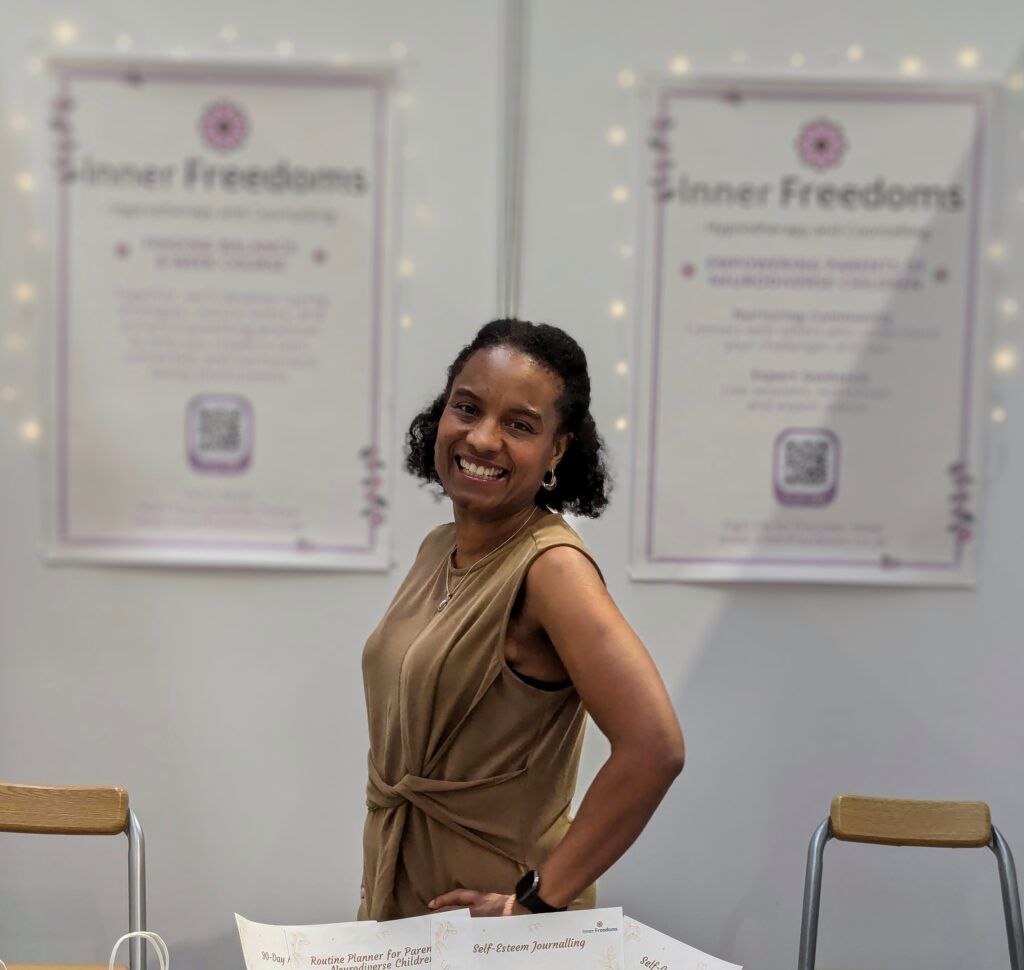
Meet Shirley Lafond, a multi-talented therapist, coach, and the founder of Inner Freedoms.
After years of running her business and feeling like she was stuck on a ‘treadmill’, her mindset completely changed after seeking small business support from Digital Boost.
She saw her confidence grow, learned how to leverage AI to work smarter, not harder, and expanded her network.
This is Shirley’s story.
Sparking an Idea
Having worked as a teaching assistant for many years, Shirley was inspired to train as a therapist. She specialised in compassionate approaches that specifically support parents of neurodiverse children.
This inspiration came from her own children, where Shirley had learned to support and develop them as a mother, she realised that other parents out there needed the guidance and support of someone who’d been on that journey themselves!
And so Inner Freedoms was born.
Finding her Feet
As with anything new, there’s always a level of fear, but overwhelmingly Shirley felt ‘excited’! She’d grown up seeing her father running his own businesses and he’d always told her anything was possible. Thanks to this early exposure to entrepreneurship, she knew she could make it happen.
But even with this self-belief, Shirley admits those early years were hard. The coaching was the easy bit! But figuring out a strategy and managing business finances was hard when Shirley had never done it before.
She found herself stuck in a mundane routine that wasn’t serving her business. That’s when she started looking for small business support that could help her get off the treadmill and start seeing real growth.
Taking Part in Begin
After joining the Digital Boost community, Shirley was inspired to apply for Begin. This programme is sponsored by NatWest and run in collaboration with Digital Boost and Buy Women Built, which trains aspiring female founders to build their businesses.
Although Shirley had an established business, this programme highlighted significant gaps in her knowledge. She would often go from "A to Z really, really, really quickly," assuming customers would just find her and buy. With the learnings from Begin, she soon realised that this "very, very rarely happens."
Across the 6-week programme, Shirley was able to slow down, step back and fill in the missing parts of her customer journey. This allowed her to build a genuine connection with potential clients, leading to more sustainable growth.
With its inspirational videos from founders in the Buy Women Built community, Begin helped her see that success doesn’t happen overnight, but through deliberate, well-structured steps!
Shirley finished Begin with a new sense of clarity, ready to take her business to the next level.
Empowering Mentors
After completing Begin, Shirley had a clear plan to fill the gaps in her business. She immediately threw herself into rebuilding her business and sought out a Digital Boost mentor to support her with this.
This mentoring was invaluable. Where previously Shirley didn’t think she had the skills to build a website, her mentor empowered her to learn how to manage and build it herself.
This newfound skill gave her a sense of control and ownership over her brand, ensuring the website truly reflected her vision.
Learning How to Use AI as a Small Business
With her newfound trust in Digital Boost’s small business support, Shirley applied for the AI Essentials programme. This programme was generously funded by Google.org AI Opportunity fund and supported by the Centre for Public Impact.
Before the programme, Shirley was using AI "lightly," but the course "opened up a whole other world."
She learned how to write effective prompts and the importance of ‘simple prompting’ - a skill she now uses every day. Through this programme, Shirley has trained AI to be a powerful tool for her business.
Shirley has been able to leverage AI to create everything from engaging social media content to entire email funnels. Using AI tools to integrate with Mailerlite, she’s been able to automate her customer communication.
Not only has this saved her time, but she’s also been able to nurture her audience like never before. Her newfound AI skills have made her marketing more strategic, effective and personal!
Building Confidence
Before finding the right support, Shirley was "so scared to even network, to walk into a room of other businesses." Today, that fear is gone. She's confident in who she is and what she offers, and she’s learned to accept that not everyone will be her client. As she says, "I can now accept a no. I'd actually prefer a no, and then I know where I'm at."
This confidence has led her to take on new challenges. She recently had the opportunity to record a podcast and take part in a Bloomberg Mentoring Day with Digital Boost.
A Mentoring Day with Bloomberg
Across two days, Shirley worked with her dedicated team of Bloomberg volunteers. She collaborated with them, sharing her business idea and receiving invaluable feedback.
The experience was "absolutely amazing" and "priceless," Shirley says. She learned how to improve her presentation skills, refine her business pitch, and gained better understanding of her communication style.
The Mentoring Day gave her a unique opportunity to share her business idea and get a different perspective. It’s an experience she would recommend to anyone. "It gives you a different perspective. It allows you to share your idea because that's another thing. Usually, you don't get to share your idea as much as I did on that day, which was amazing."
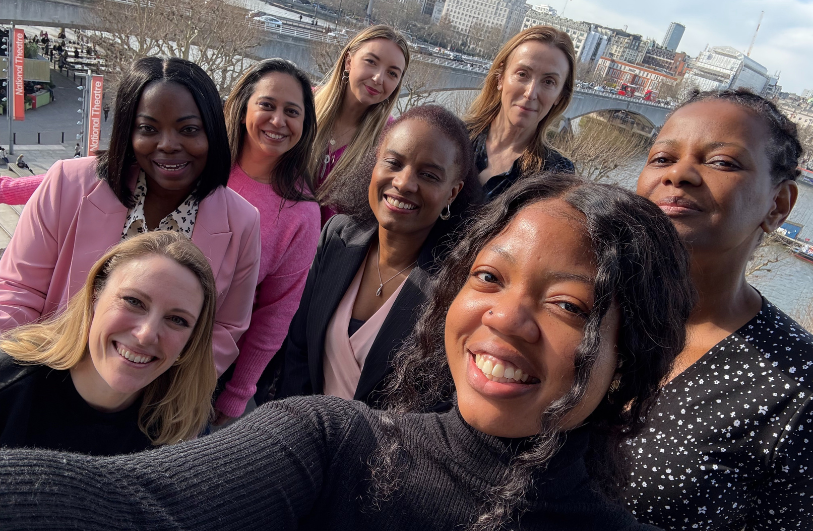
We’ve loved watching Shirley’s growth since finding our small business support! We know there are big things on the horizon for Inner Freedoms, so make sure you follow Shirley's journey!
Inspired by Shirley's growth? Check out our small business support and see what you can achieve.
We’ve got peer learning programmes, mentoring and more to support you on your journey!
At Digital Boost, we believe every founder deserves access to high-quality, empathetic support, regardless of their background, identity, or lived experience.
Last year, we made updates to our platform to better personalise mentoring to disabled founders, making it easier than ever for our community of entrepreneurs to connect with mentors who truly understand their journey.
We're proud to have always been an inclusive community, and we know that lots of our mentors had already been giving support to founders with these lived experiences. You can read about Michelle's journey with her business mentor and Amelia's experiences. But it's important to us to ensure this support is visible and built directly into our platform. And this is just the start! 🚀
Why Mentoring for Disabled Founders Matters
Disabled entrepreneurs, neurodivergent founders, and those living with long-term health conditions often face unique barriers, and whilst mentoring can be transformational, it's most effective when it’s rooted in lived experience.
That’s why we’ve enhanced our platform to offer thoughtful, relevant, and inclusive matching. Founders can choose to connect with mentors who share similar experiences, helping build confidence, understanding, and business skills in a supportive environment.
This work reflects our long-standing commitment to being an inclusive community, and this is just the beginning.
How it Works: Updating Your Profile
We’ve added a new Disability/Health section to your profile settings to make mentoring for disabled founders more accessible and meaningful.
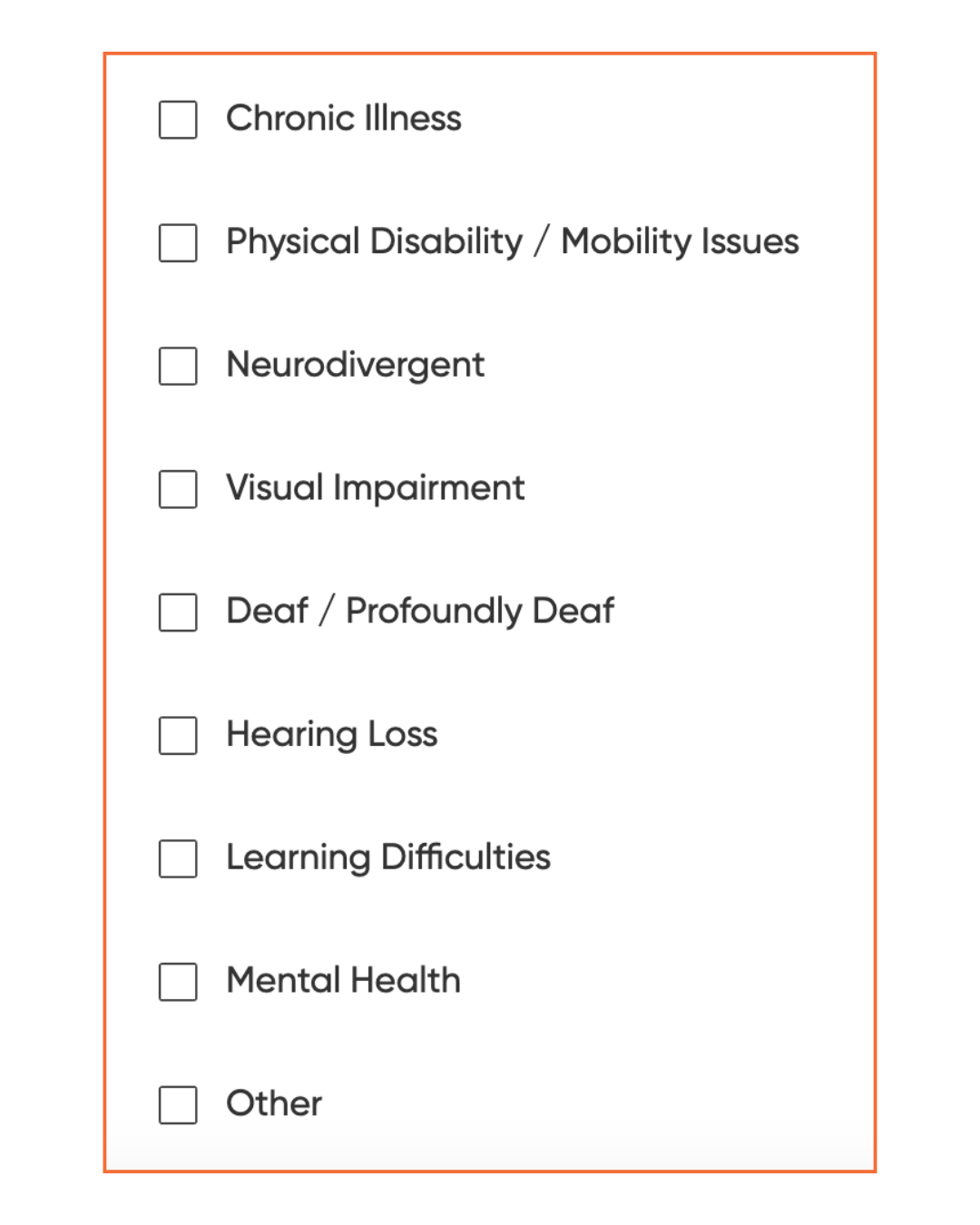
Sharing this information is:
- Totally optional
- Fully in your control
- Private unless you choose otherwise

You can update or remove this information at any time. And no matter what you choose, your privacy is always respected.
Smarter, More Inclusive Mentor Matching for Disabled Founders
If you choose to use matching preferences, here’s how it works:
- Volunteers who share lived experience will be prioritised for requests from founders seeking that support.
- Founders will be matched with mentors whose experiences align with their own.
- Request notifications now include any accessibility requirements a mentee has chosen to share.
This ensures every session is informed, supportive, and tailored.
And importantly:
You won’t only be matched with people who share your lived experience. It will be prioritised when relevant.
Our Ongoing Commitment to Accessibility
This update is just the beginning. We are committed to continually improving accessibility and support opportunities for disabled entrepreneurs across the Digital Boost platform. If you'd like to partner with us on this important work, please get in touch here.
We want to build solutions that really work for you, so we would love for you all to be part of the journey with us. Please get in touch to share any ideas, requests, or feedback with us 🤗
Together, we can ensure mentoring for disabled founders is empowering, inclusive, and always built with lived experience at its heart.
As a small business owner, you have to wear a lot of hats! If it feels like you’re always racing against the clock to get everything done, you’re not alone 🩵 Juggling so much can be hard, but that’s where AI comes in!
The key to unlocking AI’s potential is a great prompt. But how do you know what a great prompt looks like? 🤔
We’ve put together a simple formula to help you write perfect prompts every time. And to make it even easier, we’ve worked with our mentors to put together a bank of perfect prompts you can use right away!
The Perfect Formula 🪄
Try using this formula every time you ask AI to do something:
Persona: What role or job should the AI play?
Context: Briefly describe your business or the situation
Task: What do you want the AI to do?
Format: How should the answer look? (i.e. length, structure)
Tone: Choose a style (e.g., friendly, professional, funny)
Example AI Prompts for Small Business Owners
Search Engine Optimisation (SEO)
You are an award-winning SEO consultant (persona). Your goal is to get [website URL] to rank first organically on search engines and in AI with [target audience] (context). Please create a list of keywords and a targeting strategy, taking into account the competition and search volume for each keyword. Include keyword difficulty and rank them by the ones which will be most effective (task). Show results in a table format (format) and in language that non-technical people can understand (tone).
Website audit
You are a web design expert, skilled in using your SEO, UX and copywriting skills (persona). Please evaluate the effectiveness of the homepage of [add website URL] for its ability to attract and engage [target audience] (task). Please score it based on best practice criteria and give specific recommendations to improve in each area (format). Then compare it to the home page of [competitor] (context).
Social Media Content
You are an experienced social media consultant hired to create content for [name & describe company] (persona). Please recommend 1 or 2 platforms to prioritise, then generate [number] engaging posts (task). They should focus on [topic or product] and establish the company as [describe brand positioning] with [describe target audience] (context). The tone should be [brand personality] (tone). For each post, suggest a short, catchy headline, a caption, a clear call to action, 2-3 hashtags, and recommended visuals suitable for each platform (format).
Sentiment analysis
You are a data analyst (persona) looking to understand how customers feel about [company name and website URL] and what to improve (context). Please analyse the latest user reviews, survey responses, and social media mentions to identify the overall sentiment (positive, negative, neutral), summarise the main positive and negative themes, and highlight any trends or changes in sentiment over time (task). Format your findings in a clear, professional bullet-point report with actions (format).
Crisis Management
You are a business owner (persona) responding to negative publicity after a product issue (context). Prepare a public statement addressing customer concerns and outlining steps your company is taking to resolve the issue (task). Differentiate between immediate actions and long-term brand restoration steps, explaining the rationale for each. Format your response as an official press release (format). Use a reassuring and transparent tone (tone).
Customer Feedback
You are a shop owner (persona) who has collected customer feedback over the past month (context). Analyse the feedback to identify common themes and prioritise issues by frequency (task). Suggest clear, actionable next steps for each major theme, and explain how addressing these could improve customer satisfaction. Summarise your analysis and recommendations in a clear, solution-focused format (format). Use a constructive tone (tone).
Customer Service
You are a customer service agent (persona) at a small retail business (context). You’ve noticed a rise in customer inquiries about product returns (task). Create a numbered checklist of steps to handle return requests efficiently. For each step, include a sample customer question and a model answer. Present your checklist in a clear, easy-to-follow format (format). Use a friendly and patient tone (tone).
Staff Training
You are a team leader (persona) responsible for onboarding new part-time staff at a busy café (context). Develop a quick-start training guide for new hires (task). Highlight key “first-day” dos and don’ts, and include examples of common mistakes to avoid. Format your guide as a step-by-step manual (format). Write in an encouraging and clear tone (tone).
Scheduling
You are an operations coordinator (persona) for a local grocery store during the upcoming holiday rush (context). Generate an optimal staff rota for the week, taking into account employee availability and peak shopping times (task). Ensure fairness in shift allocation, flag any scheduling conflicts, and explain how the schedule optimises coverage during busy periods. Present the schedule in a weekly table (format). Use an organised and collaborative tone (tone).
Recruitment
You are an HR manager (persona) hiring staff for a new store location (context). Write a clear and attractive job description for a retail associate position (task). Identify three key traits for success in the role and ensure each is reflected in the description. Use a standard job description template (format). Write in a welcoming and informative tone (tone).
Compliance & Regulations
You are a compliance officer (persona) at a small manufacturing company that must adapt to recently updated industry regulations (context). Summarise the new legal requirements affecting your daily operations (task). Highlight the three most urgent changes, suggest a realistic timeline for implementing each, and note any common pitfalls to avoid. Use bullet points for clarity (format). Write in an official and concise tone (tone).
Inventory Management
You are a store manager (persona) at a boutique clothing shop with a significant overstock of seasonal items (context). Suggest practical strategies to clear excess inventory quickly (task). Prioritise your ideas in order of their likely effectiveness, and for each, explain the pros and cons. Present your suggestions in a clear, actionable list (format). Use a proactive and practical tone (tone).
Supplier Negotiation
You are a purchasing manager (persona) needing to renegotiate payment terms with your main supplier (context). Draft a professional email to initiate the negotiation process (task). Include key negotiation points with suggested supporting arguments, anticipate possible supplier concerns, and propose responses. Use a standard email template (format). Adopt a polite yet assertive tone (tone).
Financial Analysis
You are a small business owner (persona) reviewing your company’s financial performance from the last quarter (context). Identify trends in your revenue and expenses, and recommend the top three cost-saving measures, prioritised by potential savings (task). For each recommendation, briefly explain why it’s effective and any possible drawbacks. Present your findings in a brief report (format). Use an analytical and objective tone (tone).
Top Tips
Remember, you don’t have to take the first response your AI gives you! We recommend asking follow-up questions, giving feedback, and continuing to work with your AI until you have what you need.
Try some of these questions:
- How would you rate this response out of 10?
- What would make this a 10/10 response?
- What other information do you need from me to give me an accurate response?
- What might I be missing?
- What are the pros and cons of the response you’ve given?
- How can you tailor this better to my audience?
Conclusion
Working smart not hard has never been easier for small business owners! With the right prompts, generative AI is about to become your most powerful business tool.
The more precise you become with your prompting, the better the first answer your AI generates will be! And the better that first answer becomes, the more time you’re saving for you and your business 🤝
We know AI can be daunting when you’re getting started, so if you’ve got any questions or would like some advice, our mentors are here to help! 💛
Want to create a website using AI, but you're not sure where to start? We've got you covered with this blog, where we're sharing the top 5 AI website builders!
Let's dive in 👇
1. Wix ADI
Who it's for: Total beginners and businesses that want lots of creative control.
Wix is a long-time favourite in the website-building world, and its AI-powered tool, Wix ADI (Artificial Design Intelligence), is fantastic.
It’s perfect if you're a complete beginner who wants a beautiful, feature-rich website without the stress. The AI gets you started, and then you can take over and make it your own!
Key Features:
- AI-driven setup: Wix ADI asks you a few simple questions about your business and uses your answers to create a personalised website in minutes, complete with text and images!
- Ultimate customisation: Unlike some other AI builders, Wix gives you a huge amount of control. Once the AI has created the initial site, you can jump into the regular Wix Editor to fine-tune every single detail.
- Online store options: If you plan to sell products or services via your site, Wix has a great set of e-commerce tools to help you manage everything from inventory to payments
Pricing: You can try Wix for free, but to use your own domain and get rid of Wix ads, you'll need a paid plan.
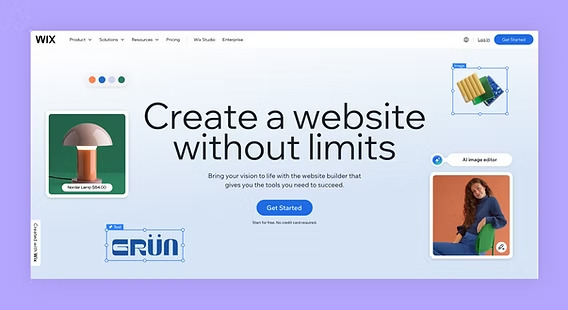
Image credit: Wix.com
2. Hostinger AI Website Builder
Who it's for: Businesses on a budget and anyone who needs a quick, all-in-one solution.
Hostinger is known for its affordable web hosting, and its AI Website Builder is a powerful, low-cost option. It’s an ideal choice if you're a small business owner who wants a high-quality website without a high price tag.
Key Features:
- Super fast generation: Hostinger's AI builder can create a full website in just a few clicks, making it one of the fastest ways to get online.
- Everything in one place: Hostinger bundles its AI builder with web hosting, a free domain, and a professional email address, giving you everything you need right from the start.
- Bonus AI tools: Beyond just building the site, Hostinger includes other AI tools for things like generating blog post ideas and writing content for you too!
Pricing: Hostinger is one of the most budget-friendly website builders with prices starting from £2.99 a month. The pricing is simple and includes your hosting, which is a great bonus!
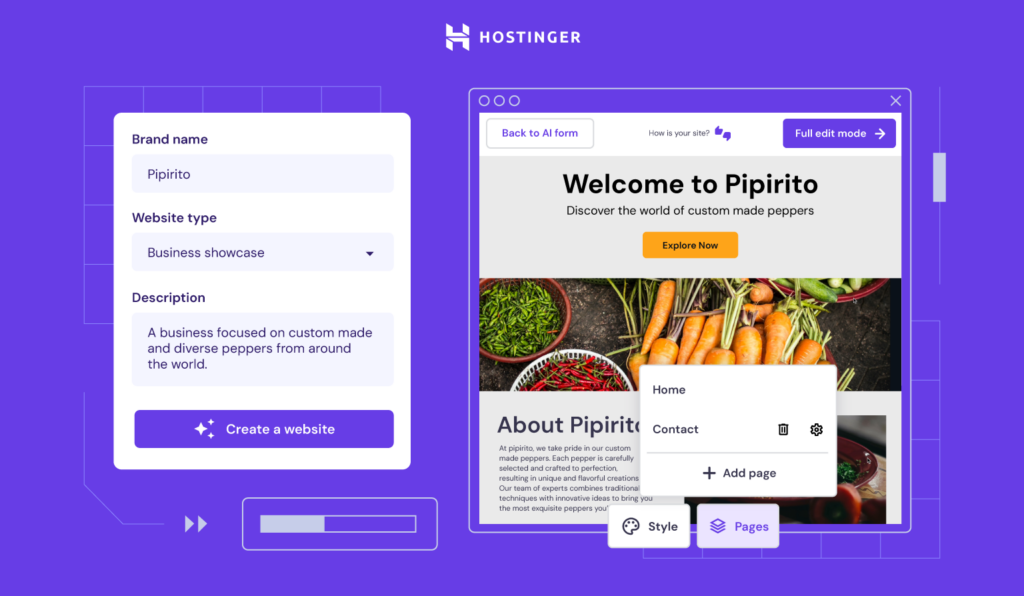
Image credit: Hostinger
3. Durable
Who it's for: Micro-businesses and freelancers who want a website and marketing tools in a flash.
Durable is a newer AI builder with an incredible promise: a complete website generated in just 30 seconds. It’s perfect for solo entrepreneurs and new businesses that need to get an online presence up and running immediately.
Key Features:
- Instant Website: Just tell Durable your business type and name, and its AI will build you a full website in under a minute.
- Built-in Business Tools: Durable isn't just for building sites. It also comes with an AI-powered CRM (Customer Relationship Management), invoicing, and marketing tools all in one simple dashboard.
- AI-Assisted Content: The platform can also help you create blog posts and social media content with its AI tools, making it easy to keep your marketing fresh.
Pricing: Durable lets you see a free preview of your site, but you'll need to subscribe to a paid plan to publish it. Plans start at around $15 per month and include custom domain names and built-in SEO & marketing tools.
Image credit: Durable
4. 10Web
Who it's for: Those who love the power of WordPress but want an easier way to use it.
10Web is an AI-powered platform built on WordPress. This makes it an ideal choice for small businesses that want the flexibility and features of WordPress without all the technical fuss!
Key Features:
- AI set-up: 10Web can generate an entire WordPress website, including content and images, based on your description in just a few minutes.
- Clone any website: This is a really unique feature. You can give 10Web the link to a website you admire, and it will clone the design and produce a customisable WordPress site for you to edit.
- AI Assistant: The platform includes an AI assistant that can help you write content, optimise images, and fine-tune your site
Pricing: 10Web offers several pricing plans, which all include a free trial- prices start from $10 a month. Their plans include managed WordPress hosting, AI tools, and SEO features.
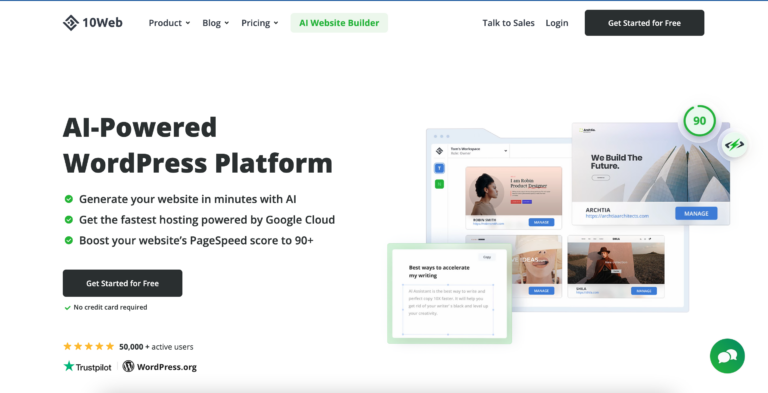
Image credit: Insidr.ai
5. Framer
Who it's for: Businesses and designers who want a modern, polished website that stands out.
Framer is a unique AI builder that focuses on creating sleek, modern websites with a lot of style. While it's popular with designers, its AI features make it accessible for any small business that wants a beautiful, cutting-edge site without needing to code.
Key Features:
- AI-powered design: You can use a simple text prompt to generate a full website, and Framer's AI will handle the layout, visuals, and copy, giving you a professional-looking site in seconds.
- Fun animations: Framer is known for making it easy to add cool animations and interactive effects to your site without any coding
- Built-in content management: The platform includes a built-in content management system (CMS) that makes it easy to organise content like blog posts and testimonials.
- Landing page option: If you're not ready for a full website, Framer has a cool 'mini' plan that allows you to build 2 landing pages for £4 a month
Pricing: Framer has a generous free version, which is great for trying out the tech. Paid plans start at £12 a month for a simple website and £4 a month for the 'mini' landing page option.
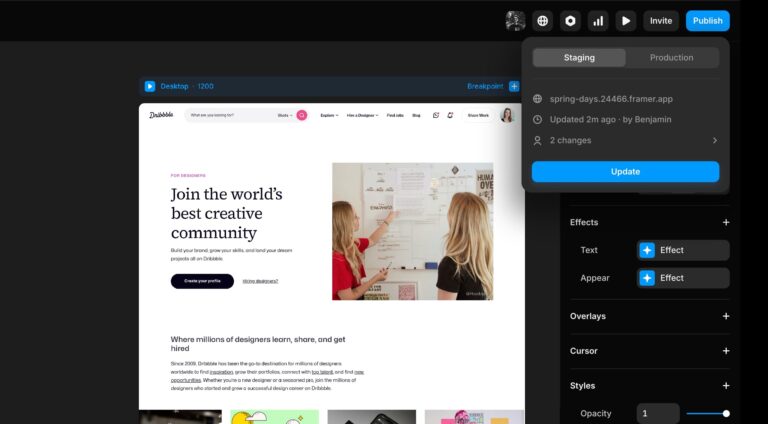
Image credit: Framer
Still not sure which AI builder to pick?
We've put together a handy table to help you decide 😊
| Wix ADI | Hostinger | Durable | 10Web | Framer | |
| High Price | — | — | — | ✓ | — |
| Low Price | — | ✓ | ✓ | — | ✓ |
| Free Version | ✓ | — | — | ✓ | ✓ |
| SEO Tools | ✓ | ✓ | ✓ | ✓ | ✓ |
| Marketing Tools | ✓ | ✓ | ✓ | ✓ | ✓ |
| E-commerce | ✓ | ✓ | ✓ | ✓ | ✓ |
| Customer Support | ✓ | ✓ | ✓ | ✓ | ✓ |
Conclusion
When used correctly, AI website builders can free up your time AND save you money!
Now you've chosen your AI website builder, why not check out our blog on how to set up your website for success?
Remember, AI is an evolving world, so ensure you do your research to find the right tool for you. We've shared our top 5 builders, but there will be many more in the future 😊
If you need support building your website with AI, why not chat to one of our AI mentors?
Our mentoring is free to access and completely unlimited too!
Building a website used to be a complicated and expensive process, but not anymore. With the rise of AI website builders, creating a professional website is now possible for every small business. 💪
From design, to structure, to content creation, AI website builders have you covered!
In this blog, we're showing you how to build a website with AI - let's dive in 👇
Understanding AI Website Builders
Before we dive into how to build a website with AI, let's quickly explain what an AI website builder is.
Think of it as a smart assistant that uses artificial intelligence to generate a website for you.
Instead of starting from scratch, you provide the AI with a few details about your business, including your name, your industry, and what you do, and it creates a custom, functional website in minutes!
It's fast, intuitive, and needs no coding or design skills 🎉
Choosing an AI Website Builder
When you're ready to choose an AI website builder, the first step is to think about what your business needs. Do you need a simple site to showcase your services, or will you be selling products online?
The best builder for you is one that offers the right tools, whether that's robust e-commerce functionality, easy customisation to match your branding, or great customer support for when you get stuck.
Check out our blog, top 5 AI Website Builders for small businesses to get some inspo! 🙌
Building Your Website
Once you've chosen your website builder, follow these steps to ensure you're set up for success!
Step 1: Build Your Foundations
When prompted, give the AI a clear picture of your business. The quality of your website depends on your input, so be as specific as possible!
Enter your business name, industry, and a short description of what you do. The AI will use this information to generate a custom website complete with a homepage, an "About Us" section, and other relevant pages. Think of this as your first draft that you can begin to build on 🛠️
Step 2: Add Your Personal Touch
Now that the AI has done the heavy lifting, it's time for you to make the website truly yours!
Use the builder's editor to customise the look and feel of your site. Ensure you change the colour palette, fonts, and layouts to match your brand's identity.
Similarly, remember to replace the AI-generated placeholder text and images with your content.
Step 3: Final Checks
- Add a contact form to collect leads (& remember to connect it to your email marketing tool!)
- Ask AI to rate your website's layout/structure out of 10 against your competitors and make suggestions to improve it
- Ask AI to rate your website's SEO out of 10 and make suggestions
Step 4: Get Ready to Launch
See how quick it is to build your website? You're nearly ready to launch!
But before your launch, make sure you've checked off these key things:
- Proofread everything: Thoroughly proofread every page. While AI is powerful, it can sometimes miss errors, so a human touch is essential.
- Nail Your SEO: Ensure your page titles and meta descriptions are clear and include relevant keywords.
- Check for Mobile Accessibility: Check that your website works just as well on mobile as it does on desktop - remember, most customers are searching on their mobiles, not laptops now!
Once you've completed that checklist, you're ready to launch your new website to the world 🚀
What Happens Next?
Now your website is live, the work begins!
Successful websites evolve over time, so here's what we recommend to maintain your website in the long term:
- Keep your content fresh: Regularly update your website with new blog posts, fresh product photos, or new information about your services. This not only keeps your audience engaged but also signals to search engines that your site is active and relevant.
- Embrace analytics: Use a tool like Google Analytics to understand how visitors are interacting with your website. What pages are they visiting most? Where are they coming from? This data helps improve your website and grow your business!
- Listen to your customers: Pay attention to customer feedback. Is there a question you get asked all the time? Turn it into an FAQ page or a blog post! Your website is a tool to serve your customers, so ensure you're listening and meeting their needs.
Conclusion
So now you know how to build a website with an AI, what are you waiting for?! This is your sign to give it a go and see the incredible results you can have using AI tools 🤩
We know it can be daunting, so if you've got questions or need support building your website with AI, our mentors are here to help 😊
Today we're sharing a story that shows the true power of small business mentoring!
This is the story of Soni Panda's incredible journey to building By Soni Panda X - a premium gender-inclusive hosiery brand!
It's a story that goes from a single moment of panic on a 30th birthday, to a thriving hosiery empire just a few years later.
Let's dive in!
A Fashion Love Affair
For as long as she can remember, Soni has loved all things fashion.
As she grew up, she developed a special passion for hosiery after seeing the self-confidence it can bring wearers.
For many, hosiery can carry a stigma, but Soni became passionate about changing those perceptions about how and why people wear hosiery.
"Starting off with [...] stockings, you think bedroom attire, you think, you're wearing it for another person instead of yourself. And actually I wanted to change those norms."
She began writing a blog to share her love for hosiery and built a loyal following on social media!
The Birthday Panic
Soni's community loved her hosiery reviews and recommendations, but they kept asking if she'd ever considered creating her own brand.
Having never owned a business before, Soni was gripped with fear at the thought of having her own line.
But the seed of inspiration had been planted.
When Soni's 30th birthday rolled around, she had an epiphany in her hotel room!
"I literally sat on my bed and I'm like, what am I doing in my life? Am I going to start a business or not? You know what, people are onto something. Let's give it a go."
Soni decided then and there to face her fears and launch By Soni Panda X -and four years later, she's hit over 1,000 orders with a thriving global customer base!

Credit: By Soni Panda X
Navigating a Business Alone
Starting a business wasn't the glamorous journey social media often portrays. Soni quickly faced the lonely reality of being a founder, despite having her online community.
The early days hit hard and imposter syndrome crept in big time. Soni describes swinging between tears of joy and complete breakdowns questioning why she was building a business.
Navigating those feelings alone was tough, so to keep herself accountable, she started documenting her journey on YouTube and LinkedIn. Fondly referring to LinkedIn as her 'business diary', Soni says that when she's having a bad day, she can now scroll back through her 'diary' and find highlights that motivate her to keep going 😊
Finding Her People
Whilst the accountability of social media helped, Soni was still feeling alone and disconnected on her business journey. Luckily, it wasn't long until she found Digital Boost!
Soni joined the community and very quickly had the opportunity to attend a Digital Boost International Women's Day event. An event she says that "changed [her] life".
Surrounded by women at every stage of the business journey, Soni was inspired by their stories and reassured that she wasn't the only one experiencing loneliness.
By the end of the event, Soni knew she'd found a community where she'd be supported and championed!
How Small Business Mentoring Made All the Difference
While the community provided emotional support, it was Digital Boost's free mentoring that delivered the transformation Soni needed.
Initially hesitant to ask for help (something she admits she'd never been comfortable with), Soni realised Digital Boost's mentoring was "a godsend."
Soni was matched with Claire, a Digital Boost mentor and huge supporter of female founders, who quickly became an ongoing support for Soni.
Claire helped Soni tackle her perfectionist tendencies and realise that asking for help was actually a strength, not a weakness. The regular check-ins provided both strategic guidance and the accountability Soni needed to implement real changes.
"She's helped me so much. She's my accountability person. And so we kind of catch up every six weeks to two months... And it keeps me in check."
A Social Media Breakthrough
One of Soni's biggest pain points was social media overwhelm. Spending hours daily on platforms was starting to really affect her mental health ❤️🩹
Through the support of her mentors, Soni figured out how to be more strategic with her scheduling and how to show up authentically online. Scheduling her content freed up masses of time and improved her business's sales!
The transformation went deeper than just time management - Soni started showing up more authentically, sharing her real self rather than just the 'business version'. The result? Better connections and more sales.
A Marketing Jumpstart
Having several years of trading under her belt, Soni is a lifelong student and recognises the power of always learning 📚
Having enjoyed Digital Boost's small business mentoring, when the opportunity to join the Small Business Jumpstart programme arose, Soni jumped at the chance to spend 6 weeks jumpstarting her marketing!
The programme delivered immediate value, particularly with SEO and website optimisation. Soni credits this newfound knowledge with making "the world of difference" to her business visibility.
Milestone Moments
Four years after that hotel room decision, Soni has experienced what she calls "a whirlwind" of success. Since then, she's celebrated major achievements, including:
- Her brand's fourth anniversary
- Hitting over 1,100 orders
- Completing her first public speaking engagement
Looking back, Soni recalls, "there [were] days where I thought I would never make it four years [ago]" but these milestones are a reminder of the hard work that pays off as a founder!
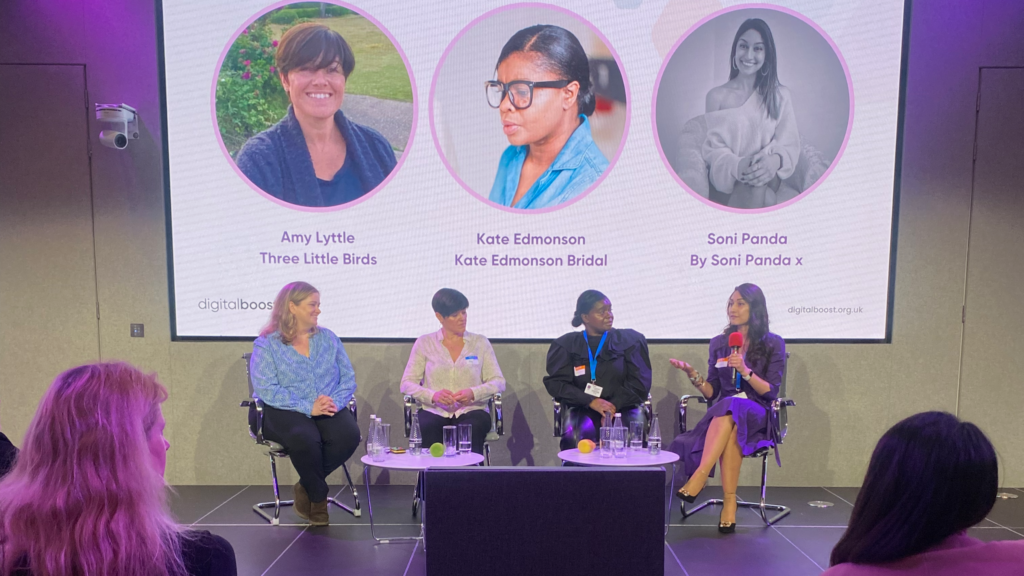
Soni speaking at Digital Boost's 2025 International Women's Day event, exactly a year after she first joined our community!
Conclusion
Soni's story is a true testament to the power of passion. It's this passion that helped her overcome self-doubt, loneliness, and imposter syndrome to create a thriving business.
We're so proud of the journey that Soni's been on, and we can't wait to see what she does next!
Interested in how small business mentoring could support you? Find out more below 😊
When you're building a business, you expect the late nights and the endless to-do lists. But what you might not expect - and what few people talk about - is just how lonely it can feel.
Loneliness as a small business owner is a topic that comes up a lot for our community, so we're excited to share this guest blog from Garry Lee! In this blog, he shares practical ways to navigate that isolation and build a stronger foundation for yourself and your business.
Let's dive in 👇
You expect bumps in the road as a first-time business owner. You brace yourself for the late nights, the financial uncertainty, and the endless to-do lists. What you might not expect—what few people talk about—is how lonely it can feel.
Starting a business is often romanticised. You’ll set your hours, make the choices you want and generally have a fun adventure. And while there’s some truth to that, the reality for many first-time business owners is a quiet, isolating experience—one where the weight of every decision rests squarely on your shoulders. Including lots of decisions, they don’t feel experienced or prepared to make.
If you’re feeling this way, you’re not alone. And more importantly, you don’t have to remain in this position.
Why It Feels So Lonely When You’re Starting a Business
Starting a business is filled with uncertainty. You’re wearing every hat: marketer, customer service, creator, sales, maker, accountant, and just general admin dogs body! Most of the time, it’s just you and your laptop, trying to figure out what works.
Friends and family will be supportive, but most of them won’t know what it feels like. They don’t understand the pressure of keeping the lights on, or how hard it is to stay motivated when there’s no one to share the small wins—or the big setbacks—with.
There’s also an unhealthy expectation to keep up appearances. To act like you’re confident and thriving, even when you’re unsure and exhausted. That kind of emotional disconnection only adds to the loneliness.
How Isolation Affects Your Mindset and Health
Loneliness isn’t just an unfortunate side product of being a business owner; it can genuinely affect your ability to run your business. Without someone to bounce ideas off of, doubt can creep in, and you start second-guessing everything.
In the worst cases, you question your decisions, your progress, even your decision to create the business in the first place.
Over time, this can all lead to burnout. You might find yourself drained before the day even begins, overwhelmed by everything that needs to be done and all with no one to share the load.
It’s incredibly hard and you should never see it as a weakness when you feel lonely. It’s a natural human response. We’re wired for connection—even in business.
What Makes the Early Stage Especially Hard
The beginning is generally the loneliest part because you're still finding your footing. You don’t have a team around you. There are no peers around who’ve walked the same path. And on top of that, you’re figuring out everything as you go.
One of the worst things people do is compare themselves to others on social media—those business owners who seem to have it all figured out. But you’re only seeing their highlight reels, not the moments when they are sat on their couch at midnight wondering if they’d made a huge mistake.
It’s important to focus less on the outward image others portray and instead talk to real people you know and look at yourself more.
Ways to Handle Loneliness When You're Building Alone
While the loneliness is real, there are ways to ease it—and even grow stronger through it.
- Find a community. Whether it’s a local networking group, an online forum, or a mastermind, being around others who are going through similarly experiences is incredibly helpful.
- Use co-working spaces. You get to be around other people working—even on different things— and that can lift your mood, give you energy and raise your mood.
- Get a mentor. Find someone who’s been through this before. They will understand your rants and share how they came through the other side.
- Make time outside of work. Schedule time with people who energise you. That coffee with a friend or dinner with family can be the boost you need.
- Attend more events. This has the double benefit of combating loneliness AND giving you the opportunity to network with potential clients!
You don’t have to power through alone; in fact, it’s positively encouraged that you don’t. Reaching out isn’t a sign of weakness—it’s a sign of resilience. Remember that most new business owners are feeling exactly the same – but like you, they are not saying it out loud.
Conclusion
It's completely normal to question yourself and feel the quiet weight of responsibility when building something from scratch. But remember, being a solo founder doesn’t mean you have to stay isolated.
There are people who understand what you're going through and resources to help you connect with them. Reaching out isn't a sign of weakness; it’s a sign of resilience.
Why not find a local business group or meet with a mentor to talk through what you're feeling? It's amazing how having that support can make all the difference to your mindset and help you overcome the loneliness as a small business owner.
Garry is the co-founder of Thirty-Three Percent, a marketing agency that helps first-time business owners with practical strategies to make finance, marketing, management, sales and recruitment less stressful and overwhelming.
He's also a Digital Boost mentor and has delivered Small Business Jumpstart sessions for us alongside his co-founder, James 😊

In this blog, we're sharing everything you need to know about PR for small businesses!
Getting your small business featured in the press might seem like something only big companies with huge budgets can achieve. But here's the truth: you don't need a massive PR agency or thousands of pounds to secure valuable media coverage.
With the right approach, timing, and a bit of know-how, you can get journalists talking about your business and build that all-important credibility.
Let's dive in 👇
What is PR and Why Does Your Small Business Need It?
PR stands for Public Relations and it's essentially how you get people talking about your business in the press.
Unlike paid advertisement, when done correctly, PR can be free advertising for you and your business.
The key is to find interesting stories that fit the current news cycle (more on this later!)
If you're struggling to get your business seen but have a great story, this could be a great strategy for your business 😊
Debunking Common PR Myths
- You need an agency to get PR - Not necessarily! With the right tools, you can do your own PR
- PR is just about press releases - Nope! There are other creative ways to get into the media
- You need to be famous to get PR - Wrong again! Journalists love fresh faces and interesting stories - you don't have to be famous!
- It's all about quantity – It's quality over quantity every day - targeted pitches beat a scatter gun approach every time
How to Get Started
1. Define Your Unique Story
What makes your business different? Maybe you have innovative workplace policies, an inspiring founding story, or you're solving a problem in a new way. Get clear on your unique selling proposition (USP) so that you can start building your story.
2. Prepare Your Assets
A great PR toolkit looks like:
- High-quality photos: Founder headshots and product images (white/transparent backgrounds for products, lifestyle shots for context)
- Company description: Keep it concise and include relevant links
- Fact sheet: A one-page overview including key team members, company background, awards, funding raised, and links to your photo library
3. Build Your Media List
Research who's writing about businesses like yours. Look at your competitors and see which journalists have covered them – they're more likely to be interested in your story too! Start building relationships with these journalists by following their work and understanding what makes them tick.
4. Start Small
You might land The Times on your first attempt - but it's okay if you don't! Like most things in life, starting small is the best strategy.
Try this instead:
- Local press: Regional journalists love local business success stories
- Podcasts: Great for telling your full story without editorial cuts
- Trade publications: Industry-specific publications are often easier entry points
- Online publications: These generally have shorter lead times than print and can still have big impact!

Image Credit: The Guardian
Crafting the Perfect Pitch
1. Subject Line
This is crucial – it needs to grab attention immediately. Ensure you include your USP and relevance/context to help the journalist understand your pitch - fast!
- "New female-founded skincare brand tackling adult acne which 1 in X women suffer from"
- "The £10 sleep spray that sold out in 48 hours"
2. Opening with Context
Why is this story relevant right now? Is there a trend, cultural awareness day, or news event you can connect to?
💡 Find key awareness days here.
3. Your Story
Introduce yourself and your business in 1-2 sentences, highlighting what's unique. Link to your fact sheet for more details.
4. The Hook
What's the angle? Why should they care about this story today?
Keep email pitches to 2-3 short paragraphs, and always include links to images and additional information. Make the journalist's job as easy as possible!
Timing is Everything: The PR Calendar
Understanding media timelines is crucial to nailing your PR.
Christmas planning starts in July – yes, really! Big seasonal campaigns need 3-6 months lead time for glossy magazines, while online publications start 2-6 weeks ahead, and newspapers/radio/TV can work with 1-7 days' notice.
Key seasonal opportunities include:
- January: Wellness, dry January, New Year, new you themes
- March: International Women's Day (perfect for female founders)
- June: Pride, school holidays
- Throughout the year: Various awareness days and cultural moments
Always check that journalists are actually writing about awareness days by searching Google News before pitching around them.
Free Tools to Supercharge Your PR Efforts
PR for small businesses can be made easier with these tools:
- Google Alerts: Set up alerts for your company name and relevant industry topics
- Google Trends: Identify rising search trends you can comment on
- Editorial newsletters: Services like Editorial (around £12/month) send daily opportunities where journalists need expert comments
- Social media: Follow journalists on Twitter/X and LinkedIn to see what they're working on
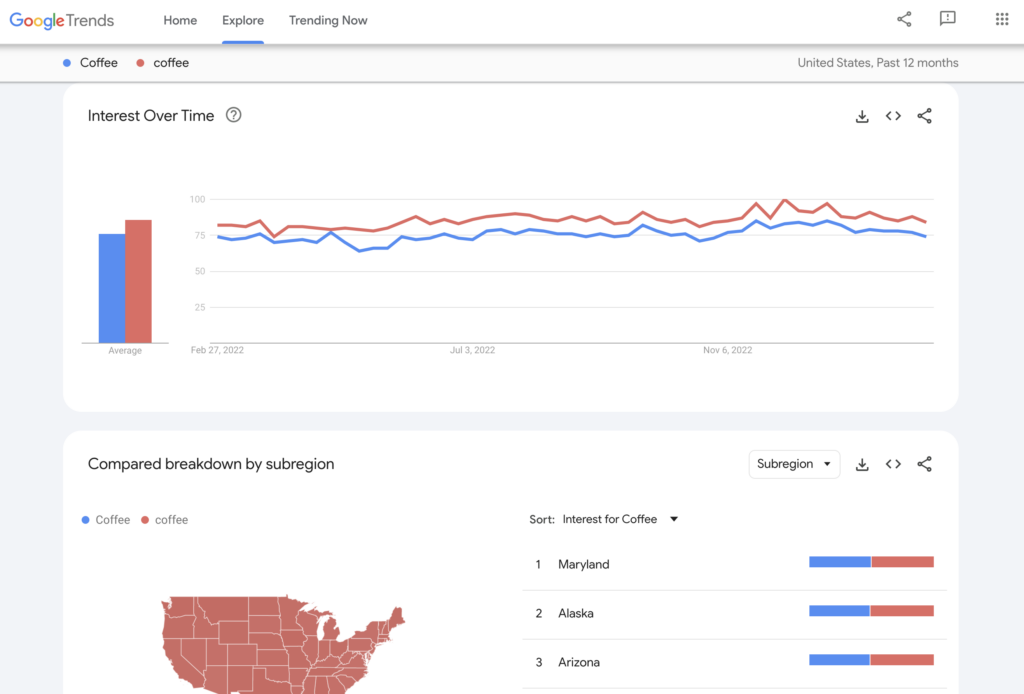
Image Credit: Google News Initiative
Making PR Work Harder for Your Business
Press coverage doesn't stop with publication - make the most of the opportunities you're landing!
- SEO Benefits: Getting backlinks and blog posts from trusted media sites can significantly improve your search engine rankings.
- Social Media: Share your coverage across your social media channels. It's great content for your business and helps you build trust with your audience.
- Email Marketing: Likewise, press coverage works well in your newsletters!
- Business Development: Investors, retailers, and potential partners all look at press coverage when evaluating businesses.
- Website Optimisation: With the press you're getting, you'll be driving potential customers to your website! So make sure it's in tip top condition ready to receive those visitors. (Check out our blog on how to avoid these 12 common website mistakes!)
Conclusion
PR for small businesses doesn't have to be complicated or expensive. With the tools and tips shared in this blog, you're ready to start getting press coverage for your business!
If you'd like support with your PR strategy, why not contact our PR mentors?
Our mentoring is free to access and means you can get personalised support to nail your PR!
Meet the Mentor
This blog was inspired by a Masterclass that Riannon delivered for the Digital Boost community!
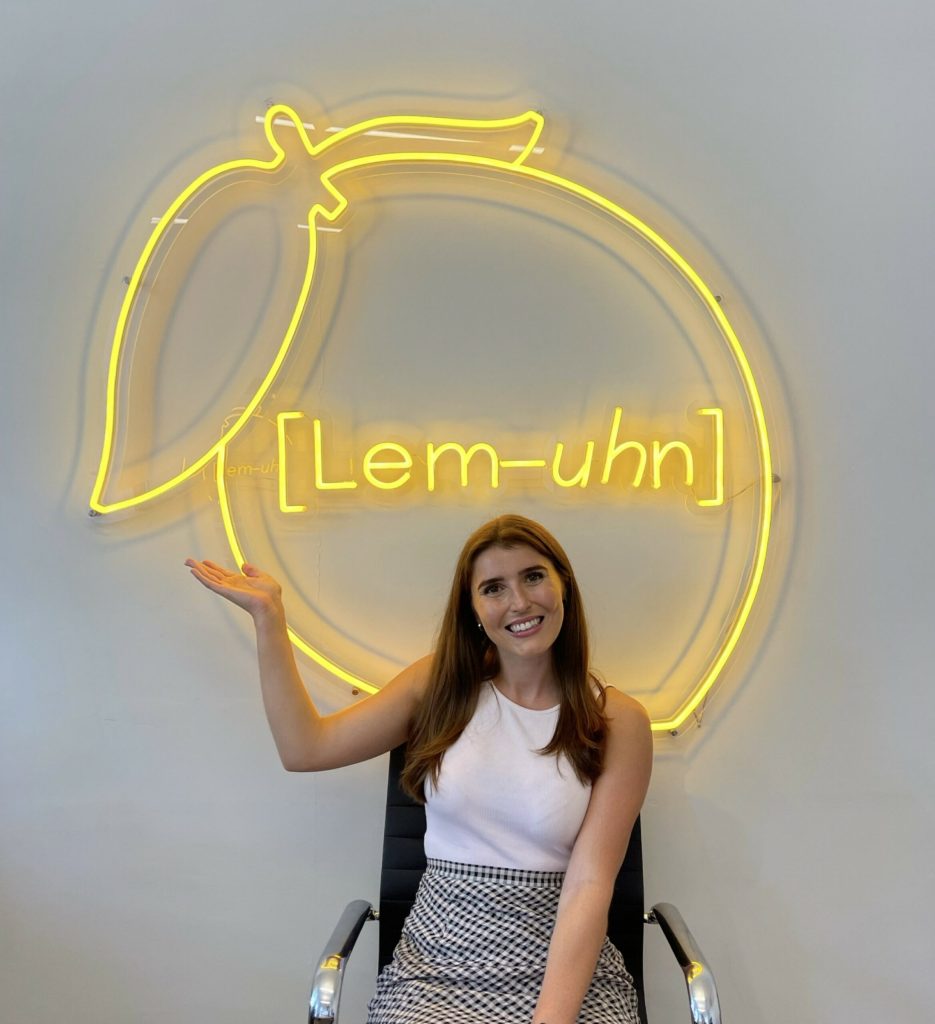
Riannon is the founder of Lem-uhn PR, the B Corp award-winning feel-good PR agency that's revolutionizing the industry through positive practices.
Riannon is also a Digital Boost mentor and volunteers her time to support founders to nail their PR strategies. Find Riannon on our platform here.
Email marketing for small businesses can be overwhelming - there's a lot to consider!
In this comprehensive guide, we're sharing why you should be using email marketing, things to consider, and how to get the best results.
Let's dive in!
Why Email Marketing Should Be Your Priority
While social media gets a lot of attention, the numbers tell a different story when it comes to email marketing for small businesses. Research shows that 63% of people prefer to stay in touch with businesses through email, compared to just 25% who prefer social media. It's clear that email is still the king of the marketing world!
In addition to this, we love email marketing because:
- You're talking directly to your clients
- You own and control your list (unlike social media platforms!)
- It's more cost-effective than many other marketing avenues
- It's accessible to almost anyone!
Understanding Your Customer Journey
Before diving into tactics, it's crucial to understand how customers interact with your business, so that you can apply it to your email marketing.
Your email marketing should guide customers through each stage:
- Awareness: Introduce your business and what makes you different
- Interest: Engage with relevant content and value
- Desire: Create urgency and show specific benefits
- Action: Make the purchase decision easy and compelling
Customer Journeys in Practice
For example, if you're a small candle business, your email sequence might look something like this:
- Awareness Email: Showcase candles, highlight natural ingredients and unique fragrances
- Interest Email: Invite subscribers to take a quiz to find their perfect summer scent
- Desire Email: Feature limited-time summer scents that won't be available in autumn
- Action Email: Announce that popular scents are back in stock (creating urgency through scarcity)
Each email builds on the previous one, gently guiding subscribers toward a purchase while providing value at every step.
Building Your Email List the Right Way
The foundation of successful email marketing is a quality mailing list.
You may have seen the option to buy lists. Here at Digital Boost, we believe in authenticity so we never advocate buying lists. It's better to have a smaller, authentic list than a large inauthentic one!
How To Grow Your List
We hear you, it's hard when you're starting out and have a low/no list! Here's our top tips to get the ball rolling.
Website Pop-ups and Forms: Offer immediate value like a discount code or free guide in exchange for email addresses. Make sure your offer is desirable enough that visitors want to give their email address.
Lead Magnets: Create valuable content that solves a problem for your target audience. This could be a how-to guide, checklist, or exclusive tips related to your industry. For service-based businesses, this strategy works really well!
Social Media: Promote giveaways and offer exclusive content on your social channels and drive people to sign up for your newsletter list as part of those promotions.
Never Miss a Touch Point: Add your email signup to your website footer, checkout process, business cards, and even QR codes at markets or events - you never know when someone might join your list!
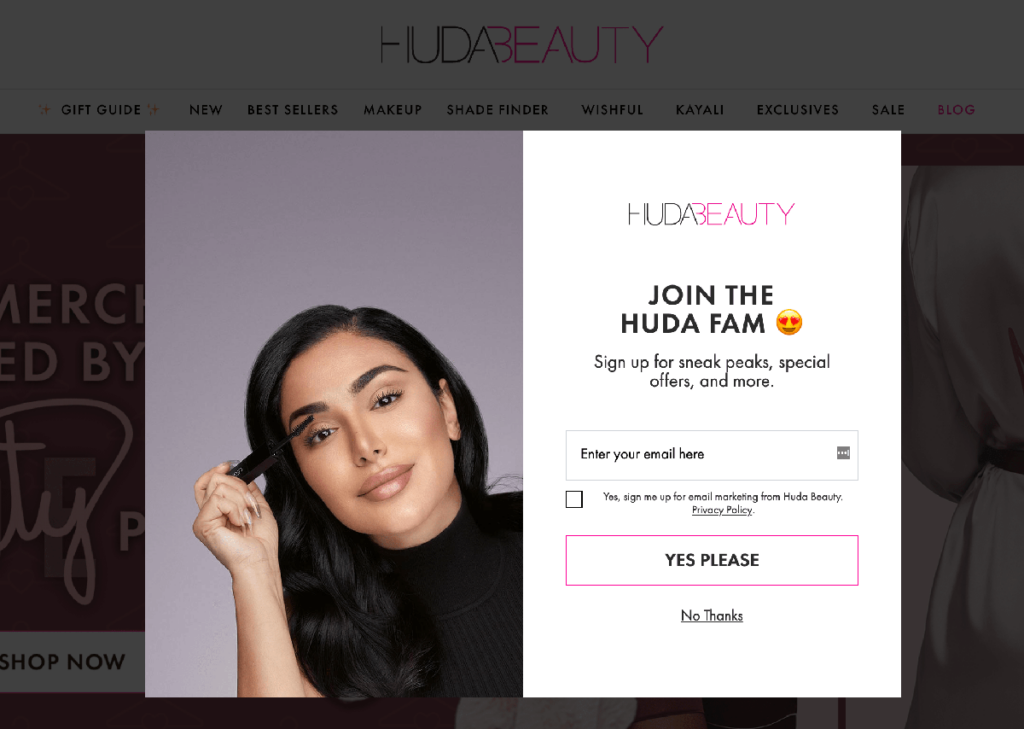
Image credit: ConvertFlow
Nailing Your Email Content
With attention spans shorter than ever, your email content needs to be focused, valuable, and action-oriented.
The most successful emails follow a simple formula: one email, one clear message, one specific action.
Email Essentials:
Subject Line: This is the first thing your customer sees, so make it engaging enough to stand out in a crowded inbox.
Visual Header: Use images or graphics that immediately grab attention and set the tone for your message.
Focused Content: Keep your main message clear and concise.
Strong Call-to-Action: Every email should have one clear action you want readers to take.
Take Your Emails To The Next Level
Use Bullet Points: Make your content scannable. Most people skim emails rather than reading every word.
Focus on Building Relationships: Emails are a chance for you to nurture relationships with your audience, not get immediate sales. Subscribers might not buy instantly, but consistent, valuable communication keeps you top-of-mind for when they're ready to buy!
Be Valuable: Your emails are a chance for you to show your audience what makes you and your business special. Always aim to give more than you take, the sales will follow.
So now you've written your email, what's next?
Testing and Optimisation
Never send an email without testing it first. Even experienced marketers rarely send a perfect email on the first try. Testing catches formatting issues, broken links, and ensures your email looks amazing!
Your Pre-Send Checklist
- Check how your email looks on desktop, tablet, and mobile devices
- Check all links and call-to-action buttons are correct
- Check that your image(s) load quickly and have appropriate alt text
- Sense check your subject line - is it catchy?
- Check the overall readability and flow
Follow that checklist before every email send and you'll nail your emails every time!
When should you send your email?
The best time to send emails depends on your audience, but here are some general guidelines to help you get started!
Best Send Days: Monday through Wednesday typically see higher engagement rates, but test different days to see what works for your audience.
Best Send Times: Target times when people transition between work and personal life:
- Early morning (before work starts)
- Lunch hours
- Early evening (just after work ends)
Frequency Guidelines: Start with one email every 4-6 weeks. This maintains awareness without overwhelming subscribers. As you create more valuable content and see positive engagement, you can increase frequency to every 2 weeks or weekly.
Remember: quality trumps quantity. It's better to send one excellent email per month than four average weekly ones.
Measuring Success
Once you're confident with your email marketing, these are the metrics you can start tracking. They'll help you understand what your audience is engaging with and what they want to see more of!
Key Metrics to Monitor
Open Rate: The percentage of subscribers who open your emails. This tells you how effective your subject line was.
Click Rate: The percentage of subscribers who click links in your emails. This tells you how interesting your content is to your audience.
Conversion Rate: The percentage of subscribers who complete your desired action (making a purchase, downloading a resource, etc.). This is your ultimate success metric!
Ready to get started?
Your Email Marketing Action Plan
- Choose an Email Platform: Start with a free tier from providers like Mailchimp, ConvertKit, or Mailerlite
- Create Your First Lead Magnet: Develop something valuable to offer in exchange for email addresses
- Set Up Signup Forms: Add email capture to your website, social media, and any customer touchpoints
- Plan Your First Campaign: Write a simple welcome email introducing your business
- Test Everything: Send test emails to yourself and check formatting across devices
- Track and Adjust: Monitor your metrics and refine your approach based on results
Want More Support?
If you're about to embark on your email marketing journey or want support to review your current email marketing plan, our mentors can help!
Our mentoring is free to access and unlimited 😊
Meet the Mentor
This blog post was inspired by a Masterclass delivered by Anastasia Terzoglou for our community. Anastasia is a Digital Boost mentor and People and Culture Manager at Imperial College London.
She's a total whizz when it comes to communication, whether that's through social media, email marketing, or at in-person events!
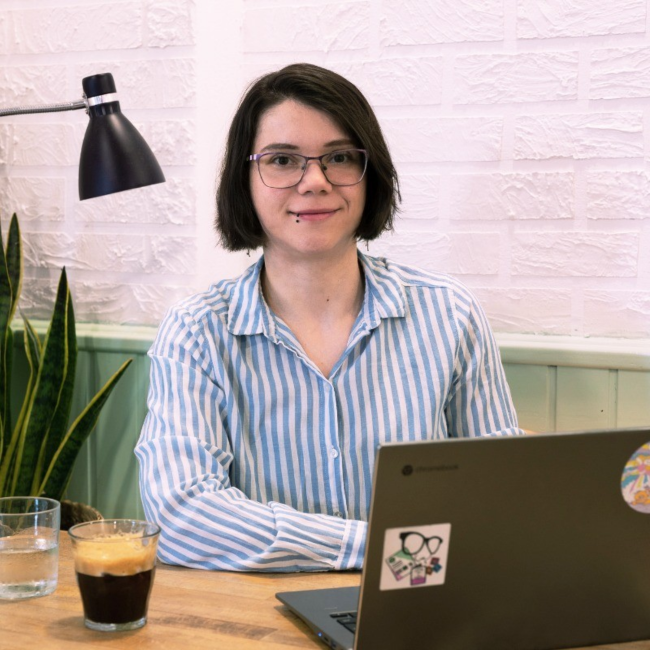
Today we're sharing Kate's journey to building Kate Edmondson Bridal! It's a story that shows the power of determination, hard graft, and how game-changing the right business support can be.
Let's dive in!
Early Years
Kate always knew she wanted to design wedding dresses. After studying at London College of Fashion and Epsom School of Art and Design, she landed roles with smaller bridal brands, but quickly hit a ceiling. Although she loved the industry, there wasn't scope for her to design – and that was her true passion.
Having decided to take the plunge into entrepreneurship, Kate was lucky enough to receive a grant from The King's Trust. With this funding, she set up her bridal business from her spare room, complete with second-hand sewing equipment and big dreams!
She began promoting her business to local brides, but launching wasn't easy. She said: "It was quite overwhelming... I felt isolated and didn't really know where to turn."
Despite this, Kate persevered, quietly honing her craft and working to steadily grow her business locally.
The Search for Support
For more than a decade, Kate continued building her business alone. She tried various support programs, but nothing clicked. Most support providers "just didn't get what [she] was trying to do" and made her feel boxed in rather than empowered.
Despite years of hard work and undeniable talent, Kate felt stuck. After 10 years in business, she was still searching for help that truly understood her challenges as a creative founder. People said her work was great, but she couldn't reach the right audience.
Finding Support That Actually Works
Then came 2020. Following the Pandemic, Kate decided to give business support another shot – and this time, everything changed.
A Google search led her to Grow London Local, who referred her to Digital Boost. The experience was completely different from anything she'd encountered before!
"It was just like a different space... and I was thinking, how didn't I find [Digital Boost] before?"
Kate joined Digital Boost's Begin programme – a collaboration with NatWest and Buy Women Built that supports female founders developing product-based businesses. Having received cookie-cutter support previously, Kate now had access to personalised mentoring from experts who understood her industry, valued her creativity, and supported her to lean into her strengths as a founder.
For the first time, business support clicked for Kate!

Getting Crystal Clear on Customers
The Begin programme immediately helped Kate shift her perspective on her business.
"It was so refreshing, especially on the marketing side. I hadn't really spent time on my sales funnel or strategy – I'd been focusing only on the product."
The support helped her narrow her focus and identify exactly who her ideal client was. The programme opened up new avenues for Kate to explore: "Yes, there are brides out there – but who is your bride? Where is she? Where does she hang out?"
This focused approach helped Kate see her brand in a new light and helped her get unstuck!
Fast Results and Renewed Confidence
With a clearer understanding of her customer and a real strategy in place, Kate started seeing results almost instantly.
“I feel confident enough to do the marketing myself, which I never thought I’d be able to do.”
Kate also discovered tools that made content creation far easier – a major win, especially as a dyslexic business owner. AI tools helped with grammar and idea development, reducing her reliance on copywriters.
“I used to pay someone to write my blogs. Now I’ve found tools that help me do it myself – it’s just like, wow.”
Game-Changing Mentoring
Kate's transformation accelerated when she started working directly with Digital Boost's mentors. An SEO mentor helped her understand the technical aspects of her website that she would never have known previously. This meant that when the time came to build her website, Kate was armed with the technical knowledge to confidently brief her website team!
"I knew what to ask... even if I didn't do it myself, I could communicate clearly with the [website] expert."
However, it was her mentoring session with Riannon Palmer, the founder of Lum-uhn PR and Digital Boost mentor, that delivered the most dramatic impact. When an influencer approached Kate about a social media collaboration, despite her initial excitement, something didn't feel right. She trusted her gut and reached out to Riannon through Digital Boost for advice.
Riannon talked Kate through the process of working with influencers, explaining what to expect from collaborations and red flags to watch out for in contracts. Armed with this knowledge, Kate requested payment upfront – only to discover the influencer didn't actually have the money to pay her.
That one session potentially saved Kate thousands!
A Real Success
And where is Kate now? She's running a thriving business. It's not an overnight success because it's real.
Her dedication to learning, growing and adapting has paid off. She's armed with stronger messaging and targeted marketing, she's attracting her dream clients (including a famous film producer's daughter!), and she's more confident than ever.
And with this targeted messaging, Kate now she knows who she's speaking to, how to reach them, and that her voice matters.
"I can tell my story – no one can tell it better than me."
Hearing real founder stories like Kate's are so exciting! They show just what's possible when passion combines with the right support 🩵
If you've been inspired by Kate's story, why not see how Digital Boost's free mentoring could take your business to the next level?
All images credited to Kate Edmondson Bridal. Sources used: website and LinkedIn