

Email Marketing for Small Businesses

Email marketing for small businesses can be overwhelming – there’s a lot to consider!
In this comprehensive guide, we’re sharing why you should be using email marketing, things to consider, and how to get the best results.
Let’s dive in!
Why Email Marketing Should Be Your Priority
While social media gets a lot of attention, the numbers tell a different story when it comes to email marketing for small businesses. Research shows that 63% of people prefer to stay in touch with businesses through email, compared to just 25% who prefer social media. It’s clear that email is still the king of the marketing world!
In addition to this, we love email marketing because:
- You’re talking directly to your clients
- You own and control your list (unlike social media platforms!)
- It’s more cost-effective than many other marketing avenues
- It’s accessible to almost anyone!
Understanding Your Customer Journey
Before diving into tactics, it’s crucial to understand how customers interact with your business, so that you can apply it to your email marketing.
Your email marketing should guide customers through each stage:
- Awareness: Introduce your business and what makes you different
- Interest: Engage with relevant content and value
- Desire: Create urgency and show specific benefits
- Action: Make the purchase decision easy and compelling
Customer Journeys in Practice
For example, if you’re a small candle business, your email sequence might look something like this:
- Awareness Email: Showcase candles, highlight natural ingredients and unique fragrances
- Interest Email: Invite subscribers to take a quiz to find their perfect summer scent
- Desire Email: Feature limited-time summer scents that won’t be available in autumn
- Action Email: Announce that popular scents are back in stock (creating urgency through scarcity)
Each email builds on the previous one, gently guiding subscribers toward a purchase while providing value at every step.
Building Your Email List the Right Way
The foundation of successful email marketing is a quality mailing list.
You may have seen the option to buy lists. Here at Digital Boost, we believe in authenticity so we never advocate buying lists. It’s better to have a smaller, authentic list than a large inauthentic one!
How To Grow Your List
We hear you, it’s hard when you’re starting out and have a low/no list! Here’s our top tips to get the ball rolling.
Website Pop-ups and Forms: Offer immediate value like a discount code or free guide in exchange for email addresses. Make sure your offer is desirable enough that visitors want to give their email address.
Lead Magnets: Create valuable content that solves a problem for your target audience. This could be a how-to guide, checklist, or exclusive tips related to your industry. For service-based businesses, this strategy works really well!
Social Media: Promote giveaways and offer exclusive content on your social channels and drive people to sign up for your newsletter list as part of those promotions.
Never Miss a Touch Point: Add your email signup to your website footer, checkout process, business cards, and even QR codes at markets or events – you never know when someone might join your list!
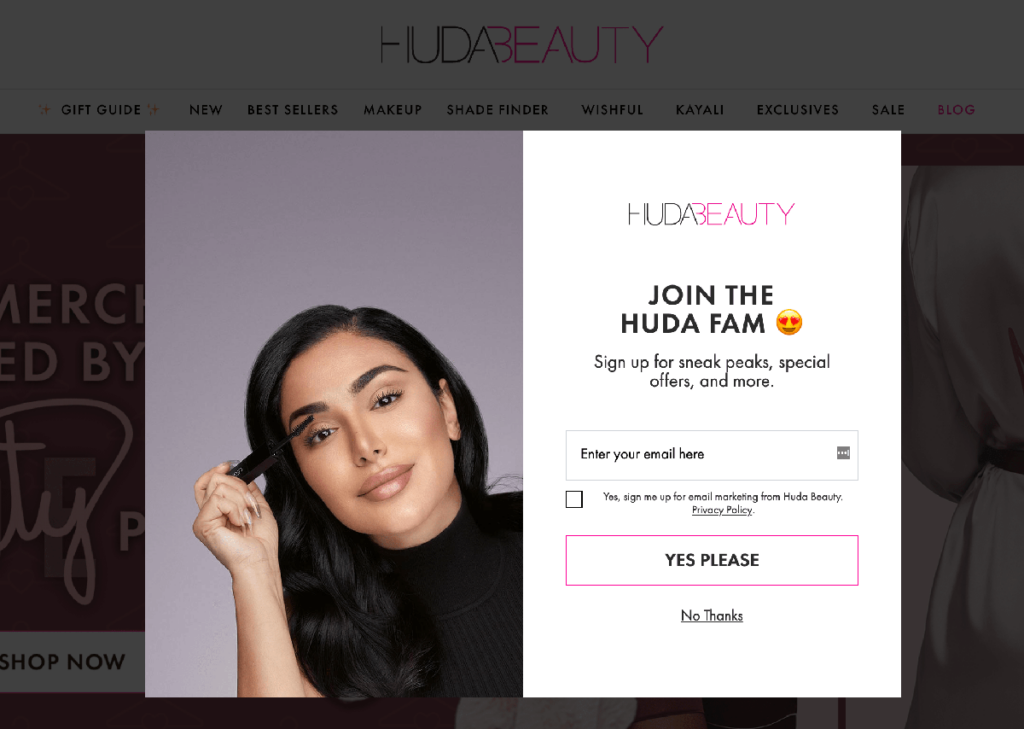
Image credit: ConvertFlow
Nailing Your Email Content
With attention spans shorter than ever, your email content needs to be focused, valuable, and action-oriented.
The most successful emails follow a simple formula: one email, one clear message, one specific action.
Email Essentials:
Subject Line: This is the first thing your customer sees, so make it engaging enough to stand out in a crowded inbox.
Visual Header: Use images or graphics that immediately grab attention and set the tone for your message.
Focused Content: Keep your main message clear and concise.
Strong Call-to-Action: Every email should have one clear action you want readers to take.
Take Your Emails To The Next Level
Use Bullet Points: Make your content scannable. Most people skim emails rather than reading every word.
Focus on Building Relationships: Emails are a chance for you to nurture relationships with your audience, not get immediate sales. Subscribers might not buy instantly, but consistent, valuable communication keeps you top-of-mind for when they’re ready to buy!
Be Valuable: Your emails are a chance for you to show your audience what makes you and your business special. Always aim to give more than you take, the sales will follow.
So now you’ve written your email, what’s next?
Testing and Optimisation
Never send an email without testing it first. Even experienced marketers rarely send a perfect email on the first try. Testing catches formatting issues, broken links, and ensures your email looks amazing!
Your Pre-Send Checklist
- Check how your email looks on desktop, tablet, and mobile devices
- Check all links and call-to-action buttons are correct
- Check that your image(s) load quickly and have appropriate alt text
- Sense check your subject line – is it catchy?
- Check the overall readability and flow
Follow that checklist before every email send and you’ll nail your emails every time!
When should you send your email?
The best time to send emails depends on your audience, but here are some general guidelines to help you get started!
Best Send Days: Monday through Wednesday typically see higher engagement rates, but test different days to see what works for your audience.
Best Send Times: Target times when people transition between work and personal life:
- Early morning (before work starts)
- Lunch hours
- Early evening (just after work ends)
Frequency Guidelines: Start with one email every 4-6 weeks. This maintains awareness without overwhelming subscribers. As you create more valuable content and see positive engagement, you can increase frequency to every 2 weeks or weekly.
Remember: quality trumps quantity. It’s better to send one excellent email per month than four average weekly ones.
Measuring Success
Once you’re confident with your email marketing, these are the metrics you can start tracking. They’ll help you understand what your audience is engaging with and what they want to see more of!
Key Metrics to Monitor
Open Rate: The percentage of subscribers who open your emails. This tells you how effective your subject line was.
Click Rate: The percentage of subscribers who click links in your emails. This tells you how interesting your content is to your audience.
Conversion Rate: The percentage of subscribers who complete your desired action (making a purchase, downloading a resource, etc.). This is your ultimate success metric!
Ready to get started?
Your Email Marketing Action Plan
- Choose an Email Platform: Start with a free tier from providers like Mailchimp, ConvertKit, or Mailerlite
- Create Your First Lead Magnet: Develop something valuable to offer in exchange for email addresses
- Set Up Signup Forms: Add email capture to your website, social media, and any customer touchpoints
- Plan Your First Campaign: Write a simple welcome email introducing your business
- Test Everything: Send test emails to yourself and check formatting across devices
- Track and Adjust: Monitor your metrics and refine your approach based on results
Want More Support?
If you’re about to embark on your email marketing journey or want support to review your current email marketing plan, our mentors can help!
Our mentoring is free to access and unlimited 😊
Meet the Mentor
This blog post was inspired by a Masterclass delivered by Anastasia Terzoglou for our community. Anastasia is a Digital Boost mentor and People and Culture Manager at Imperial College London.
She’s a total whizz when it comes to communication, whether that’s through social media, email marketing, or at in-person events!