
Making Tax Digital (MTD) is the government's move to make tax more efficient and digital. Gone are the days of one big annual tax return - you'll now need to submit smaller, digital tax updates throughout the year.
So what does this mean for you as a small business owner? If you're a sole trader, it changes how, and often, you report your income to HMRC.
If it sounds like a big shift, don't panic! Once you understand the rules and processes of MTD, you're going to feel confident doing your taxes. The key thing is to understand it and get ahead. So that's exactly what we're covering in this blog, with the help of Xero to Good.
Let's dive in!
What Is Making Tax Digital?
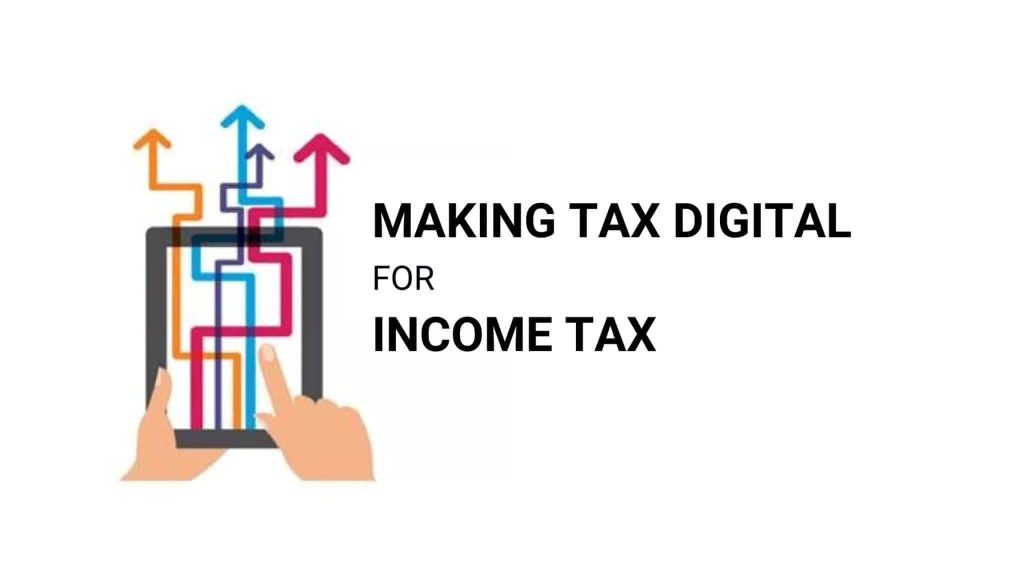
Right now, most people submit one self-assessment tax return a year. MTD breaks that into smaller steps, so you're keeping on top of your numbers throughout the year instead of scrambling at the end of the tax year!
Instead of one annual return, MTD for Income Tax involves three parts:
- Keeping digital records of your income and expenses as they happen, using HMRC recognised software
- Sending quarterly updates to HMRC - this is a running summary of your business activity, not a tax return in itself
- Submitting a final declaration by January 31st, which pulls your quarterly updates together and replaces your current self-assessment return
🎥 Want to see it in action? Watch the intro to Making Tax Digital video on our resource centre.
Who Does Making Tax Digital Apply To?
MTD for Income Tax applies if you're a sole trader, a landlord, or both, and your gross income (aka the total income before expenses) is above a certain threshold.
If you have more than one source of income, for example, a self-employed business and a rental property, your gross income from both is added together to check whether you're over the threshold. You'll then send separate quarterly updates for each income source, but only one final declaration covering everything at the end of the year.
As this is a new process, it's being introduced in phases:
| From | MTD applies if your gross income is over |
|---|---|
| April 2026 | £50,000 |
| April 2027 | £30,000 |
| April 2028 | £20,000 |
With this phased approach, MTD might not apply to you. But as MTD will likely apply to you in the future, there's no harm in getting ahead and following the processes now to get into the swing of things!
If you're unsure whether or when MTD applies to you, you can use HMRC's free online tool.
What You Need to Keep and Submit
Under MTD, your income and expenses need to be recorded digitally, using HMRC-recognised software, rather than on paper.
You must keep digital records for:
- Sales invoices and payments received
- Day-to-day business expenses
- Anything else showing money moving in and out of your business
You must submit:
- A quarterly update every three months, giving a summary of your income and expenses for that period
- One final declaration a year, confirming your total gross income, expenses, and any allowances or adjustments (this replaces your current self-assessment return)
Everything is submitted directly through your chosen software, so there's no separate manual filing process to remember!
🎥 Want to see it in action? Watch the digital records video on our resource centre.
Examples of HMRC-Recognised Software
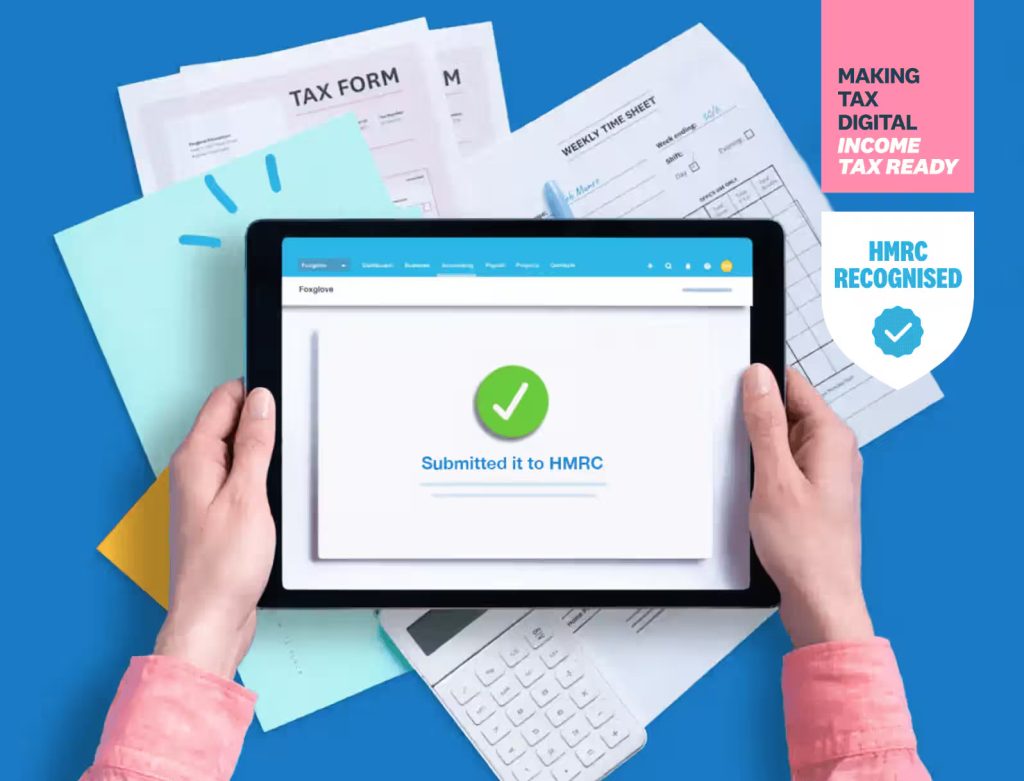
For MTD, you'll need to start using an HMRC recognised system to keep your records and send your updates. There are many options out there, but here's a few software options that our community likes:
As with any tech, do your research and ensure you find a compatible software that works best for you.
Keep in mind that good software should let you connect your bank account, capture and store receipts, and keep everything searchable in one place.
3 Steps to Get Started
Although MTD sounds complex, it's super easy to set up!
Follow these 3 steps to get started:
- Choose your software: Pick HMRC-recognised software that suits your business and set it up before you're required to use it.
- Sign up for MTD: This isn't automatic, so you need to actively register with HMRC, with your business details, National Insurance number, and accounting period to hand.
- Start early: Even if you haven't hit your threshold yet, getting comfortable with digital record-keeping now makes the eventual switch far less stressful.
Once you're set up, set aside just 15 minutes a week to check transactions, scan receipts, and keep your software up to date. Small, regular check-ins mean fewer surprises when your quarterly update or final declaration is due, and help you feel genuinely on top of your numbers, not just compliant on paper!
🎥 Want to see it in action? Watch the preparing for MTD video on our resource centre.
Bringing It All Together
Making Tax Digital isn't about doing more work, it's about spreading the same work across the year instead of facing it all at once. Choose the right software, build a small weekly habit, and start early if you can, and by the time MTD applies to you, it'll already feel familiar!
If you want to get on top of your numbers, don't forget to check out our Xero series, where we explore finance foundations, explain financial statements, and share how to budget for your business!
About Xero for Good
We’re very pleased to be partnering with Xero for Good and their Unlock Your Numbers programme, which covers essential financial topics like understanding financial statements, budgeting, and forecasting. It’s designed to help small businesses develop the confidence to manage their finances effectively.
If you've ever planned a holiday, you already understand the basics of budgeting. You know roughly where you want to go and what you want to do, you work out what it'll cost (some of it exact, some of it a guess), and you figure out how much you need to save and by when.
A business budget works the same way! It's simply a financial plan for the income you expect to earn and the bills you expect to pay over a set period of time.
Even if you've never budgeted before, it's essential that you have a budget for your business.
With the help of our partners at Xero for Good, we're showing you how to budget as a small business owner - let's dive in!
What Is a Budget, and Why Does Your Business Need One?

A budget is a financial plan covering the income you expect to earn and the costs you expect to pay over a set period. Some numbers you'll know for certain, like your rent. Others you'll have to estimate, like next quarter's sales. The longer you track your budget, the more accurate your estimates become.
A good budget helps you:
- Set prices that properly cover your costs and your time
- Plan ahead for tax, materials, and other business expenses
- Avoid undercharging or being caught out by surprise costs
- Prepare for funding or grant opportunities
- Build a buffer for the unexpected
Many of us are scared of knowing our numbers, but a budget is there to help you get on top of things! It's going to help you run your business better and help you make decisions confidently 💪
🎥 Want to see it in action? Watch the intro to budgeting video on our resource centre.
What does a budget look like in practise?
No two budgets will look the same, but there are some commonalities depending on your business model. Let's look at how budgeting may differ for product-based businesses and service-based businesses!

Budgeting for a Product-Based Business
If you sell a physical product, there are five things your budget needs to watch for:
- Costs that grow with sales: Materials and packaging costs rise as you sell more. Budget for that growth now, not after it's eaten your margin.
- Cash before income: Stock and equipment often need paying for before customers pay you - don't get caught out!
- Supply chain risk: Supplier delays or price rises are out of your control. Build in a buffer so one bad month doesn't derail your quarter.
- How far you can flex your pricing: Know your true costs, so you can decide whether to compete on price or double-down on what makes you different.
- The cost of your own time: Even in a product business, your time is a cost. Make sure your pricing reflects it!
Example:
Let's imagine you're an artisan candle maker. You're budgeting £2 per candle for the wax and the wicks. Fantastic news! Your orders have grown from 100 to 500 units a month. But as your orders grow, your material costs have risen from £200 to £1,000 overnight.
If we haven't budgeted for this growth, that jump could catch us off guard and affect our cash flow. But if we had budgeted, we would have built a buffer so that increased material costs didn't hit us so hard.
🎥 Want to see it in action? Watch the product-based budgeting video on our resource centre.

Budgeting for a Service-Based Business
If you deliver a service, there are five things your budget needs to watch for:
- Costs that grow with your client base: More clients often means more admin, tools, and support. Budget for that growth, not just the income it brings.
- Cash before income: New tools, subcontractors, or admin support are often needed before new client revenue lands - plan for it.
- The hidden hours: Proposals, travel, admin, and unpaid client calls rarely get invoiced, but they still cost you time. Budget for them so they don't quietly eat your margin.
- Pricing that reflects your value: Pricing too low might win the job, but it costs you in the long run. Factor in your time, value, and overheads, not just the headline rate.
- The ripple effect of growth. A bigger space or extra staff both come with financial knock-on effects worth mapping out before you commit.
Example:
Imagine you're a confidence coach. Great news! You've landed 3 new clients in a month. Now, alongside the paid delivery hours, you're also now spending an extra 10 unpaid hours a week on calls and admin. If we've not budgeted for that time, you're busier than ever, but actually earning less per hour than before you brought the new clients in. Whereas, if we'd budgeted for that potential growth, we'd have priced our services correctly to include those hidden hours so that you're not making a loss!
🎥 Want to see it in action? Watch the service-based budgeting video on our resource centre.
Proactive vs. Reactive Budgeting
Your budget is a bit like a dashboard for your business's health. It's going to quickly highlight when things are going well, and when things might be getting off track.
If you wait until your numbers show something seriously wrong (e.g. your costs outstrip your sales), you'll be using your budget reactively. This is because you're waiting until after something has happened to take action. Many founders starting out will fall into this bucket.
This approach isn't inherently bad, because knowing your numbers still puts you in a strong position to take action and turn things around!
But the great thing about getting nerdy about your budget is that it can show you something is off before things go really wrong. This is using your budget proactively.
Rather than waiting until we're at panic stations, your budget can show you something is off, allowing you more time to course correct and get back on track before the disaster even hits!
Now, it's worth noting that not every change is a red flag. So you don't need to panic every time you see a change. For example, you might see a rise in your costs, but this might indicate that you're growing - which is good news!
The aim is not to panic at every change; instead, the goal is to understand your numbers so that you can act if needed.
When using your budget proactively, you can test "what if" scenarios before they happen:
- What if supplier prices rise?
- What if I land double the clients next quarter?
- What if I launch something new?
Having this future-thinking allows you to stay on top of your numbers and make confident decisions in your business.
🎥 Want to see it in action? Watch the proactive budgeting video on our resource centre.
3 Questions to Check Your Business Budget
A budget is only useful if you actually check in on it! Rather than treating your budget like a document you write once and forget, run it through a simple health check on a regular basis, weekly if your cash is tight, monthly or quarterly otherwise.
1. What did I expect, and what actually happened? Compare your budgeted numbers against the real ones. Did income and costs land where you predicted, or were they higher, lower, or later than planned?
2. What changed, and why? Look for the pattern behind the numbers. A cost creeping up might be a warning sign, or it might simply be a sign of growth, like more materials because you're selling more, or more admin hours because you've landed new clients. The goal isn't to panic at every shift, it's to understand what's driving it.
3. What will I do about it? Based on what you've found, decide your next move: keep going as planned, adjust your budget, or dig deeper before making a call. If things went better than expected, celebrate it. If they didn't, investigate and change course if needed.
You won't get every prediction right, and that's the point. Each check-in makes your next budget a little more accurate, and gives you a clearer picture of how your business actually runs, not just how you hoped it would.
Bringing It All Together
A budget isn't a document you write once and file away. It's a living plan you check regularly, learn from, and adjust as your business grows. Whether you're managing materials and supply chains as a product business, or hidden hours and client admin as a service business, the same principle holds: a budget turns guesswork into a plan, and a plan into confidence.
If you want to get on top of managing your business finances, check out our financial foundations and our financial statements guide to get confident knowing your numbers 💪
About Xero for Good
We’re very pleased to be partnering with Xero for Good and their Unlock Your Numbers programme, which covers essential financial topics like understanding financial statements, budgeting, and forecasting. It’s designed to help small businesses develop the confidence to manage their finances effectively.
There are four financial statements every founder should know: the profit and loss account, the balance sheet, the cash flow statement, and the cash flow forecast. Together, they tell you whether your business is profitable, how stable it is, where your cash has been, and where it's heading next.
Right now, we know those terms may sound scary - especially if you've never come across them before!
That's why we've partnered with Xero for Good so that we can demystify these terms and get you confident managing your business finances. 💪
Why do these financial statements matter?
First off, knowing your numbers is key to building a business that lasts. Now, these four statements we're talking about today are essentially your business's medical records. On their own, each statement gives you a small piece of the health. But put all those pieces together and track over time, and you've got a full bill of health, telling you what's working and what needs attention!
So now we know why these statements are so important, let's dive into what they each mean.
What Is a Profit and Loss Account (P&L)?
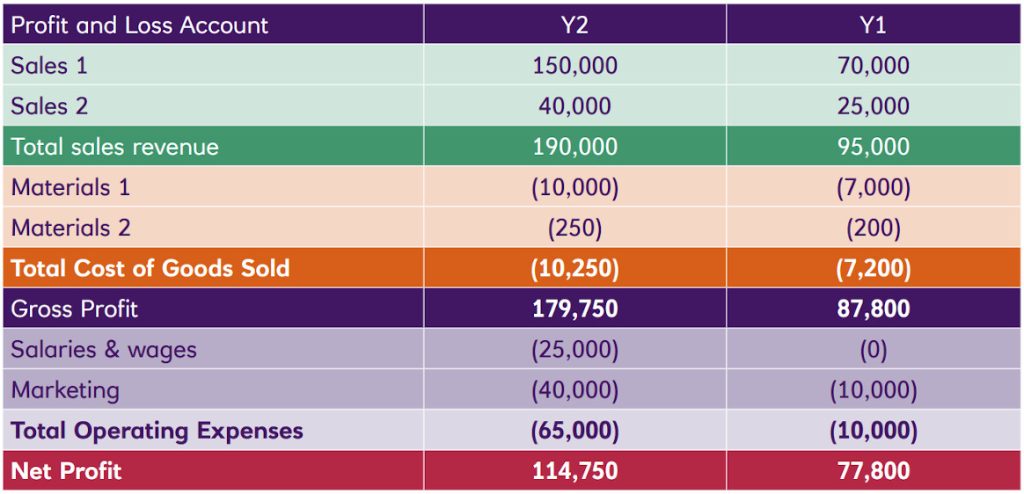
A profit and loss account, or P&L, tracks your income and expenses over a set period of time to show whether you've made a profit or a loss.
At the top sits your income: the money coming in from sales, or things like funding and investment. Below that are your expenses, split into two types. Direct costs (also called cost of goods sold) are tied directly to producing what you sell, like materials, and they tend to move up and down with how much you produce. Indirect costs, or overheads, are everything else that keeps the business running, like rent or marketing, and some of these stay fairly fixed.
From there, two numbers matter most:
- Gross profit = income minus direct costs. This is what's left to cover your overheads.
- Net profit = gross profit minus indirect costs. This is your actual profit.
Example: Say your candle business brings in £5,000 in sales this month. Your wax, wicks, and jars (direct costs) cost £1,500, so your gross profit is £3,500. After paying £1,200 in rent, marketing, and other overheads, your net profit is £2,300. That £2,300 is what your business has actually made, not just what it's sold.
You can produce a P&L weekly, monthly, quarterly, or annually. The more often you check it, the sooner you'll spot trends worth acting on.
⬇️ Download Xero's free P&L template here!
🎥 Want to see it in action? Watch the P&L video on our resource centre for a full walkthrough.
What Is a Balance Sheet?
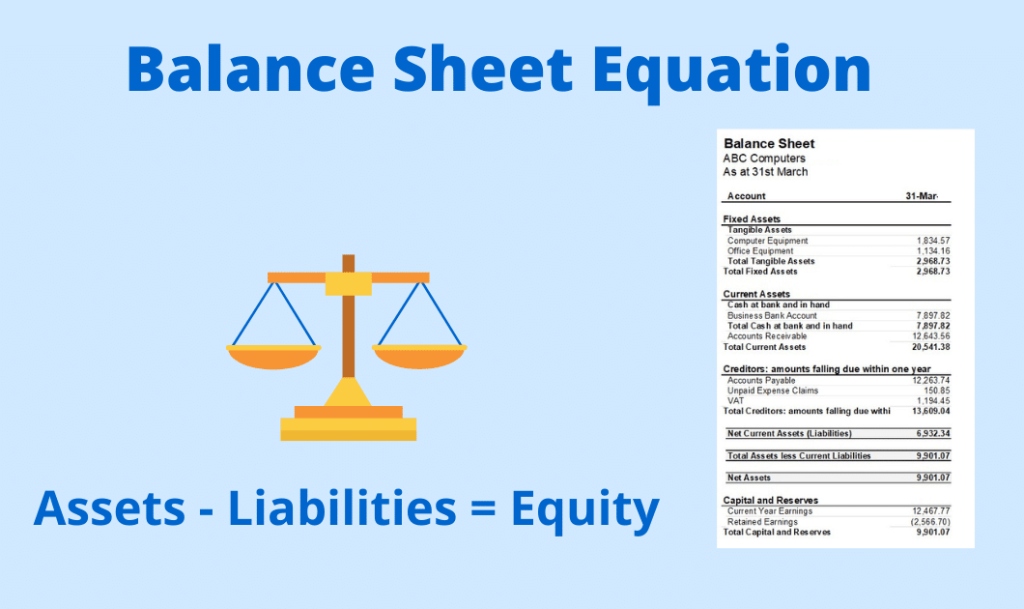
A balance sheet gives you a snapshot of what your business is worth at a single point in time, made up of three things: assets, liabilities, and equity.
- Assets are anything of value you own: cash, inventory, or money owed to you.
- Liabilities are anything you owe: loans, unpaid bills, or tax due.
- Equity is what's left over, essentially what the business is worth once liabilities are covered, including money invested and profits retained.
Your P&L can show you're profitable on paper, but the balance sheet is what tells you how stable that profit actually is.
Example: Your business has £8,000 in the bank, £2,000 of stock, and £1,000 owed by customers (assets: £11,000 total). You owe £3,000 on a business loan and £1,500 in unpaid supplier invoices (liabilities: £4,500 total). That leaves £6,500 in equity: what the business is genuinely worth right now.
Comparing balance sheets from different points in time helps you spot growth, risk, and financial patterns, like whether you're carrying more stock because customers pay you upfront, or whether generous payment terms mean more money owed to you than cash in hand. Lenders and investors lean heavily on this document too, since it shows them exactly how much risk they'd be taking on.
⬇️ Download Xero's free balance sheet template
🎥 Want to see it in action? Watch the balance sheet video on our resource centre for a full walkthrough.
What Is a Cash Flow Statement?

A cash flow statement looks at past cash movements in and out of your business over a set period. It shows where your money came from, where it went, and whether it left faster than it arrived.
Cash moves through your business in three ways:
- Operating activities: cash earned from sales and spent running the business
- Investing activities: cash spent or received buying or selling assets, like equipment or property
- Financing activities: money received from or repaid to lenders or investors, plus anything you've put into or taken out of the business yourself
Example: Over the last quarter, your operating activities brought in £4,000 more than they spent. You bought a new piece of equipment for £1,500 (investing), and repaid £800 of a loan (financing). Even though your P&L might show a profit, this statement shows exactly how that profit translated (or didn't) into cash actually sitting in your account.
Because it's retrospective, this statement is brilliant for spotting patterns, like seasonal dips or recurring costs, and is usually prepared by an accountant or bookkeeper at year-end, depending on the size and complexity of your business.
⬇️ Download Xero's free cash flow statement template
🎥 Want to see it in action? Watch the cash flow statement video on our resource centre for a full walkthrough.
What Is a Cash Flow Forecast?

A cash flow forecast is the forward-looking sibling of the cash flow statement. Your cash flow statement looks at the past, and your cash flow forecast looks at the future. It predicts how much cash is likely to flow in and out of your business, so you know whether you'll have enough to cover what's coming.
There are five parts to track:
- Starting balance: cash in your business accounts right now
- Money in: expected income, like sales, interest, or loans
- Money out: expected spend, like rent, wages, supplies, or tax
- Net cash flow: money in minus money out
- Closing balance: what you expect to have left at the end of the period
Example: You start the month with £3,000. You expect £6,000 in sales and a £1,000 loan (money in: £7,000). You expect to spend £5,500 on rent, wages, and stock (money out: £5,500). Your net cash flow is £1,500, giving you a closing balance of £4,500. If you also know a big supplier payment is due next month, this forecast gives you time to plan for it, rather than being caught out.
You can prepare a cash flow forecast at any time, and the tighter your cash flow, the more often it's worth revisiting!
⬇️ Download Xero's free cash flow forecast template
🎥 Want to see it in action? Watch the cash flow forecast video on our resource centre for a full walkthrough.
Bringing It All Together: How Often Should You Check Each Statement?
Knowing what each statement means is one thing. Knowing when to actually look at them is what turns this into a habit rather than a once-a-year scramble. Here's a simple guide:
| Statement | How often to check it | Especially useful when |
|---|---|---|
| P&L | Weekly, monthly, or quarterly | You want a quick read on whether you're actually making money right now |
| Balance Sheet | Monthly or quarterly | You're applying for funding, taking on debt, or want to track growth over time |
| Cash Flow Statement | Usually annually, often prepared by your accountant or bookkeeper | You want to understand past patterns, like seasonal dips, or need to reassure a lender |
| Cash Flow Forecast | Monthly, or weekly if cash is tight | You've got a big expense coming up or want to plan ahead with confidence |
No single statement gives you the full picture on its own. But when used together, and checked regularly, these four financial statements can give you a full picture of what's going on in your business.
With this simple guide, we hope you're now feeling confident about these terms and ready to start building good financial habits, checking those statements regularly!
About Xero for Good
We’re very pleased to be partnering with Xero for Good and their Unlock Your Numbers programme, which covers essential financial topics like understanding financial statements, budgeting, and forecasting. It’s designed to help small businesses develop the confidence to manage their finances effectively.
We're guessing you didn't start your business because you love spreadsheets! You likely started it because you had an idea worth chasing, a skill worth sharing, or a problem worth solving.
But here's the thing every experienced founder will tell you: the businesses that last are the ones that get to know their numbers early, not the ones that wait until tax season forces them to.
There are three foundations to healthy business finances: having a dedicated business account, regular tracking of income and expenses, and understanding your financial statements. Get those three things right early on, and everything else gets a whole lot easier.
That's exactly why we've teamed up with Xero for Good: we want to ensure every founder has free, practical financial guidance that makes sense.
Let's dive into the three things you can start doing today to manage your business finances.
3 Simple Ways to Manage Your Business Finances
Open a Dedicated Business Bank Account
When starting out, it can feel easier to have your personal and business money in the same place. But in the long run, it makes it almost impossible to see what your business is actually spending or earning. And when it comes to tax returns, it's a nightmare to unravel the mixed up transactions.
So what's the solution? Having a dedicated business bank account.
Luckily, setting up a business bank account as a small business has never been easier!
Most UK banks built for small businesses and sole traders offer free or low-fee accounts, with no need for a branch visit.
There are many out there, but some we've come across in our community include:
- Starling Bank — free business account, no monthly fees for sole traders
- Tide — free to set up, built specifically for SMEs
- Mettle (by NatWest) — free business account with simple bookkeeping tools built in
- Monzo Business — free tier available, easy to use alongside personal Monzo
(As with everything financial, make sure you do your research. Compare fees, features and offers before making your choice!)
🎥 Want to see it in action? Watch this video on setting up your business bank account.
Keep Your Expenses Separate

Once your account is open, the real habit is using it properly. It's easy to forget and purchase both personal and business items in one transaction on your personal account.
Doing this creates unnecessary work for you in the long run. Now that you've got your business account, ensure that all business expenses go through the business account.
Your future self will thank you when you're doing your tax return!
🎥 Want to see it in action? Watch this video on separating personal and business expenses.
3. Get Your Money Mindset Right From Day One

For many people, money is hard to talk about, and harder to keep an eye on. It's easier to let the finances slide and be dealt with "later", than it is to be honest about what's working and what isn't working.
But the best thing you can do for your business is to build your financial confidence.
To develop a strong financial mindset, get clear on these questions:
- What does success actually look like for me - and by when?
- What budget do I really have to work with, right now?
- How will I know if my actions are moving me toward my goals, or just keeping me busy?
You don't need all the answers today. You just need to start asking questions like this regularly, so that tracking your numbers becomes a habit rather than a chore.
🎥 Want to see it in action? Watch this video on building a healthy money mindset.
4. Get to Know the Key Terms
As your business grows, you'll start bumping into financial terms that can feel intimidating if nobody's explained them.
Don't worry, they're simpler than they sound! And as you build on your new finance foundations, we're going to help you develop your understanding and grow your confidence.
Here's some terms to get to know:
- Profit & Loss (P&L) - shows what you've earned and spent over a period, and whether you're actually making money
- Balance Sheet - a snapshot of what your business owns and owes at a single point in time
- Cash Flow Statement - tracks the actual cash moving in and out of your business
- Cash Flow Forecast - helps you plan ahead so you're never caught short
Check out this blog for a deep dive into each of these terms!
Bringing It All Together
So to manage your business finances, remember: keep your finances separate, check your finances regularly, define what success means for you, and start paying attention to you financial statements. That's all you need to do to start knowing your numbers 💪
With these four foundations in place, we promise you're going to start feeling confident with your finances in no time!
None of this needs to be perfect from day one. But the more you can turn these foundations into habits, the better your money management will be.
About Xero for Good
We’re very pleased to be partnering with Xero for Good and their Unlock Your Numbers programme, which covers essential financial topics like understanding financial statements, budgeting, and forecasting. It’s designed to help small businesses develop the confidence to manage their finances effectively.
How Rebecca Waclawyj turned a health crisis into Brighter Future Mediation - an affordable, accessible family and workplace mediation service now saving hundreds of children from the family court system, with Digital Boost's small business support
Some businesses start with a five-year plan. Rebecca Waclawyj's started from a hospital bed, with £400 in her account.
Eighteen months later, Rebecca is the founder and director of Brighter Future Mediation. It's a fast-growing family and workplace mediation business that has supported 148 clients to date. And the monthly recurring revenue has grown by 100% in its first operating year!
A career built on seeing what's broken
Rebecca's route into family mediation wasn't obvious, but it makes complete sense in hindsight. After studying psychology at university, she began her career as an assistant psychologist in a mental health unit. She then moved into probation work in the magistrates' and Crown Courts. It was there that she saw first-hand how unequal the system could be for the people caught inside it.
She went on to spend 11 years at a pioneering domestic abuse intervention project. She became an expert witness in family court proceedings and wrote risk and vulnerability assessments. After her fourth round of redundancy (now a single mum) she moved into project management, eventually training as a mediator in 2017. Even then, the business idea was shelved: full-time work, childcare and the cost of accreditation made self-employment feel impossible.
A hospital bed turning point
In October 2024, everything changed. Rebecca was recovering in hospital from sepsis and a string of surgeries. She'd just been made redundant for a fifth time -so Rebecca made a decision. On her daughter's birthday, she registered Brighter Future Mediation online from her hospital bed. She had just £400 to her name, but took the leap and paid a developer to build her website.
That's when she discovered Digital Boost's small business support. It was one of the first organisations she came across as she began searching for small business support, mentoring and a network to help her make sense of running a company on her own.
Digital Boost's Small Business Support
Rebecca's first Digital Boost event, in March 2025, was also her first networking event as a founder and she nearly didn't go. "I'm a fraud, I shouldn't even be here," she remembers thinking, with only two clients to her name.
However, she stepped outside of her comfort zone and pushed herself to go. She took part in a goal-setting session and had a huge turning point during a powerful visualisation exercise. She wrote down a target of exiting her business for a minimum of £5 million by 9 March 2030 - a goal that now sits on her fridge alongside her family and health ambitions.
From there, the free mentoring made the difference between an idea and a functioning business:
- A mentor helped write a business plan that secured a £20,000 startup loan.
- Social media mentoring grew Rebecca's followers to 1,000 within six months
- A tech mentor gave her the confidence to start building her own CRM and client app, despite having never built one before.
"I go to so many founders' events and I say: start with Digital Boost," Rebecca says. "You don't have to commit to a mentor every week - just go on there, search for the one problem you have, message a few people, and see what happens."
Learning to raise investment from scratch
Armed with growing confidence, Rebecca attended a NatWest fundraising accelerator workshop, where she first heard the terms SEIS and EIS - the UK tax-relief schemes that make early-stage businesses attractive to investors. Within weeks she had taught herself the entire process, secured Advanced Assurance, and closed a funding round of around £60,000 from personal contacts who believed in her.
"No VC would look at me," she says candidly. "But these were women who said, you've always come through, and you always excel."
With this injection of cash and confidence, Rebecca was able to invest in her business and take it to the next level!
The results: real growth, real impact
The numbers speak for themselves. Brighter Future Mediation's monthly recurring revenue grew from £398 in its first month to £8,500 within the year. This was a 1,014% increase between the first and fourth quarters of its first year of trading! More importantly to Rebecca, the business has helped 148 clients and kept 252 children out of the family court system, sparing them the financial, emotional and time cost of lengthy legal battles.
Bright Future Mediation now also offers accredited workplace, civil and commercial mediation. This is alongside affordable court-support packages that help people fill out complex legal forms without paying solicitor rates.
Why it matters
Rebecca's story is, at its heart, a story about what happens when ambitious founders get access to the right mentoring, the right network, and the confidence to ask questions in rooms where they don't feel they belong. It's exactly the kind of founder journey Digital Boost exists to support - free, expert business mentoring for small business owners and entrepreneurs across the UK, whatever stage they're at.
Inspired by Rebecca's story? Start accessing our free support today!
“I came from a background where you just deal with it yourself. You just figure it out. But Digital Boost showed me I didn’t have to do it all alone.”
When Steve Anyiwo first encountered Digital Boost's small business mentoring programme at an SME Expo, he'll be the first to admit he was a sceptic. As a founder formulating moisturisers for his twin daughters' sensitive skin, he was used to the "DIY" life.
“I was a bit frosty,” Steve laughs, recalling his first interaction. “I didn’t want to hear about elevator pitches or exit plans, I just wanted to make my cream.”
But after his freelance work was halted by the pandemic, Steve realised that a great product wasn't enough to survive a global crisis. He needed a business strategy, a roadmap, and a sounding board. That’s when he turned to the Digital Boost community to help turn his passion into a professional brand: Datsit.
Humble Beginnings
Steve’s story didn't start with a business plan; it started with a father’s concern. Eight years ago, he was "flabbergasted" by the chemical ingredients found in high-end commercial creams. Some of which he discovered could have long-term health implications for his children.
Fuelled by a mission to create something better, he spent a year researching and testing formulations in his kitchen until he found the perfect formula. For years, it remained a family secret - until the 2020 lockdowns forced a career pivot. Steve went from being a freelance graphic designer to a full-time entrepreneur, navigating the "scary" world of lab testing, compliance, and trademarking.

Breaking the One-Man Band Cycle
For many small business owners, the solo-founder mindset is a survival mechanism. Steve was no different, managing everything from manufacturing to manual sales.
“Coming from a background of being a freelancer, you’re a one-man band,” Steve explains. “You’re the accountant, you’re the tea boy, you’re everything. You think you have to have all the answers.”
However, Steve soon hit a wall. Transitioning from a hobby to a professional brand was a "steep learning curve" that equired specialised knowledge. As he faced the rigorous requirements of lab reports, sanitisation standards, and registering products on portals, he realised that trying to master every department alone wasn't just exhausting; it was slowing Datsit’s growth. To move from a kitchen-table operation to a scalable business, he knew he had to stop being a "one-man band" and start seeking outside expertise.
Scaling a Small Business with Mentoring
Steve's turning point came when he engaged with Digital Boost's small business mentoring service.. He was matched with expert mentors - including a senior professional from NatWest and a specialist mentor who helped him strip away the jargon and focus on what mattered.
“The mentoring sessions were priceless,” says Steve. “It wasn't just about the advice; it was about having someone tell me, ‘You’re doing okay, but let’s look at this differently.’ They helped me with the nitty-gritty: business planning, forecasting, and the fundamentals of fundraising.”
Turning AI into an ‘Extra Staff Member’
One of the most transformative parts of Steve’s journey was embracing technology that he'd previously found intimidating. By participating in Digital Boost’s AI course, Steve learned how to use AI to bridge the gap between his small team and his big ambitions.
“I use AI as a staff member,” Steve says. Instead of spending hours staring at a blank page or guessing what his customers wanted, he used the skills from the course to:
- Identify his ideal customer: By using AI to analyse his website and social media data, Steve identified exactly who was buying his products and why.
- Scale his content: Steve uses AI to draft newsletters that maintain his unique brand voice. “It helps me get the structure down, so I can just go in and polish it.”
Words of Wisdom
If you’re sitting on an idea or feeling overwhelmed by the "business" side of things, Steve has a simple message: Don't let over-researching kill your dream.
“Over-researching is what kills a lot of these ideas,” he warns. “Research your problem and how your solution addresses it, but do not over-research to the point it puts you out of the game.”
Get Free Small Business Mentoring with Digital Boost
Steve's been on an incredible journey to build Datsit, and we're honoured to have been part of his story 😊 He's proof that with the right support, anything is possible ✨
Inspired by Steve's story? Whether you're looking for help with your marketing strategy, your business plan, or your first steps into AI, the Digital Boost community is here to help!
Join thousands of founders like Steve who are growing their businesses with free, expert support.
Meet Marissa Johnston, co-founder and managing director of Shaker Collective. Through Digital Boost's small business support, she was able to launch her business in just 30 days!
The Vision: A Professional Home for Hospitality
After 15 years navigating the world of corporate FMCG spirits giants like Diageo and Moët Hennessy, Marissa reached a turning point. While managing a global cocktail competition, she realised that while the corporate world was well-connected, the heartbeat of the industry - the hospitality workers themselves - was often left in isolation.
Marissa spotted a significant gap in the market: hospitality professionals were relying on personal social media platforms to find brand events, training, and job opportunities. She noticed a growing shift where people wanted to be "slightly more analogue," preferring not to use their private accounts for professional growth.
She envisioned something different - a dedicated digital community.
"Think of it a little bit like LinkedIn, but for hospitality," Marissa explains. "The purpose of it is to share jobs, share resources and allow for greater collaboration and networking across the hospitality industry."
Leveraging her marketing expertise, Marissa didn’t just guess at what was needed. She conducted market research, surveying existing communities to ensure Shaker Collective would be a true solution.
The Challenge: Moving Beyond the "Safety Net"
Despite her deep industry knowledge, the transition from corporate leader to solo founder was hard. Leaving the corporate world meant losing her safety net—a challenge almost every new entrepreneur faces. It also meant leaving large teams behind, which can be an isolating experience without a team to bounce ideas off.
"I was really missing that opportunity to just bounce ideas off people," says Marissa. "That's something that can be really challenging when you're self-employed - having a community to get feedback from and even just talk things out loud".
Beyond the isolation, there was the technical weight of launching. Even with her experience, she spent six months planning, during which the concept shifted several times based on feedback - even up until a week before launch.
How Digital Boost's small business support changed Marissa's path
After attending a Digital Boost networking event in Edinburgh, Marissa was inspired to join the Begin programme. Sponsored by NatWest, the programme trains aspiring female founders to turn their ideas into reality.
For Marissa, the timing was perfect as she prepared to launch. The programme provided the structure she had been missing:
- Weekly challenges kept her to a strict timeline, making the business "real" and keeping her on the right track.
- Begin offered a roadmap for her business plan, marketing strategy, PR, and the commercial side of the venture.
- Mentoring opened up a pool of "incredible resources and brains" to help solve Marissa's business hurdles.
The Result: From Concept to Launch in 30 Days
The impact of this structured support was immediate. By the time the programme concluded, Marissa had the clarity and confidence she needed to stop planning and start doing.
"As a result of completing the Begin programme, I launched Shaker Collective just one month later," she shares.
Since launching in July 2025, the community has been growing week by week, and is securing brand partnerships! Marissa continues to use Digital Boost's free small business support to navigate the ups and downs of running a small business 😊
Inspired by Marissa's journey? If you've got a business idea brewing, why not check out our free small business support and see how we can help you make your idea a reality ✨
If you're a small business owner, you'll know that often your time doesn't match up with the huge ambitions you have! And that's certainly true when it comes to selling as a small business owner. You want to reach more customers, but the juggle of researching, chasing and trying to close deals is a lot!
We know this juggle well, which is why in this blog, we're showing you how you can grow your sales with AI tools! Let's dive in 👇
Start with your process, not the technology
Before you touch any AI tools, you need to get clear on what your sales process is.
AI can only help you to move faster if you’ve got the right foundations in place for it to work from.
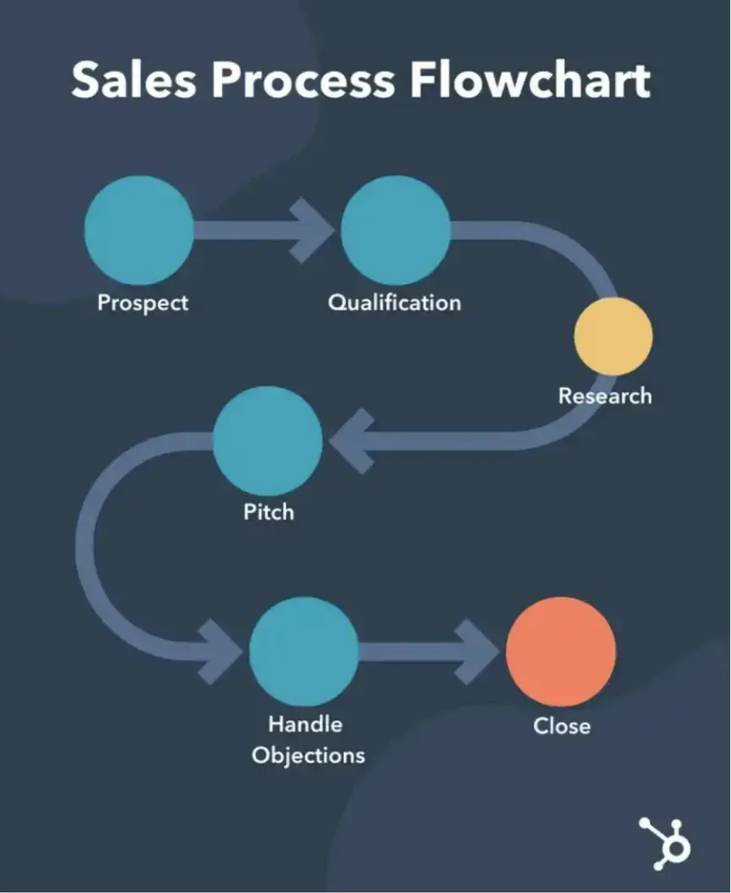
So what does a good sales process look like?
- Prospecting - knowing who your target customer is
- Connecting - finding the right leads
- Researching - checking they're a good fit and understanding their problems
- Presenting- showing your customer your solution
- Handling objections - easing your customers concerns
- Closing - getting your sale over the line!
💡 Tip: Don't try to automate a messy process. Get your map right on paper first. If you know exactly what your "steps" are, you can see where you’re getting stuck and where AI can help.
3 Ways to Grow Your Sales With AI
Once you’ve got your sales map in place, you can start identifying ways to leverage AI to save you time.
Here are three ways you can be using AI in your sales process.
1. Delegate admin tasks
83% of people trying to do sales say productivity is their biggest concern. As small business owners, we know this too well!
That’s where AI tools come in. They’re there to do the manual work that doesn’t necessarily need your full input.
Easy ways to start delegating manual tasks to AI tools:
AI notetakers
If you’re not already using AI notetakers - add one to your tech stack ASAP! They’re easy and free to use, and mean that you can be fully present in your client meetings. Try Otter.ai or Fireflies.ai to get started!
Meeting prep
If you’re using AI notetakers, you’ve got a lot of client data there that can help you prep for future client meetings. Ask an AI tool like Gemini or Claude to analyse your notes and help you prep for your upcoming meetings
Draft personalised content
Similarly, tools like Gemini and Claude can be used to quickly draft personalised content that gives you a V1 draft to work from when making contact with your clients. Gone are the days of staring at a blank screen waiting for inspiration to strike! These tools can quickly whizz up a personalised email - even better if you’ve got the AI notes from your last meeting ;)
2. Proactive prospecting
Researching the right leads used to take hours, but not anymore thanks to the help of AI tools. These tools allow you to quickly find ideal clients and keep your database up to date.
How to use this in your sales strategy:
- AI tools like HubSpot's Breeze can identify "warm" leads by tracking who is searching for your specific solution or visiting your pricing page before they even contact you.
- AI agents (like Alice or Ava) are digital assistants that can do research for you, and then help you to send personalised outreach without you having to do a thing!
- AI tools like Clay or Apollo can keep your database "alive" by automatically updating records when a lead changes jobs or a company gets funding.
3. Data & insights
If you’re a small business owner, chances are you don’t have a data analyst on hand to help you be strategic and identify who's ready to convert in your sales pipeline. But again, AI is here to help!
- Predictive Lead Scoring: Instead of calling everyone, AI tools like Hubspot’s Breeze can rank your leads based on thousands of data points so you know who to call first on Monday morning.
- Conversation Intelligence: Tools like Gong or HubSpot’s AI can "listen" to your sales calls to identify patterns (e.g., "Mentioning the warranty increases close rates by 40%").
Implement these three steps slowly in your sales processes, and we're sure that you’ll start to free up more time to do the business that you love!
And remember, at the end of the day, people buy from people. AI won’t replace the trust you build or the way you solve a customer's problem.
What it will do is clear the "clutter" from your diary. You’re not just sending more emails; you’re making sure the emails you do send are the right ones, to the right people, at the right time.
Get help to grow your sales with AI
If you need support with AI or your sales strategy, we’re here to help! We’ve got 1000s of mentors on hand to offer free advice to help you grow your business.
Join our community and get matched with a mentor today!
About HubSpot for Startups
This blog was inspired by a webinar we hosted in partnership with HubSpot for Startups. HubSpot is an AI-powered customer relationship management system (CRM). Startups can manage contacts in the customer platform, sell better through HubSpot’s robust suite of sales tools, manage all marketing through a full suite of marketing automation tools, and close the loop with customers with service tools. Through HubSpot for Startups, the mission is to connect startups with the right knowledge, tools, and resources needed to scale.
Digital Boost members can access up to 90% off HubSpot for Startups' AI tools. Find out more and apply here.
Many of us dive into mentoring because we have a passion for giving back and sharing our expertise. However, even the most well-intentioned conversation can sometimes miss the mark if it lacks a clear framework. Without structure, sessions can easily devolve into "advice-giving" marathons where the mentor does all the heavy lifting and the mentee leaves feeling even more overwhelmed than when they arrived.
In a recent workshop with our partners at the Association of Business Mentors (ABM), we explored how to structure your mentoring sessions using a simple framework.
Introducing the T-GROW Model
To avoid these pitfalls, the ABM recommends using the T-GROW model as a backbone for your sessions. It’s not a rigid script, but a flow that ensures the mentee remains in the driver's seat.
| Stage | Focus | Key Question |
| T - Topic | Defining the broad area of focus, not just the immediate problem. | "What would you like to talk about today?" |
| G - Goal | Pinpointing the specific outcome the mentee wants by the end of the hour. | "What would you like to leave with today?" |
| R - Reality | Exploring the current situation and the internal/external factors affecting it. | "What is actually filling your time right now?" |
| O - Options | Encouraging the mentee to brainstorm multiple ways forward. | "What options do you see?" |
| W - Will | Gauging the mentee's commitment and defining the very first step. | "What is your first step after this meeting?" |
Pro-Tips for High-Impact Mentoring
During the workshop, the ABM team highlighted several skills that make this structure effective:
- Embrace the pause: Allow for silence. It gives the mentee space to reflect and come up with their own suggestions.
- Gently push back: Instead of giving the answer, ask the mentee what they think. This builds their agency and confidence.
- Stay flexible: Use the model to navigate the conversation, but remain human. If a mentee expresses deep overwhelm, pause to acknowledge it before moving on.

About the Association of Business Mentors
The Association of Business Mentors is the UK’s professional body for business mentoring. They exist to raise the standard of business mentoring nationwide by providing clear professional guidelines, recognised accreditation, and a supportive community of experienced mentors. Helping them to deliver high quality business mentoring which drives positive impact through business growth and wellbeing.
For practicing or aspiring business mentors, ABM offers a trusted path to develop your skills, build confidence, and strengthen your credibility. Members benefit from high‑quality training, CPD opportunities, ethical and professional standards, and a vibrant community of peers who share knowledge, insight, and best practice. Whether you're mentoring independently or within an organisation, ABM provides the structure, standards, and support to help you deliver impactful, effective mentoring.
After years as a dedicated academic, Alice was finishing her PhD at the University of York when she spotted a unique gap in the market: a high-end research and content studio specifically for the "niche of the niche" in financial services.
Connecting with the Digital Boost community and gaining access to one-to-one small business mentoring gave Alice the framework to transition from a "romantically impoverished scholar" to the CEO of Uncommon, an international, six-figure business.
This is Alice’s story.
The Challenge: Navigating the 'Unknown Unknowns'
Coming from a background in sociology, Alice knew she had the analytical skills and the "proclivities" for relationship building. However, moving from a PhD scholarship to a solo venture meant facing a daunting list of "unknown unknowns" - the things she hadn't even considered she needed to know yet.
"I was feeling totally overwhelmed and confused," Alice explains. "Like, what should I be doing right now? This minute, right now?".
Beyond the initial technical hurdles like writing contracts and setting fee levels, Alice faced a personal challenge: the "do it all myself" mindset. She struggled with the nervousness of asking for help, worried about being a burden to those more experienced, while she navigated the shift from freelancing to running a proper company.
How Small Business Mentoring Made the Difference
After a desperate Google search for free business support, Alice found Digital Boost. At first, she thought the quality of the professionals available was "too good to be true," but she quickly found the support she needed to get Uncommon off the ground.
Through the platform, Alice was matched with a mentor named George Ioannou. The relationship went far beyond simple advice; it provided the emotional and professional scaffolding Alice needed to scale. George helped Alice move past her comfort zone by guiding her through the nuances of fee negotiations and the complexities of client relationship management.
"I was so nervous about being a burden," Alice admits, "but George was exceptionally generous with his time and his brain."
This support also extended into the wider Digital Boost network. Through a trusted personal recommendation from another member of the community - the founder of a successful PR agency - Alice was introduced to her first major international lead. This connection was instrumental in helping her secure deals with multi-million dollar global companies, including the software giant Docker.
From Mentorship to Partnership
The synergy between Alice and George was so effective that their journey took an unexpected turn. After six months of mentoring, Alice realised that George’s pragmatic, "brass-tacks" business sense perfectly balanced her own academic and creative strengths.
"He’s very good at the things that I’m not so good at," Alice says. "I recognised that if I could find a way to work with him more closely, it would be to the benefit of the business."
What began as a mentorship evolved into a formal business partnership. Together, they have transformed Uncommon into a global player. The results speak for themselves: within 18 months, the business's monthly turnover jumped from $3,000 to peak months of $25k–$30k. Alice has gone from "begging the internet for help" to working with flagship global clients like Docker and even flying to Hollywood for client award ceremonies.
"I can categorically say that I would not have experienced the level of success that I have... without George," Alice says. "It wouldn't have been possible without him."
We’ve loved watching Alice’s growth since finding our small business mentoring! We know there are big things on the horizon for Uncommon, so make sure you follow Alice’s journey!
Inspired by Alice’s growth? Check out our support and see what you can achieve. We’ve got peer learning programmes, mentoring, and more to support you on your journey!