
We're on a mission to help founders develop digital skills so that their businesses can thrive! With the help of our partners at BT, we've interviewed real-life business owners and mentors so that you can learn from people who've been in your shoes and can show you the way forward.
In this blog, we’re exploring how to grow your business with AI, without getting bogged down in the technical jargon. We know that for many founders, especially in traditional industries, AI can feel like a "huge technical leap" that leaves you feeling a bit frozen.
But you don’t have to be a tech expert to see results. In this blog, we hear from Cath, founder of CDS Printer Solutions, who shares how she moved past the initial "bombshell" of AI to boost her sales by 20% and even grow her team!
You can watch the full video interview here.
Finding excitement with AI
Before embracing AI, Cath describes her printer repair business as "plodding along." They weren't growing; they were standing still. When a mentor first asked Cath why she wasn’t using AI for business growth, she admitted she felt intimidated.
"It was a bit of a bombshell, really," Cath says. "We’re an old-fashioned repair company. I thought, 'We don't do that.'"
But by shifting her mindset, Cath didn't just find a new tool—she found a "jumping-off point" that made the business feel exciting again. Here's how you can dive into AI just like Cath did!
Your guide to mastering AI
1. Treat AI as your "Digital Teammate"
Running a small business can be lonely. You don’t always have someone sitting across from you to help with a difficult email or bust a creative block. AI fills that gap, helping you tackle the "wordy stuff" that usually takes up way too much of your brainpower.
How to use your new "teammate":
- Unblock your marketing Use AI to draft social media posts or blogs that you’ve been putting off.
- Tidy up your writing: Save hours of self-correcting by having AI write proposals and emails for you.
- Brainstorming: Ask questions and request feedback to help you develop and refine ideas.
Does it actually work? Yes! Cath used AI to get "much louder" on LinkedIn, Facebook, and Instagram. Even though she didn't think a printer repair business belonged on Instagram, the results were "mind-blowing"—sales increased by 15% to 20% in just six months.
➡️ Take Action
- Try this today: Ask your AI to create a social media post for you, optimised for each of the platforms that you use (we like Claude or Gemini for this!).
- Watch this Masterclass on how to use AI wisely in your marketing copy
2. Focus on gaps not fear
There’s a big myth that AI is only here to take jobs. But for small businesses, it’s often the exact opposite! When you move away from that fear and focus on the gaps AI can help you fill, that's when the growth happens.
So how do you find your gaps? For Cath, she sat down and listed out all the repetitive tasks she was doing each day. She also reflected on the things she wasn't doing. In Cath's case, this was marketing, which was nonexistent at the time.
Cath used AI to fill her marketing gap. Using it to generate consistent content at scale across multiple social media platforms. This presence on social media steadily built Cath's online following. And after just a few months, she was getting new leads and contracts from social media! Rather than replacing anyone on her team, AI plugged a gap that unlocked more sales. And with more sales, came the need for Cath to hire two new team members for their warehouse!
Ask yourself, what growth could you see if you filled some of the gaps in your business with AI?
➡️ Take Action:
- As Cath recommends, make a list of all the repetitive tasks you do each week. Tasks that are taking up your time unnecessarily are "gaps" that AI can easily fill! Once you've got your list, see which of these gaps AI could fill for you. You'll be amazed how many hours you can reclaim by outsourcing these tasks to your AI!
3. Get great at prompting
The biggest mistake people make is being too vague when prompting their AI tool. If you just say "write me an email," you're not going to get great results.
And what we don't want to do is put out content that's clearly written by AI. We want to ensure that the outputs you're getting look and sound like your business.
To get the best out of your AI, follow this framework when prompting:
- What: What exactly are you trying to create?
- Why: What's the goal of this content?
- Tone: How do you want the content to sound? Professional? Friendly?
- Context: Give it the background info it needs to be accurate.
➡️ Take Action: Try out these simple AI prompts to get started with your AI!
The AI Toolkit: Tools to Try Today
There are so many AI tools out there, but don't worry! You don't need to learn them all. Experiment and see which tools you like, and then stick with what works for you 😊
Here are some of Digital Boost's favourite AI tools:
- ChatGPT, Gemini or Claude: Great for drafting emails, blogs, and social posts.
- Perplexity: Fantastic for research and finding real-time information.
- NotebookLM: A brilliant tool for organising your business notes and ideas, and understanding a large amount of information
- Otter.AI or Fireflies.AI: Amazing for taking meeting notes so you don't have to!
- Intercom or Tidio: Great starting points for Chatbots and customer support
- Klaviyo and HubSpot: Email marketing tools that allow you to build automations and connect with your customers in real-time
- Notion or ClickUp: Two great project management tools that are integrating AI to help you work smarter, not harder, across all your projects
- Zapier: The best in class for connecting all your tools and apps and ensuring they're all "talking" to each other
The Bottom Line
So there you have it! Cath's shown us how to grow your business with AI. As you can see, it's all about taking small steps into the world of AI and beginning to gain confidence and momentum as you go.
You don't need to be a tech genius; you just need to start!
Need support with anything that we've covered in this blog? Join our community and start accessing free mentoring to continue learning with us!
Meet the Founder
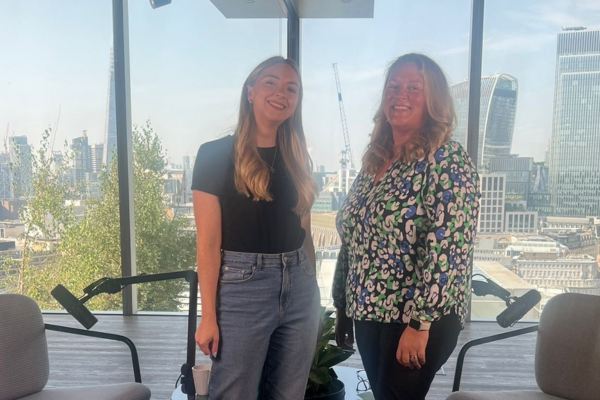
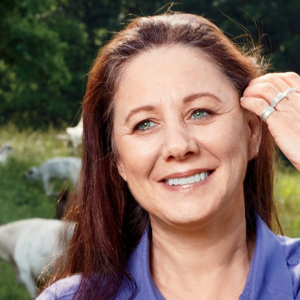
Cath (pictured right) runs CDS Printer Solutions, a printer repair and sales company in Staffordshire. After a mentor challenged her to start using AI, she went from being "frozen" by marketing to seeing record-breaking growth and hiring new staff.
At Digital Boost, we’re all about celebrating small businesses and the incredible people behind them and International Women’s Day (IWD) is the perfect time to do exactly that! 💖
We’ve put together a spotlight on some of the amazing female-founded small businesses and entrepreneurs from across our community. Whether you’re looking for a unique gift, a new service, or just some inspiration from women in business who are making it happen, why not support a female-led small business this month?
Pallavi Dubey

Pallavi is the founder of Grow with Pallavi, providing strategic marketing and copywriting help for SMEs. She offers to stand in the gap of a marketing manager by mentoring in-house team members in social media and digital marketing best practices.
How has Digital Boost changed your business?
Digital Boost has played a huge role in helping me think more strategically about my business. The mentoring and resources gave me clarity on positioning my services, refining my offerings, and building my personal brand with confidence.
Amelia Harris
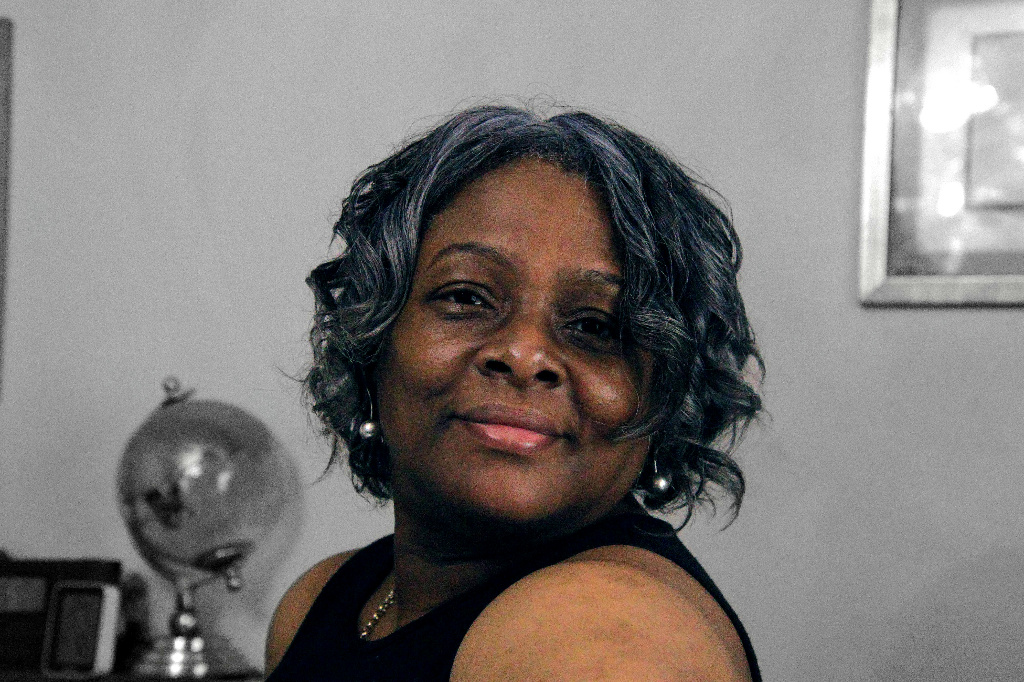
Amelia is the founder of Purple Paradigm. She offers an affordable suite of web consultancy services with an emphasis on accessibility, designed to enhance digital presence.
What's been your proudest moment so far as a founder?
Getting support in my journey, including Access to Work funding for a support worker. It has empowered me and means the ideas in my head can be realised. Before, I didn't have a written voice, but now I do - and as a severely dyslexic founder with ADHD, having a written voice is really powerful.
Abbie Matthews
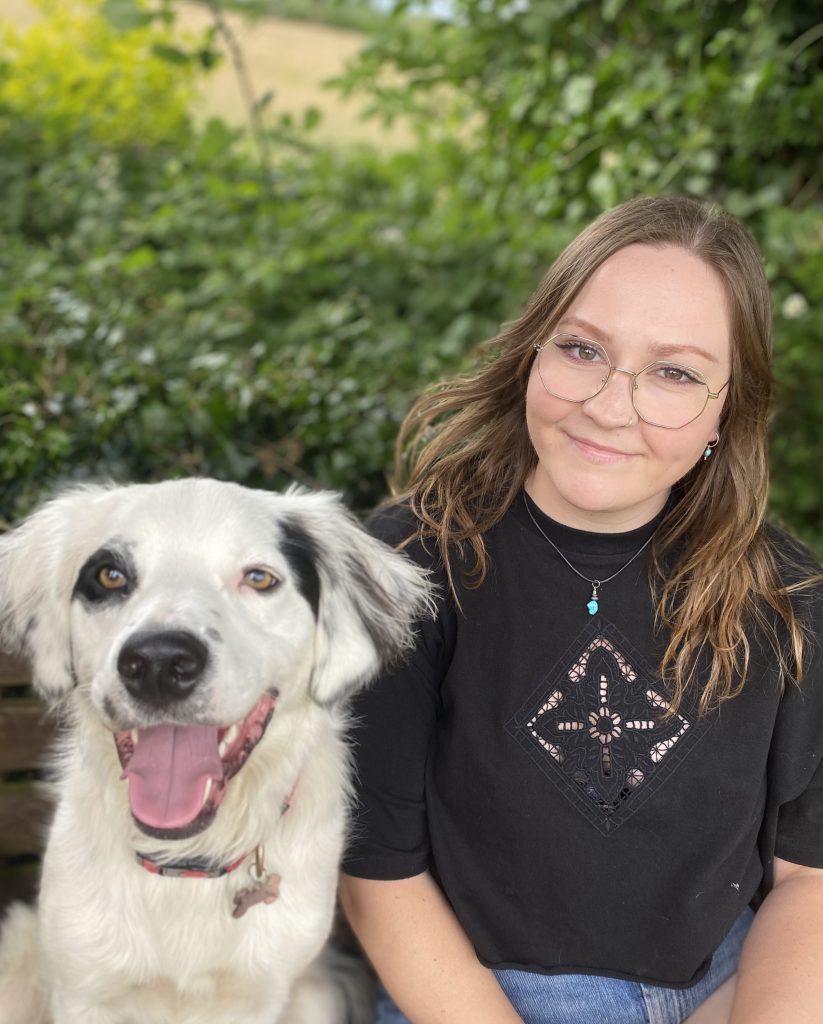
Abbie is the founder of Galactic Grooms, providing a calm, one-on-one dog grooming service in Southampton. Abbie's first dog, Danny, was deaf and blind - she learnt early on that some dogs need extra patience and a gentle touch to feel safe, so she provides a safe space for all dogs and uses only natural ingredients to ensure they leave feeling relaxed, happy, and their absolute best 🐶
What's one piece of advice you'd give a new founder just starting out?
Have buckets patience with yourself, most projects take longer than you expect. Making little bits of progress can mean reaching closer to your goal without getting overwhelmed.
Parven Kaur

Parven is the founder and programme lead of Kids N Clicks, a web resource that helps parents and children thrive in a digital world. Where she shares the latest online safety news and digital parenting trends with safeguarding lead, parents and teachers in bite-sized, practical formats.
How has Digital Boost changed your business?
Digital Boost gave me space to think differently about my business. Through mentoring sessions, I was exposed to strategies and perspectives I had not previously considered. It challenged how I frame my ideas, how I structure growth, and how I think about long term direction rather than just day to day activity. Sometimes it was not about being given a direct answer, but about being asked the right questions. That shift in thinking has been valuable.
Lucy Guthrie
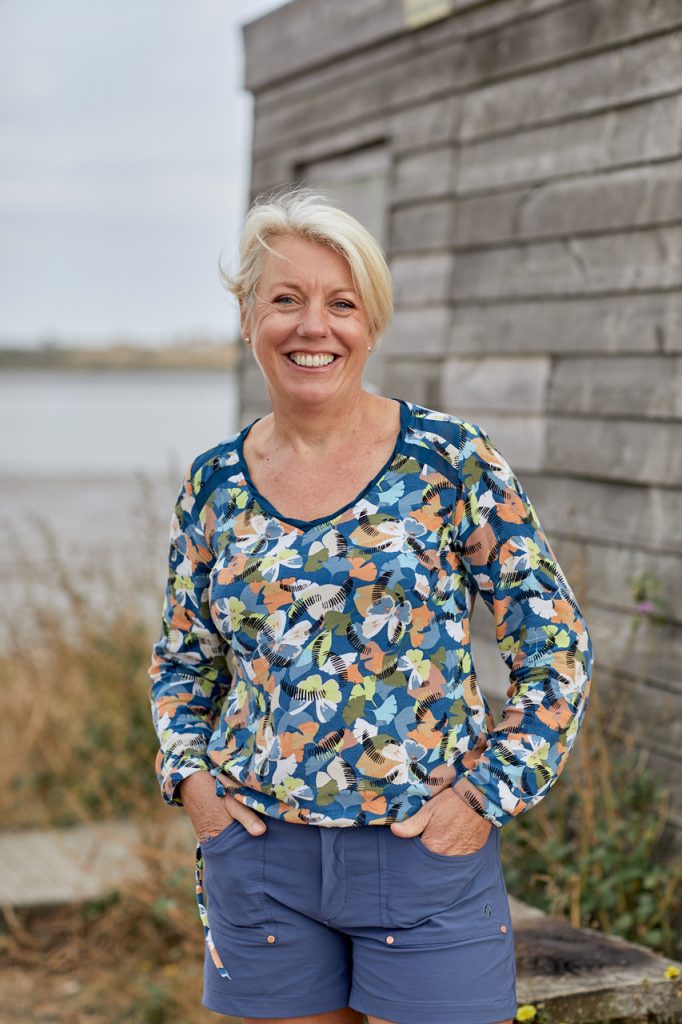
Lucy is the founder of Mad Creative Ltd. She provides marketing-led solutions for businesses that want to improve their customer/client engagement. Aiming to improve online interactions, workflow, overall visibility and B2C connectivity.
What's been your proudest moment so far as a founder?
I was very honoured last year to receive the award for Most Enthusiastic Mentor from Digital Boost. I know lots of people aspire to be business owner and our role as mentors is to listen carefully, provide support and be a cheerleader. Winning the award made me feel I was offering all of this and more.
Kate Edmondson

Kate is the founder of Kate Edmondson Bridal, living her childhood dream to become a wedding dress designer. Kate has over 20 years of experience in bridal fashion, working for some of Britain’s leading bridal designers, allowing her to perfect the exquisite craft of bridal couture, ensuring her brides receive only the highest quality and luxury results for their big day.
What's one piece of advice you'd give a new founder just starting out?
Join Digital Boost and attend as many workshops as possible that you can. Gather as much information on your business, join the Begin course, which is a 6-week course, in-depth training to help you form a business & marketing plan.
Emma York
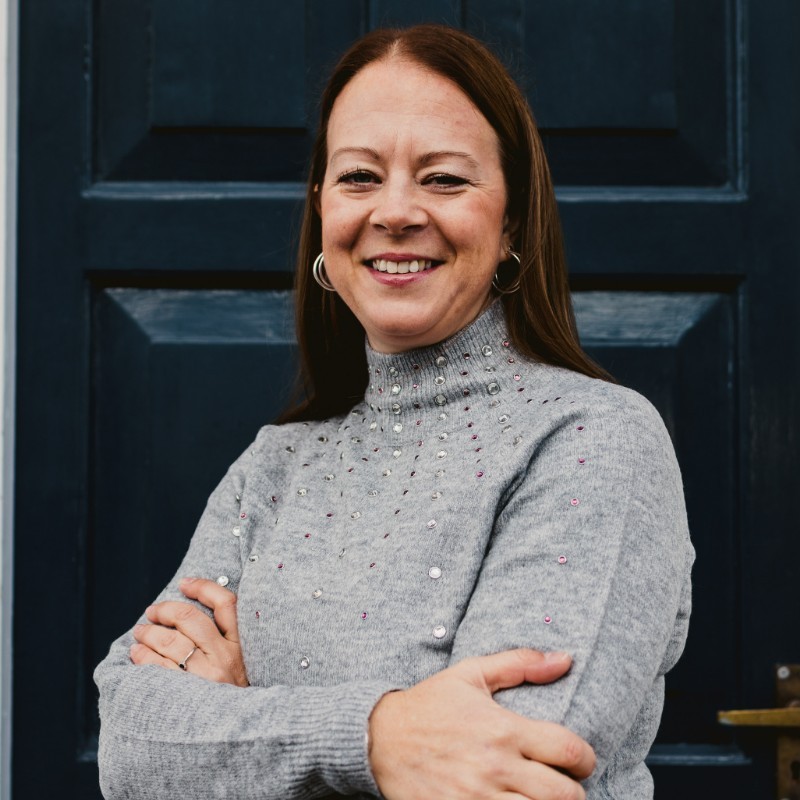
Emma is the founder, social media trainer and digital marketing specialist at Fresh Approach Digital. Providing help and guidance for small business owners with their online presence and digital communications.
What's one piece of advice you'd give a new founder just starting out?
You are not alone. Ask for feedback. We don't know what we don't know and starting out in business is the hardest step, as there are so many parts to tackle. Don't overthink it, is also something I say a lot to my mentees!
Diane Thompson

Diane is the founder and executive coach at Courage Over Comfort Coaching. With over 20 years of leadership and coaching experience, she has successfully led and transformed schools, mentored aspiring leaders, and coached professionals at every stage of their journey to overcome barriers, build resilience, and create lasting impact.
What's been your proudest moment so far as a founder?
There are two that stand out. Seeing the women and leaders I coach step into senior roles with confidence is rewarding. I am also proud of creating practical self-development tools, including my Mindful Moments Wellbeing Journal for Educators and 21-Day Challenge packs, which give people tangible ways to achieve their goals and prioritise their wellbeing.
Supporting female-founded small businesses isn’t just for International Women’s Day - it’s something we can do all year round. We hope you enjoyed meeting some of our fantastic community members! ✨
Want to be a part of a community that truly champions small businesses and charities? Join our Digital Boost family here 👇
To celebrate International Women's Month, we wanted to share some female founders changing the world.
These founders are trailblazers, solving everyday problems and disrupting industries with their pioneering ideas.
Please join us in celebrating and championing these founders! ✨
Sherry Coutu
Founder of Digital Boost
Sherry Coutu is a powerhouse entrepreneur and angel investor who’s spent her career building, scaling, and championing the next generation of tech companies.
Having been a successful angel investor, she turned her hand to philanthropic work, founding Founders4Schools in 2015. Through Founders4Schools, Sherry launched Digital Boost to upskill founders and bridge the tech skills gap.
Image: Sherry Coutu
Melanie Perkins
Founder of Canva
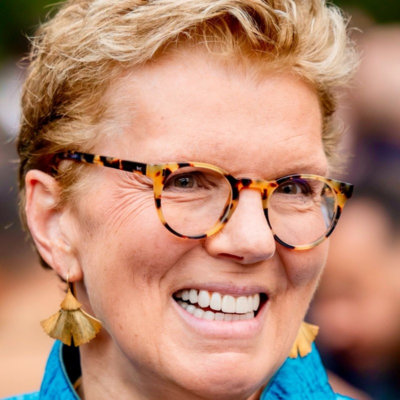
After seeing her university students struggle with clunky design software, the idea for Canva was born! She famously faced over 100 investor rejections, even taking up kitesurfing just to break into the Silicon Valley inner circle and pitch her dream.
As the CEO of Canva, Melanie has totally democratised design and is one of the world’s youngest tech female founders. Not only has she revolutionised the design world, she’s also committed to making the world a better place and commits the majority of her equity to philanthropic causes.
Image: Melanie Perkins

Leah Busque
Founder of TaskRabbit
In 2008, Leah was heading out for dinner when she realised she was all out of dog food. She thought how handy it would be to have someone run her errand for her, and the idea for TaskRabbit was born!
She cashed her retirement fund, quit her 9-5 and spent 10 weeks coding the first platform version of TaskRabbit. Initially canvassing local community groups to gauge interest and handpicking the first taskers, TaskRabbit has grown to 200k taskers and was bought by Ikea in 2017.
Image: Fortune
Whitney Wolfe Herd
Founder of Bumble
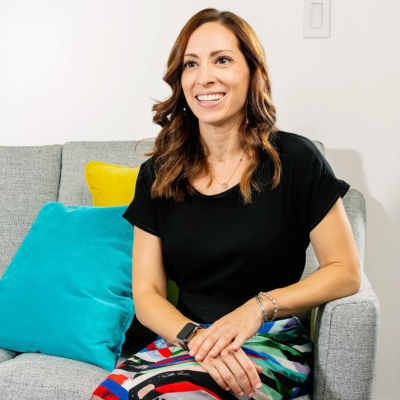
After a messy exit from Tinder ( which she co-founded) Whitney found herself at the centre of a media storm and a brutal wave of online harassment. Instead of retreating, she decided to fix the very industry that had burned her by creating a space where women held the power.
She launched Bumble in 2014, introducing the revolutionary "women make the first move" rule to cut through the toxicity of online dating. At age 31, Whitney became the youngest woman to take a company public, turning her mission for a "kinder internet" into a multi-billion dollar success story.
Image: Forbes

Tessa Clarke & Saasha Celestial-One
Founders of Olio
Tessa was moving home and had leftover sweet potatoes she couldn’t bare to go to waste. She went knocking on neighbours doors until she found her veggies a new home - and the idea for a food saving app was born! She shared the idea with Saasha, who shared her passion for food waste, and they tested a simple food-sharing WhatsApp group with their neighbours.
The Whatsapp was a huge success and led to Olio, a global movement where millions now swap everything from groceries to gadgets to protect the planet.
Image: Olio
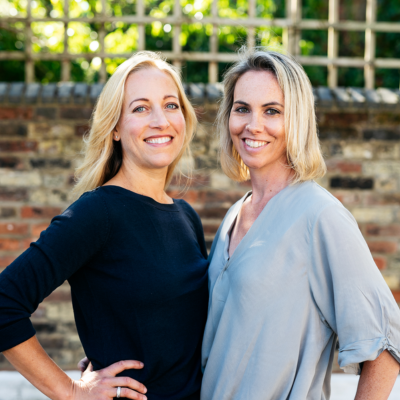
Marcia Kilgore
Founder of Beauty Pie
Having built global giants like Soap & Glory and FitFlop, you might have thought Marcia had achieved all her dreams.
But when she attended a press day and realised the goodie bag contained $5k worth of products that actually cost a fraction of that to make, she realised her audience needed to see behind the smoke and mirrors of the beauty industry - and Beauty Pie was born.
Beauty Pie has totally disrupted the beauty world, allowing buyers to purchase luxury formulas at a fraction of the cost.
Image: Marcia Kilgore

Payal Kadakia
Founder of ClassPass
In 2010, Payal Kadakia spent over an hour frustratedly clicking through "clunky" websites just to find a single dance class in New York City. Realising that the difficulty of booking was stopping people from living their passions, she set out to solve the problem.
It took several iterations of the idea before it was a success, but Payal kept going, firm in her belief that she could build something that made exercise fun again for everyone.
ClassPass is now a billion-dollar company used in over 30 countries.
Image: Chief

Ida Tin
Co-founder of Clue
In 2013, Ida Tin realised that while people could track their sleep and steps, there was no sophisticated tool for women to track their own bodies - and so Clue was born!
Ida didn’t just build an app; she famously coined the term "FemTech" to give a name to an entire industry that male investors had long ignored.
Despite the challenge of pitching women’s health to sceptical rooms of venture capitalists, her vision paved the way for a sector now projected to be worth $1 trillion, and putting women’s health at the centre of the conversation.
Image: Ida Tin

Eshita Kabra-Davies
Founder of By Rotation
Eshita Kabra-Davies was planning her honeymoon when she realised she didn't want to buy a whole new wardrobe she’d never wear again. Having witnessed the impact of textile waste in India, she was inspired to create a solution that combined her love for fashion with a commitment to the planet.
By Rotation started as a side hustle from her bedroom. Eshita hand-delivered clothes to the first few users to build a community founded on trust. Today, the platform has evolved into the "world's largest shared wardrobe," and Eshita is blazing the trail for positive change in the fashion industry.
Image: British Vogue

Sandy Lerner
Co-founder of Cisco Systems
In 1984, Sandy was frustrated that she and her husband couldn’t easily share files between their computers at Stanford. Determined to fix the problem, she co-founded Cisco Systems.
Cisco Systems went on to develop the first commercially successful multi-protocol router. This breakthrough allowed computer networks to communicate for the very first time, and laid the foundations for modern day connectivity.
After a difficult exit from Cisco Systems, Sandy launched Urban Decay, a cosmetics brand that challenges traditional beauty standards.
Image: Medium
Josephine Philips
Founder of SOJO
Josephine Philips founded SOJO in 2021 to solve a personal frustration: making second-hand clothes fit perfectly.
Known as the "Deliveroo of clothing repairs," her app connects customers with local tailors via bicycle couriers, making alterations as easy as ordering a takeaway.
By simplifying how we fix and fit our garments, Josephine is tackling "throwaway culture" and helping the fashion industry move toward a circular economy. Her mission has earned her a spot on Forbes’ 30 Under 30 and transformed how we care for our wardrobes.
Image: Vogue

Katie Lopes
Stripe & Stare
After a divorce, accumulating £1.5 million in debt and personal loss, Katie turned everything around and founded Stripe & Stare.
When her search for the perfect pair of knickers came up short, she set out to create sustainable knickers that were good for the customer and good for the planet!
Her knickers are now cult products and she’s on a mission to empower other female founders through the S&S foundation.
Image: Katie Lopes
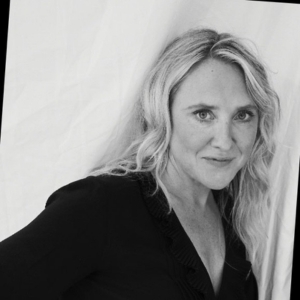
Michelle Zatlyn
Co-founder of Cloudflare
While studying at Harvard, Michelle Zatlyn teamed up with classmate Matthew Prince to enter a business plan competition with a "crazy" idea to fix the internet.
She turned down a high-paying job offer to move to Silicon Valley and launch Cloudflare. Cloudflare is a platform dedicated to making the web faster and more secure. Today, Cloudflare is a global powerhouse that protects millions of websites and one of the most important infrastructure companies in the world.
Image: Forbes

Tan Hooi Ling
Co-founder of Grab
While studying at Harvard Business School, Tan decided to fix a problem that hit close to home. Back in Malaysia, taxi services were so chaotic and unsafe that her mother would stay up late tracking her via a "manual GPS" of text messages to ensure she arrived safely.
Inspired by this experience, Tan and her classmate co-founded Grab. What started as a mission for safety has since transformed transportation across Southeast Asia, growing into a "super-app" with over 5 million drivers and worth over $17 billion.
Image: Tatler Asia

Victoria Jenkins
Founder of UnHidden
After undergoing life-changing surgery in 2012, Victoria Jenkins realised how little adaptive clothing was on the market.
With an extensive career in fashion design, she set about creating clothes that made her customers look and feel amazing whilst supporting their accessibility needs.
UnHidden has been featured at London Fashion Week and continues to go from strength to strength, setting the standard for fashion that’s inclusive for everyone.
Image: Victoria Jenkins

Rachael Twumasi-Corson & Joycelyn Mate
Founders of Afrocenchix
University friends turned founders, Twumasi-Corson and Mate, launched Afrocenchix in 2010, following a conversation about their struggles with hair loss and sensitive scalps.
Through Afrocenchix, they create and sell natural, ethical products tailored to Afro, coily, and curly hair. Their products are now sold in over 54 countries!
Image: Sifted

A 3-Pillar Plan for Consistent Conversions
Many small business owners fall into the "perfection trap" - waiting for the right lighting or a massive following before they start selling. However, implementing a social media strategy for a small business means understanding that in 2026, authenticity beats production value, and strategic content beats "posting for the sake of posting".
If your engagement isn’t turning into income, it’s time to move from scrolling to selling by bridging the gap with a clear social media sales funnel.
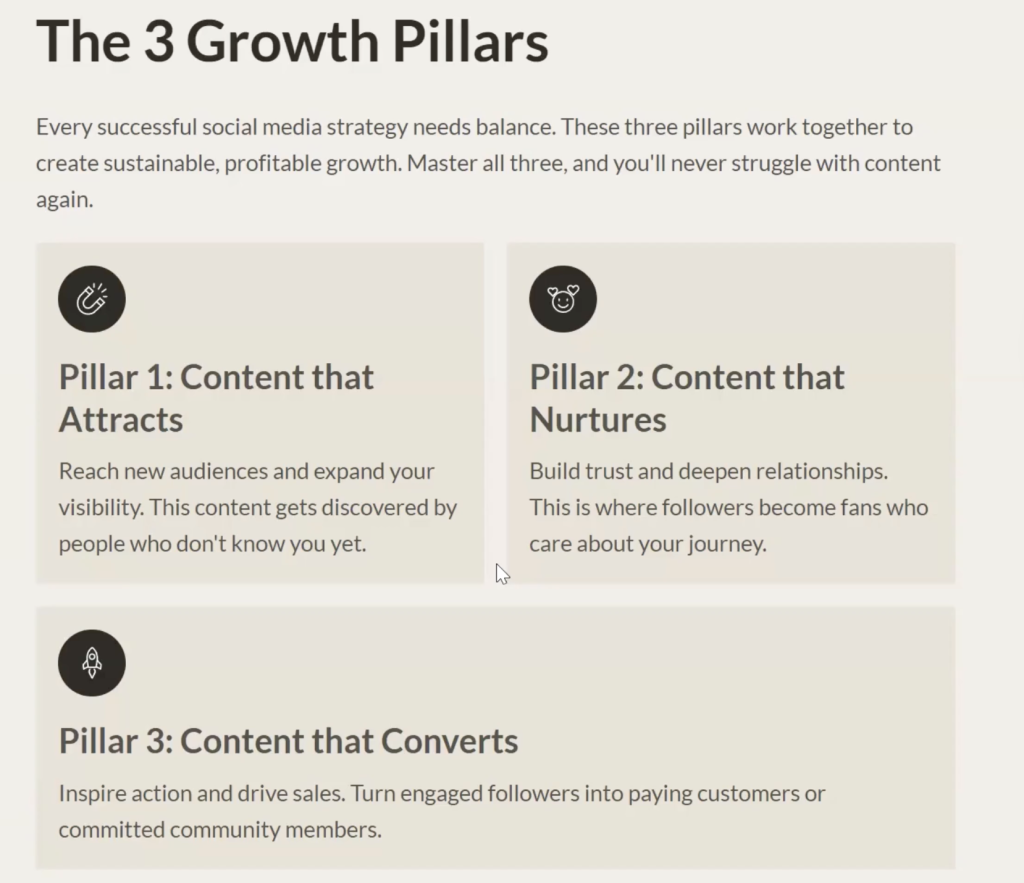
1. The Three Pillars of Social Media Growth
To convert a stranger into a customer, your content must serve three distinct purposes. Think of these as the legs of a stool, without all three, your strategy will fall over.
Pillar 1: Attraction (The Visibility Phase)
This is your "top of funnel" content designed to reach new eyes.
- The Strategy: Use 5–7 second micro-videos or "Trial Reels" (content shown primarily to non-followers).
- The Goal: A strong hook is essential here. You have under 3 seconds to give someone a reason to stop scrolling.
Pillar 2: Nurturing (The Trust Phase)
Once they follow you, they need to know you are a real person who truly cares about their problems.
- The Strategy: Use Silent Storytelling, mini-vlogs, or behind-the-scenes (BTS) clips.
- The Goal: Show your values and your vision. People buy from people they relate to.
Pillar 3: Conversion (The Sales Phase)
This is the direct ask. You must be comfortable telling people how to buy from you.
- The Strategy: Share client transformations, product reviews, and limited-time offers.
- The Goal: Every single post should have a Call to Action (CTA). Tell them exactly what to do next: "DM me," "Click the link," or "Save for later."
2. High-Conversion Tools
Efficiency is the key to avoiding burnout. In 2026, the best brands are using automation to keep the conversation going 24/7.
- ManyChat for Direct Sales: Stop telling people to "click the link in bio" - it’s a point of friction. Instead, use ManyChat to automate DMs. When a user comments a keyword (e.g., "READY"), they automatically receive a link in their inbox. This keeps them in the app and starts a one-on-one conversation immediately.
- Metricool for Consistency: Use a scheduling tool like Metricool to batch-plan your content. Aim for 2 weeks at once so you can focus on running your business instead of worrying about what to post every morning.
3. Selling Without Showing Your Face
A common hurdle for founders is the desire for privacy. You do not have to be a "famous face" to sell effectively. If you are camera-shy, use these alternatives to build a 'human' brand:
- Voiceovers: Let your audience hear your passion while you show clips of your product or workspace.
- Silent Storytelling: Use text overlays on aesthetic, raw video clips (like packing an order or a "day in the life" montage).
- Hand Movements: Simple shots of you working with your hands provide a human touch without requiring a "selfie."
- Mini-Blogs: Use your captions to write honest letters and lessons learned. Words can be just as powerful as video.
4. Common Social Media Mistakes to Avoid
- The "Sales-Only" Trap: If you only post "Buy This," people will tune out. You must nurture and educate before you ask for the sale.
- Chasing Viral Trends Blindly: Don't do a trending dance just because it has a million views. Ask: "Does this value my brand?" If it doesn't align with your personality (classy, energetic, calm, etc.), skip it.
- The "Ghost" Post: Posting a beautiful picture with no caption or CTA. Even a simple "Double tap if you agree" is better than silence.
5. Your 1-Hour Content Action Plan
Don't wait for next week. Set a timer for 20 minutes and follow these steps:
- Brain Dump with AI: Use ChatGPT as a thought partner. Describe your brand and ask for 5 storytelling ideas based on your specific niche.
- Batch Film: Shoot 3–4 raw clips of your product or service in action. Don't edit them to perfection; keep them raw and honest.
- Use a Personalised Hook: Try a hook like: "The day I stopped doing [X] and everything shifted."
- Add a Clear CTA: End with a specific instruction for the viewer.
Conclusion: Consistency Over Perfection
The secret to social media success in 2026 isn't a complex algorithm - it's trust and consistency. Your audience doesn't need you to be a polished influencer; they need to see that you are a reliable expert who provides real value. By shifting your focus from "getting likes" to "building a community," you turn your profile into a high-converting sales engine.
Struggling for Content Ideas?
Let’s be honest: the hardest part of social media isn't posting - it’s knowing what to say in the first place. Sasha put together an amazing content guide to help you never run out of content ideas again 🎉 She has provided ideas for your next hook, video content ideas (long & short-form), prompts and CTA ideas.
Meet the Mentor
This blog post was inspired by a Masterclass delivered by Sasha for our community. Sasha is a Digital Boost mentor and Social Media expert and marketing strategist.
She has been with Digital Boost since 2025 and is passionate about helping small business owners drive growth & engagement across their social platforms and campaigns.
Your Guide to a More Productive, Stress-Free Week 👋
Being a small business founder usually means wearing every hat in the cupboard - from CEO and Marketing Director to Accountant and Customer Support. If you feel like there just aren’t enough hours in the day, believe us, you are not alone!
But what if you could get a little bit of your life back? Imagine having a full extra day every week to focus on the parts of your business you actually love. Recent data shows that using time-saving AI tools can help a busy founder recover 8 to 10 hours a week.
We know the world of AI can feel a bit overwhelming, so we’ve created this guide to help you find the best time-saving AI tools for entrepreneurs that actually work. Let’s look at how to make your daily routine a whole lot smoother. 👇
Where is your time disappearing?
It’s easy to get stuck in 'manual' mode without even realising it. See if any of these common "time-theft" scenarios feel familiar to you:
1. The "Blinking Cursor" Moment: Do you spend your Monday mornings staring at a blank screen, trying to find the right words for a newsletter?
- The Stress: It’s exhausting to start from scratch, and it often means your marketing gets delayed.
- The Fix: Use time-saving AI tools to create a "v1" draft. Think of it as a helpful assistant who gives you a rough starting point. You don't need to be a professional writer; you just need to be the editor who adds your own "spark"! ✨
2. The "Juggling Act": Are you constantly jumping between client calls, your inbox, and your calendar to coordinate follow-ups?
- The Stress: This "context switching" can drain your productivity by up to 40%. It makes it hard to stay in the zone.
- The Fix: Let a "Digital Twin" help you. AI note-takers and smart calendars act like the glue between your tasks, taking notes and organising your schedule so you don't have to worry about the admin details.
3. The "Broken Record" How many times a week do you find yourself typing out the same pricing info or lead times to new prospects?
- The Stress: It’s repetitive work that doesn't actually require your unique creative input.
- The Fix: Set up a friendly AI assistant on your "Front Door." These time-saving AI tools can answer routine questions instantly, so you only need to step in when a conversation requires a personal human touch. 📈

Credit: Zoi Kotsou
Helpful Time-Saving AI Tools to Try in 2026
You don’t need a tech degree or a big budget to start seeing results. We recommend starting with a few core tools that offer the most immediate "wins":
For writing and ideas: ChatGPT and Claude are brilliant for drafting emails or social media posts. If you already use Word or Google Docs, check out Copilot or Gemini - they sit right inside your documents to help you as you work.
To help with meetings: Tools like Otter.ai or Fireflies act as your personal note-taker. They join your video calls and provide a simple list of action items so you never have to re-watch a recording.
For a stress-free calendar: Motion is a standout. It uses AI to manage your calendar, automatically reshuffling your tasks if a meeting runs over and protecting your "deep work" time.
Things to keep in Mind
While AI is a powerful assistant, it still needs you in the driver's seat! To keep things running smoothly, keep these principles in mind:
- Double-check the facts: AI can sometimes get a little confused with dates or data. Give everything a quick once-over before sending it to a client.
- Keep your voice: AI can be a bit generic. Use it for the structure, but make sure to add your own personality to the final version.
- Privacy is key: Just like you wouldn't leave your passwords on a bus, don't put sensitive financial details or private client info into public AI tools.
- Start small: Don't feel you have to do everything at once! Pick the one area that causes you the most stress and start there. 💪
Want More Support?
If you’re not sure which time-saving AI tools are right for your specific business, or you’re worried about the tech setup, don't worry - we’re here to help! We have plenty of mentors ready to walk you through it for free.
In the fast-paced landscape of the UK economy, small businesses and charities are the "heartbeat" - yet they often face the digital journey alone. Since our inception, Digital Boost has been on a mission to bridge that gap by combining the power of technology with the kindness of people, to bring small business mentoring to the UK.
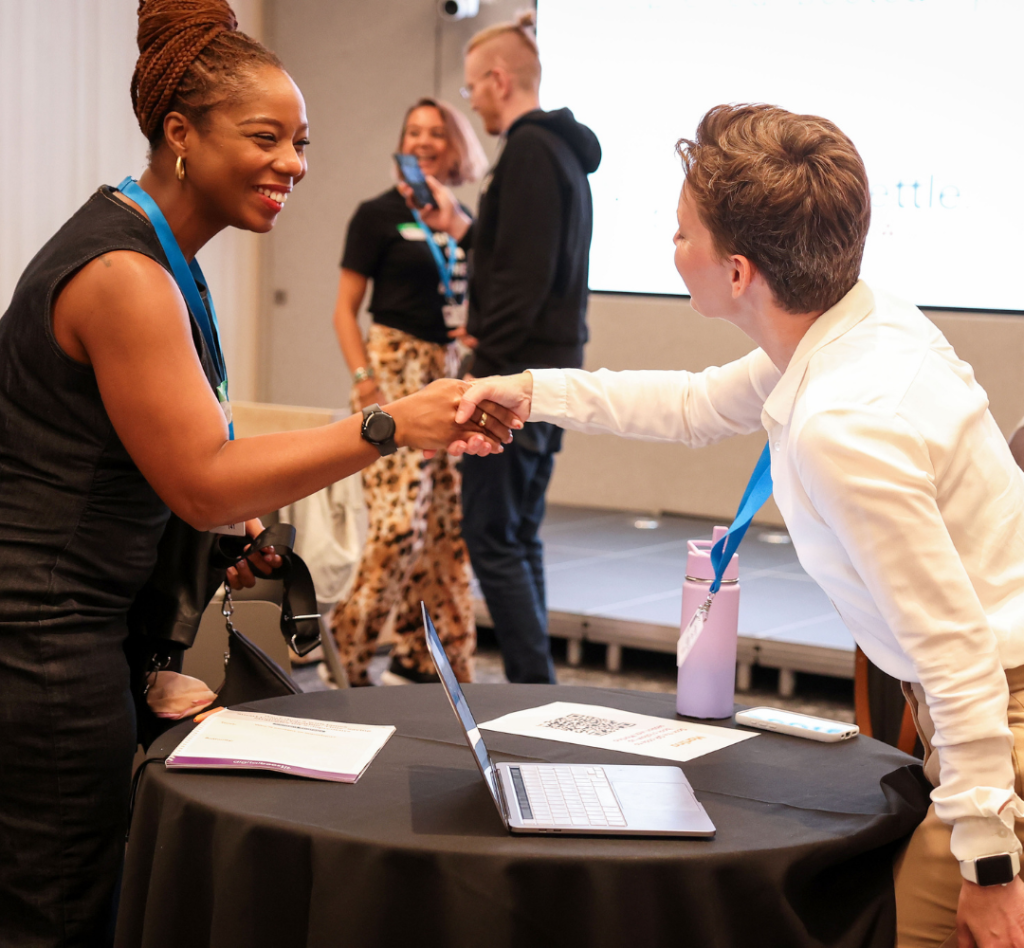
What started as a simple idea to bridge the digital gap has grown into a nationwide movement. This year, we aren’t just looking back at the last 12 months - we’re celebrating five incredible years of providing small business mentoring in the UK and supporting our vibrant community of small businesses, charities, and freelancers! 🎈
The Big Numbers: 5 Years of Social Impact 📈
From a small "experiment" to a community of over 40,000 people, it’s been a journey fueled by one thing: the power of human connection. Since we began, the Digital Boost community has proven that when we share what we know, everyone wins.
Over the last five years, this community has achieved extraordinary things together:
- 36,456 small businesses, charities, and social enterprises supported.
- 5,260 skills-based volunteer mentors engaged.
- 99,643 verified hours of free human support delivered.
- 24,418 1:1 mentoring connections made.
- 74% of support requests are successfully matched within just 72 hours.
2025: Leading the Way in Digital Skills Training
The digital world moves fast, and in 2025, we made sure our community stayed ahead of the curve. This past year was all about making digital skills training even more accessible and future-ready:
- Demystifying AI: We welcomed 300 dedicated AI mentors and delivered over 8,000 hours of AI training for small businesses, helping them use new tech ethically and effectively.
- Hyper-Local Support: We upgraded our platform to allow for local matching, connecting mentors and mentees in their own neighborhoods to boost local economies.
- Empowering Female Founders: In 2025, our award-winning programme, Begin (delivered in partnership with Buy Women Built and NatWest) reached a landmark milestone by supporting its 1,000th female founder!👩💻

Why Small Business Support Matters ❤️
Small businesses and charities are the heartbeat of our economy. But being a founder can be lonely, and the digital landscape can be overwhelming. This is why accessible small business mentoring in the UK is so vital.
Whether it was helping an organic skincare brand scale up or guiding a traditional print shop through an AI marketing transition, our mission remains the same: to ensure no small organisation is left behind.
What’s Next for Digital Boost? ✨
We’ve built a proven model for skills-based volunteering, and we’re not stopping here. As we look toward the next five years, we are more committed than ever to scaling our impact and reaching even more founders who need a "boost."
To our mentors, our partners, and our incredible community: Thank you for being part of the story so far. Let’s keep growing together! 💛
Your Guide to a Stress-Free Transition 👋
In the world of small business, tax isn’t usually the most exciting topic. But with big changes coming to how we report income, it’s one you can’t afford to ignore!
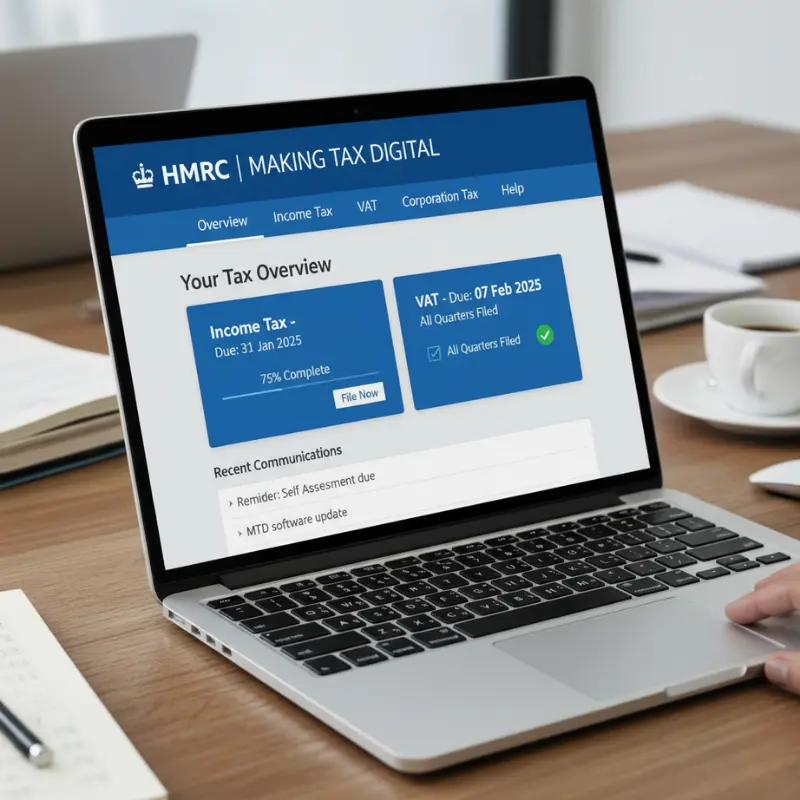
HMRC is introducing Making Tax Digital (MTD) for Income Tax starting in April 2026. For many of us DIY-ing our own accounts, this shift from an annual return to quarterly updates can feel like a lot to take in.
But don't worry, we're here to help! We've created a Making Tax Digital checklist 2026 so you can get ahead of the game, stay compliant, and keep your focus on growing your business 😊
Let’s dive into the steps you need to take and how to make the transition smooth 👇
1. Check Your Income Threshold
The Mistake: Assuming MTD doesn't apply to you yet.
Fix It: Check your gross income (total sales) from the 2024/25 tax year. If it’s over £50,000, you are in the first wave for April 2026. If it's over £30,000, you have until April 2027. Knowing your date is the first step to staying calm!
2. Ditch the Manual Spreadsheets
The Mistake: Relying on paper ledgers or basic spreadsheets that don't connect to HMRC.
Fix It: MTD requires "digital links." Start looking for MTD-compatible software now. Tools like Xero, QuickBooks, or FreeAgent are great options that do the heavy lifting for you.
3. Stop the "January Scramble"
The Mistake: Waiting until the end of the year to organise your receipts.
Fix It: Under MTD, you’ll send updates every three months. Start a habit of logging your expenses weekly. Not only does this keep HMRC happy, but it also gives you a real-time view of your profit! 📈
4. Separate Your Bank Accounts
The Mistake: Mixing personal spending with business transactions in one account.
Fix It: If you haven't already, open a dedicated business bank account. It makes digital record-keeping faster because you won't have to filter out your weekly grocery shop from your business expenses!
5. Snap Your Receipts on the Go
The Mistake: Losing physical receipts or letting them fade in a shoebox.
Fix It: Use an app (like Hubdoc or Dext) to snap a photo of your receipts the second you get them. Most accounting software includes this for free, and it means your digital records are always backed up. ✨
6. Understand the "Quarterly Update"
The Mistake: Thinking you have to do a full tax return four times a year.
Fix It: Don't panic! A quarterly update is just a summary of your totals, not a full audit. Your software will usually generate this for you with a few clicks.
7. Check Your "Digital Links"
The Mistake: Copying and pasting data between different software or spreadsheets.
Fix It: HMRC wants data to flow digitally. Ensure your setup doesn't rely on "manual intervention" (like re-typing numbers). If you use a spreadsheet, you’ll need "bridging software" to send the data safely.
8. Chat with a Professional Early
The Mistake: Waiting until March 2026 to ask an accountant for help.
Fix It: Accountants will be very busy when the deadline hits! Book a chat now or connect with a Digital Boost mentor to discuss which software fits your business best.
Ready to Master Your Taxes?
Many of these steps are quick wins you can start today! We recommend starting with your software choice first - once that’s in place, the rest of the checklist becomes much easier to manage. Once you've completed these steps, you'll be MTD-ready and ahead of the curve! 💪
Email automation for small businesses can feel overwhelming – there’s a lot of noise and contradicting advice online!
One expert says send at 9 am, another says 4 pm. Some suggest complex logic, while you're just trying to keep your business running day-to-day. If you feel exhausted just thinking about your inbox, you aren't alone!
In this guide, we’re sharing how to simplify your email automations, why they matter, and a simple 3-week plan to get the best results without the stress.
Let’s dive in!
Why Email Automation Should Be Your Digital Assistant
While manual newsletters are great, email automations do the heavy lifting in the background. They act like a digital assistant that works while you sleep!
We love email automation for small businesses because:
- It saves you time by handling repetitive tasks automatically
- It ensures consistency even when you are busy juggling other areas of your business
- It builds trust by showing up for your customers at exactly the right moment
- It increases sales without any additional manual effort from you
The "Big Three" Automations to Start With
You don’t need fifty different workflows to see success. Most small businesses only need these three core touchpoints to get things rolling:
1. The Welcome Email
This is your first digital impression. It’s triggered the moment someone signs up for your list. Use it to introduce yourself, set expectations on how often you'll email, and provide immediate value (like a tip or a discount).
2. The Abandoned Cart Reminder
Life gets in the way, we know that! This is a gentle nudge for customers who added items to their cart but didn't finish the purchase. Keep the tone kind and helpful, rather than "salesy," to reassure the customer.
3. The Post-Purchase Thank You
The journey doesn't end at the checkout. This email builds loyalty by showing genuine appreciation, explaining the next steps for delivery, and encouraging a feedback loop or review.
Using AI to Save You Time
One of the biggest hurdles for founders is knowing what to say. AI tools like ChatGPT or Gemini can help you draft these emails in seconds.
Remember: you are always in control. You don't have to use a robotic output - use it as a starting point, then add your own personality and brand voice.
Try this AI prompt to get started:
"Write a warm welcome email for my small business [Name]. We provide [Service/Product]. Include a friendly introduction, tell them to expect weekly tips on [Topic], and offer a 10% discount code: SAVE10."
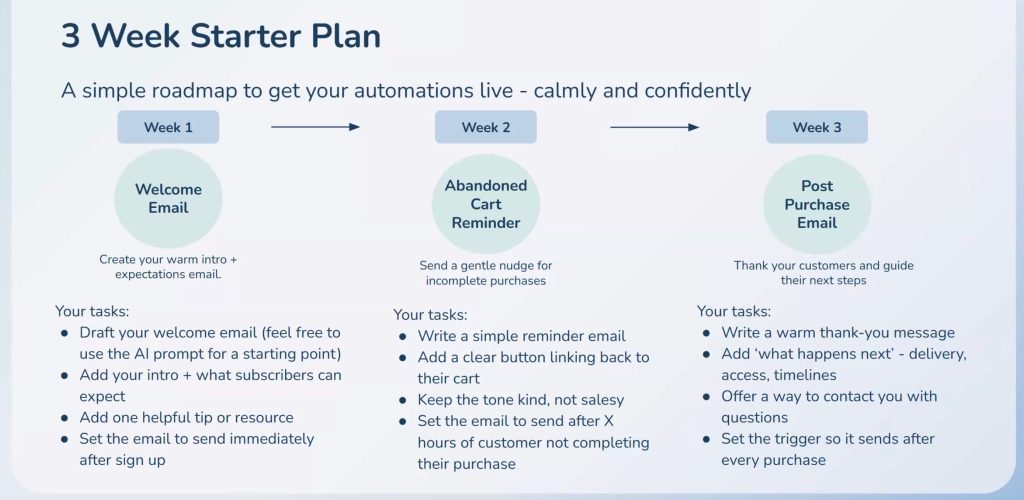
Your 3-Week Email Automation Plan
Don't try to implement everything at once. Break it down into manageable tasks so you can go live confidently.
Week 1: The Welcome Email
Draft your intro. Tell subscribers what they’ll get from you (guides, tips, or early access). Set it to send immediately after someone signs up via your website form.
Week 2: The Abandoned Cart
Write a simple, friendly reminder. Most platforms like Mailchimp or Shopify have a standard trigger for this. Set it to send a few hours after a customer leaves your site without purchasing.
Week 3: The Post-Purchase Thank You
Focus on appreciation! Outline what happens next with their order and provide your contact information so they feel supported.
Credit: Ceren Cetin
Measuring Success
Once your automations are live, these are the simple metrics to keep an eye on:
- Open Rate: Tells you if your subject line is engaging.
- Click Rate: Shows if your content is interesting to your audience.
- Conversion Rate: The ultimate goal - how many people completed the action you wanted!
Want More Support?
If you’re about to embark on your email marketing journey or want support to review your current automation plan, our mentors can help!
Our mentoring is free to access and unlimited 😊
Meet the Mentor
This blog post was inspired by a Masterclass delivered by Ceren for our community. Ceren is a Digital Boost mentor and an email marketing specialist at Bloomberg.
She has been with Digital Boost since 2023 and is passionate about helping small business owners simplify "overwhelming" topics into easy, actionable steps.
Connect with Ceren here.
As 2025 comes to a close, we've been reflecting on our year and the achievements that we've had 🎉 Through our small business mentoring, Masterclasses, programmes and in-person events, we're proud to say that we delivered over 165,000 hours of live support.
It's been a year packed with new programmes, fantastic partnerships, and big changes to our mentoring platform. Let's dive into 2025's milestones 👇
Highlights of 2025
A year of events
If 2025 could be summed up in one word, it would be 'connection'. We delivered 24 in-person events for our community and supported over 1000 founders through these events!
- International Women's Day: We welcomed nearly 200 guests to our IWD event. It was a day for inspiration and connection and was supported by our partners at NatWest
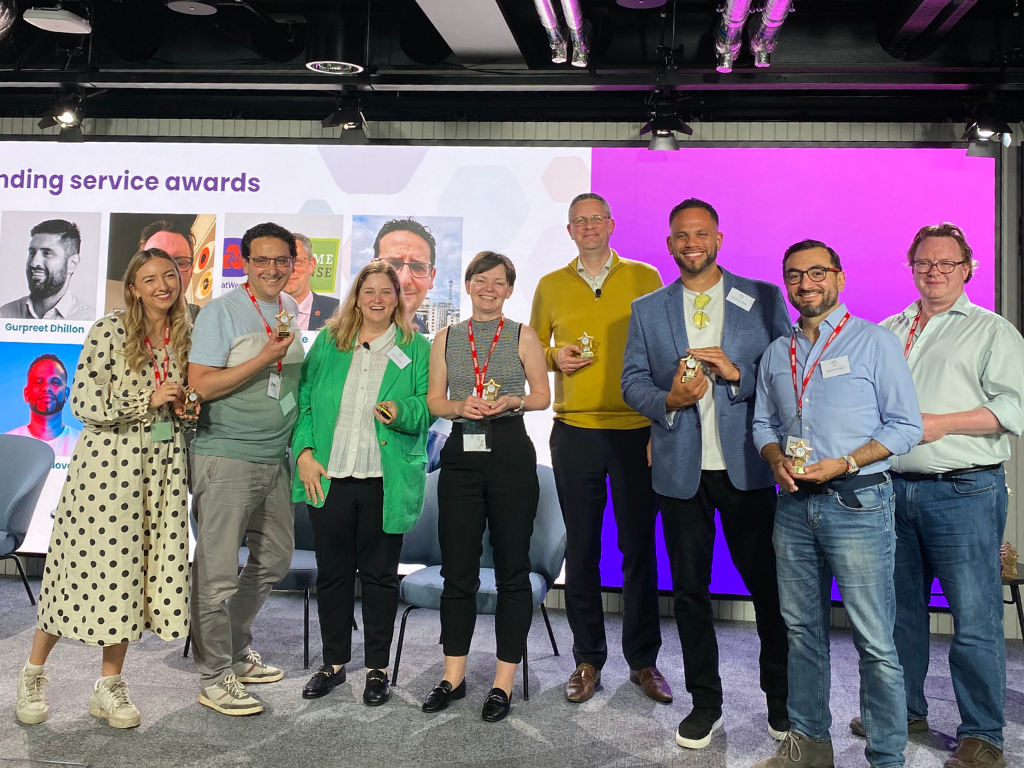
- Volunteer Celebration Event: We held our very first volunteer celebration event in the summer! This was a chance for us to celebrate our volunteers' hard work and also spotlight some of our top mentors from the community 🩵
- Small Business Roadshow: In partnership with BT, we did a Roadshow tour of the UK! Our tour took us everywhere from Barnstaple, right up to Durham, and it was a pleasure meeting so many inspiring business owners out in their local areas.
- Small Business Bootcamps: Our flagship events took place in London and Edinburgh this year. Supported by NatWest and Constant Contact, we supported over 300 founders at these events. Across the day we delivered expert Workshops, small business mentoring, and created meaningful connections!
It's been fantastic getting out into the community and meeting so many of you! We're excited to deliver even more events in 2026 and have the chance to meet more of you in-person 😊


A record year for programmes
2025 stands out as Digital Boost’s biggest year yet for structured programmes! We delivered five major programmes alongside our amazing partners in 2025. And we supported over 1,800 small business owners, helping them to upskill and develop their organisations.
- Through Begin, we support over 300 female founders to start and grow their product businesses! This programme is sponsored by NatWest and supported by BuyWomenBuilt and we can't wait to deliver it again in 2026
- Through Jumpstart, our community was able to 'jumpstart' their marketing and get unstuck! With BT's support, we ran three cohorts of this programme in 2025.
- With our AI Essentials programme, we embarked on a new project with Google! Hundreds of students registered through Google’s AI Opportunity Fund to take the Google AI Essentials course and earn certification, embracing growth with AI.
- In partnership with Constant Contact, our Email Marketing programme supported over 260 founders! Through this programme, they learned how to successfully harness the power of email marketing to grow their businesses.
- We also supported Visa's Pioneers Everywhere programme! We delivered a 6-week course for 30 female refugee founders and offered them long-term mentoring to support and develop their businesses!
A platform upgrade
A final highlight from 2025 was launching the upgraded version of our platform for the community! With this upgrade, we streamlined the scheduling process, making it easier for small business mentoring sessions to be booked. And we enabled our volunteers to add learning profiles to their accounts. Ensuring our mentors can upskill and develop was extremely important to us, so we're really proud of this new feature! Thanks to this upgrade, it'll now be easier than ever for us to keep developing new features and deliver an amazing experience for our community.
We're working hard behind the scenes on new features that will be launching in 2026, so watch this space!
Conclusion
2025 will go down as one of the proudest moments in our Digital Boost journey. It's been an exciting and inspiring year and we can't wait to see what 2026 holds for us!
If you're not already in the Digital Boost community, why not join us for the ride?
Whether you're a founder looking to get support, or a professional who'd like to give back through volunteering, there's a place for you in the Digital Boost community 🤗
Ready to stop guessing and start growing? Growth Metrics for Small Businesses are the compass you need. If you're looking to identify the metrics that matter for small businesses but aren't sure where to start, you're in the right place.
In this guest blog, Sid simplifies the process, showing you how to focus on your North Star Metric and key performance drivers to unlock clear, measurable success for your business.
Why Do Growth Metrics Matter?
Too many businesses are measuring everything, yet seeing progress on nothing.
If you’re a founder, marketing lead, or SME owner, you know the drill: dashboards overflowing with CTRs, impressions, CAC, bounce rates… But when growth stalls, none of these tell you what to fix first.
The truth? Most small businesses are looking at vanity metrics, not the levers that actually drive growth. To succeed, you need to focus on the right growth metrics for small businesses.
Start With Your North Star Metric (NSM)
The North Star Metric is the one number that captures the core value you deliver to customers.
It’s not your revenue. It’s not your traffic. But it’s what happens when people truly use and love your product or service.
- For Spotify: Time spent listening
- For Airbnb: Nights booked
- For Slack: Messages sent
How to Find Your North Star:
Ask:
- What activity means my customers are getting real value?
- If I grow this number, will revenue naturally follow?
- Can every team influence it?
💡 Example:
- An eCommerce brand’s NSM might be repeat purchases per month.
- A SaaS tool might choose daily active users (DAUs).
Your NSM is your growth compass. Every effort should move this needle.
Credit:SlideSalad
Break Down Growth Metrics With Key Drivers
Your NSM is a lagging indicator. It only shows progress after the fact. To influence it, you need to focus on Key Drivers, the tier 2 metrics that push the NSM forward.
For effective metrics management, think of it as unfurling:
"If I want more DAUs, I probably need: More new signups (Acquisition). Higher activation (users experiencing the ‘aha’ moment). Better retention (keeping users coming back)."
For an SME, common Key Drivers might include:
- Acquisition: Traffic, leads, signups
- Activation: First purchase, onboarding completion
- Retention: Repeat customers, churn rate
- Revenue: Average order value, upsell rates
Rule: Only 3–4 Key Drivers at a time. Any more, and you lose focus.
Identify Your Rate-Limiting Step
Not all Key Drivers are created equal. One of them is almost always the bottleneck holding you back - the Rate Limiting Step.
How to Spot It:
Ask:
- If I double this driver, does my NSM skyrocket?
- Which driver currently feels most broken?
💡 Example:
- If retention is poor, no amount of new customers will help.
- If acquisition is low but retention is strong, focus there first.
This is where prioritisation begins.
The Nuance Metrics: Less Is More
Beyond your NSM and Key Drivers, there are supporting metrics - call them Nuance Metrics.
However, these add context but don’t drive decisions. Limit to 3–5.
Examples:
- Customer Acquisition Cost (CAC)
- Lifetime Value (LTV)
- Revenue per User
- Marketing Qualified Leads (MQLs)
- Churn Rate
Rule: If a metric doesn’t help you decide what to do next, ditch it.
Growth Metrics: Stop Being Busy, Start Growing
Every idea, every campaign should pass this litmus test:
“Will this directly move our Rate Limiting Step and, by extension, our North Star?”
💥 Trade show in the US? Only if it impacts a Key Driver.
💥 New TikTok strategy? Only if it solves the current bottleneck.
This isn’t about doing more. It’s about doing what matters most.
Key Takeaways for Small Businesses
- Pick a North Star Metric - your growth compass.
- Identify 3–4 Key Drivers pushing it forward.
- Find the Rate Limiting Step - fix the bottleneck first.
- Track a few Nuance Metrics for context.
- Focus on decision-driving data, not dashboards.
Meet the mentor
This guest blog was written by Sid, a sustainable growth strategist at Unlock Growth and volunteer mentor for Digital Boost!
With 24 years of experience transforming startups and scale ups into high growth businesses, Sid knows a thing or two about stopping wasteful marketing and delivering a positive return.
Sid specialises in developing strategic blueprints that prioritise customer insights and align all marketing activities with meaningful growth goals, helping businesses stop 'being busy' and unlock growth.
Connect with Sid here.