
The 4 Financial Statements Every Founder Needs to Understand

There are four financial statements every founder should know: the profit and loss account, the balance sheet, the cash flow statement, and the cash flow forecast. Together, they tell you whether your business is profitable, how stable it is, where your cash has been, and where it’s heading next.
Right now, we know those terms may sound scary – especially if you’ve never come across them before!
That’s why we’ve partnered with Xero for Good so that we can demystify these terms and get you confident managing your business finances. 💪
Why do these financial statements matter?
First off, knowing your numbers is key to building a business that lasts. Now, these four statements we’re talking about today are essentially your business’s medical records. On their own, each statement gives you a small piece of the health. But put all those pieces together and track over time, and you’ve got a full bill of health, telling you what’s working and what needs attention!
So now we know why these statements are so important, let’s dive into what they each mean.
What Is a Profit and Loss Account (P&L)?
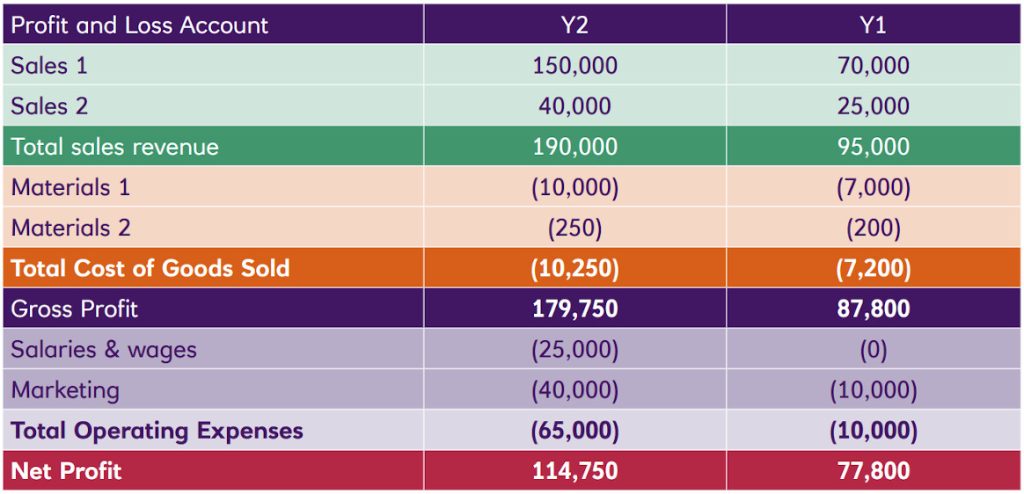
A profit and loss account, or P&L, tracks your income and expenses over a set period of time to show whether you’ve made a profit or a loss.
At the top sits your income: the money coming in from sales, or things like funding and investment. Below that are your expenses, split into two types. Direct costs (also called cost of goods sold) are tied directly to producing what you sell, like materials, and they tend to move up and down with how much you produce. Indirect costs, or overheads, are everything else that keeps the business running, like rent or marketing, and some of these stay fairly fixed.
From there, two numbers matter most:
- Gross profit = income minus direct costs. This is what’s left to cover your overheads.
- Net profit = gross profit minus indirect costs. This is your actual profit.
Example: Say your candle business brings in £5,000 in sales this month. Your wax, wicks, and jars (direct costs) cost £1,500, so your gross profit is £3,500. After paying £1,200 in rent, marketing, and other overheads, your net profit is £2,300. That £2,300 is what your business has actually made, not just what it’s sold.
You can produce a P&L weekly, monthly, quarterly, or annually. The more often you check it, the sooner you’ll spot trends worth acting on.
⬇️ Download Xero’s free P&L template here!
🎥 Want to see it in action? Watch the P&L video on our resource centre for a full walkthrough.
What Is a Balance Sheet?
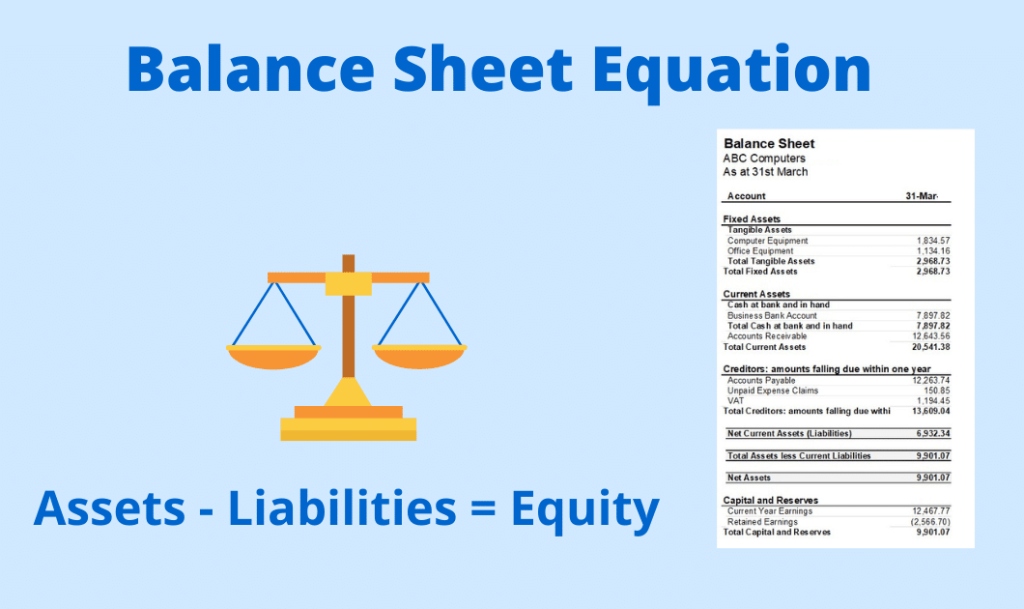
A balance sheet gives you a snapshot of what your business is worth at a single point in time, made up of three things: assets, liabilities, and equity.
- Assets are anything of value you own: cash, inventory, or money owed to you.
- Liabilities are anything you owe: loans, unpaid bills, or tax due.
- Equity is what’s left over, essentially what the business is worth once liabilities are covered, including money invested and profits retained.
Your P&L can show you’re profitable on paper, but the balance sheet is what tells you how stable that profit actually is.
Example: Your business has £8,000 in the bank, £2,000 of stock, and £1,000 owed by customers (assets: £11,000 total). You owe £3,000 on a business loan and £1,500 in unpaid supplier invoices (liabilities: £4,500 total). That leaves £6,500 in equity: what the business is genuinely worth right now.
Comparing balance sheets from different points in time helps you spot growth, risk, and financial patterns, like whether you’re carrying more stock because customers pay you upfront, or whether generous payment terms mean more money owed to you than cash in hand. Lenders and investors lean heavily on this document too, since it shows them exactly how much risk they’d be taking on.
⬇️ Download Xero’s free balance sheet template
🎥 Want to see it in action? Watch the balance sheet video on our resource centre for a full walkthrough.
What Is a Cash Flow Statement?
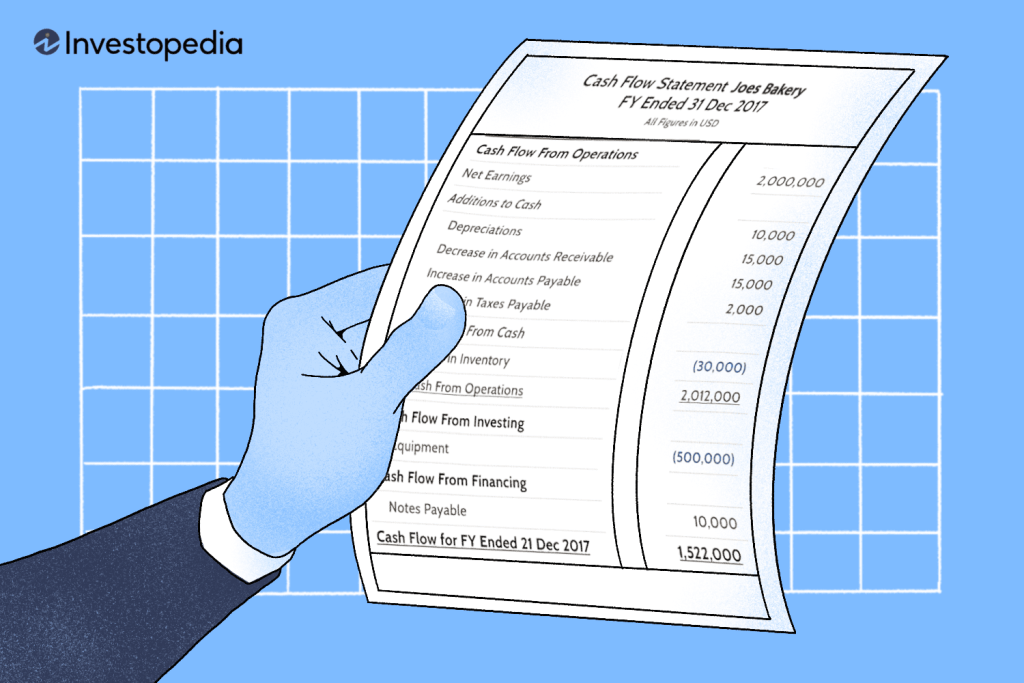
A cash flow statement looks at past cash movements in and out of your business over a set period. It shows where your money came from, where it went, and whether it left faster than it arrived.
Cash moves through your business in three ways:
- Operating activities: cash earned from sales and spent running the business
- Investing activities: cash spent or received buying or selling assets, like equipment or property
- Financing activities: money received from or repaid to lenders or investors, plus anything you’ve put into or taken out of the business yourself
Example: Over the last quarter, your operating activities brought in £4,000 more than they spent. You bought a new piece of equipment for £1,500 (investing), and repaid £800 of a loan (financing). Even though your P&L might show a profit, this statement shows exactly how that profit translated (or didn’t) into cash actually sitting in your account.
Because it’s retrospective, this statement is brilliant for spotting patterns, like seasonal dips or recurring costs, and is usually prepared by an accountant or bookkeeper at year-end, depending on the size and complexity of your business.
⬇️ Download Xero’s free cash flow statement template
🎥 Want to see it in action? Watch the cash flow statement video on our resource centre for a full walkthrough.
What Is a Cash Flow Forecast?
A cash flow forecast is the forward-looking sibling of the cash flow statement. Your cash flow statement looks at the past, and your cash flow forecast looks at the future. It predicts how much cash is likely to flow in and out of your business, so you know whether you’ll have enough to cover what’s coming.
There are five parts to track:
- Starting balance: cash in your business accounts right now
- Money in: expected income, like sales, interest, or loans
- Money out: expected spend, like rent, wages, supplies, or tax
- Net cash flow: money in minus money out
- Closing balance: what you expect to have left at the end of the period
Example: You start the month with £3,000. You expect £6,000 in sales and a £1,000 loan (money in: £7,000). You expect to spend £5,500 on rent, wages, and stock (money out: £5,500). Your net cash flow is £1,500, giving you a closing balance of £4,500. If you also know a big supplier payment is due next month, this forecast gives you time to plan for it, rather than being caught out.
You can prepare a cash flow forecast at any time, and the tighter your cash flow, the more often it’s worth revisiting!
⬇️ Download Xero’s free cash flow forecast template
🎥 Want to see it in action? Watch the cash flow forecast video on our resource centre for a full walkthrough.
Bringing It All Together: How Often Should You Check Each Statement?
Knowing what each statement means is one thing. Knowing when to actually look at them is what turns this into a habit rather than a once-a-year scramble. Here’s a simple guide:
| Statement | How often to check it | Especially useful when |
|---|---|---|
| P&L | Weekly, monthly, or quarterly | You want a quick read on whether you’re actually making money right now |
| Balance Sheet | Monthly or quarterly | You’re applying for funding, taking on debt, or want to track growth over time |
| Cash Flow Statement | Usually annually, often prepared by your accountant or bookkeeper | You want to understand past patterns, like seasonal dips, or need to reassure a lender |
| Cash Flow Forecast | Monthly, or weekly if cash is tight | You’ve got a big expense coming up or want to plan ahead with confidence |
No single statement gives you the full picture on its own. But when used together, and checked regularly, these four financial statements can give you a full picture of what’s going on in your business.
With this simple guide, we hope you’re now feeling confident about these terms and ready to start building good financial habits, checking those statements regularly!
About Xero for Good
We’re very pleased to be partnering with Xero for Good and their Unlock Your Numbers programme, which covers essential financial topics like understanding financial statements, budgeting, and forecasting. It’s designed to help small businesses develop the confidence to manage their finances effectively.