

Heard of evergreen content but wondering what on earth it is or how to use it in your business?
Naomi Rose is here to help! In this guest blog, Naomi will teach you about evergreen content and how it can help you to grow your business.
Let’s talk about the kind of content that grows your business without you having to show up constantly.
Evergreen content is the stuff that keeps working long after you’ve posted it. It builds trust, attracts the right people, and gives your brand longevity without needing you to be online 24/7.
This is how you move from scattergun marketing to something that actually builds momentum.
What is evergreen content?
Evergreen content is content that stays relevant over time. It answers timeless questions, solves ongoing problems, or shares insights that don’t expire with trends.
Think “how-to” tutorials, client FAQs, your signature approach, or common myths in your industry. Even the content that shares a little about you is evergreen content. Done well, it gives people clarity, positions you as the expert, and can show up in search or recommendations months, even years after you post it.
The 3 types of content you need
Evergreen content is essential, but it’s one piece of a bigger puzzle. You need all three types working together:
Evergreen Content
Foundational content that builds long-term visibility and trust. It lives on your website, your YouTube channel, Pinterest boards, TikTok feed—anywhere content can be discovered after the day it’s posted. It’s what new people find when they search. It’s what builds your authority without you being present.
Launch Content
This is your time-sensitive sales content – offers, promos, events, cart opens. It’s what gives your audience a reason to take action now. Great for email, Instagram Stories, countdowns, testimonials, and live content.
Opportunity Content
Trend-driven or reactive content that jumps on what’s happening right now. This is your ‘hot take’ content, seasonal themes, or viral audio on TikTok and Reels. High energy, short lifespan but great for reach if it’s right for your clients.
You don’t need to post constantly but you do need to be intentional. Evergreen content is what keeps your brand visible when you’re focused on doing the actual work.
Where evergreen content works best
This is where strategy kicks in. Not all platforms are equal when it comes to content lifespan.
TikTok – Content here can have a surprisingly long shelf life. Unlike Instagram, TikTok’s algorithm keeps surfacing high-performing content weeks or even months after it’s posted. Educational, how-to, and niche tips do especially well as evergreen pieces here.
Pinterest – A search engine in disguise. Evergreen content thrives here. Pin your blog posts, tutorials, freebies, and checklists. It’s not about likes, it’s about clicks and saves over time.
YouTube – The king of evergreen. A solid video on your method, how you work, or a client FAQ can rank in search and bring in traffic for years. This is long-game content marketing at its best.
Instagram – More short-term, but Reels with educational or relatable content can still land in the feed for weeks. Pin your best evergreen posts to the top of your grid to extend their visibility.
Email – Your best evergreen content should be recycled in your welcome sequences and nurture flows. Don’t post something great once and forget it, use it to keep warming up new subscribers.
Consistency = Reliability
You don’t need to be everywhere. You just need to be consistent where it matters. Evergreen content helps you stay present even when you’re not posting daily.
If someone finds your Instagram today, do they get what you do, who you help, and why they should trust you?
That’s the job of good evergreen content.
Content pillars make this easy
Most people struggle with content because they don’t have structure. That’s where content pillars come in, core themes that anchor your message and keep your content aligned with your business goals.
For example, a coach might focus on:
- Creative mindset and motivation
- Behind-the-scenes of client work
- Their coaching framework
- Marketing tips for creatives
- Stories and transformations
Build your evergreen content around these and you’ll never run out of relevant, valuable things to say.
Who’s doing it well?
Not On The High Street is a brilliant example. Their content pillars are crystal clear: product ideas, behind-the-scenes of small businesses, and seasonal gift guides. Their content is designed to be found and reused across email, Pinterest, and their site.
The Design Trust is another great one. They’re not flashy, but their content is practical, evergreen, and strategic which is ideal for creatives who want to build a long-term, sustainable business.
Conclusion
Inspired to work on your evergreen content? Why not request a free mentoring session through Digital Boost?
In just one hour, you’ll get expert support to work out what evergreen content you could be working on and how to leverage the content you’ve already got to grow!
Meet the mentor
This guest blog was written by Naomi Rose. Naomi is a content marketing strategist and volunteer mentor at Digital Boost!
With over 20 years’ marketing experience, plus having started and grown a successful business, she knows a thing or two about how small businesses can stand out from the crowd.
Naomi specialises in creating content that attracts more clients, boosts visibility and increases sales for her clients!

What happens when experienced professionals donate their expertise to help small businesses thrive? The numbers tell an incredible story: 25,000 businesses supported, 180,000 hours of mentorship delivered
Behind these achievements are our small business mentors—the heart of our community. Today, we're celebrating the exceptional volunteers who went above and beyond in 2025.
Come and meet them here ⬇️
Marketing mentor - Claire Randon
The first, much-coveted award of Marketing Mentor goes to… Claire! Claire has been with us since March 2024 and in that time she's delivered over 80 mentoring sessions 🎉
With over 25 years experience working with small businesses and start-ups, Claire is an absolute power house! She helps founders nail their marketing, by making bold choices that align with their business goals. She's a huge advocate for female founders and makes it her mission to support them on their business journeys.
Praise for Claire:
“Claire is fantastic! She really knows her stuff, and helped to me to visualise and mobilize to the next level with my business vision, website and marketing plan. [Claire] seemed to be able to read my mind and gave so much support and inspiration. She also delivered some honest feedback on my website which I really appreciated - it is so hard to get this when you are a small business owner. I'm so grateful for our sessions and get a lot out of them.”
“Thank you Claire, this first session really got me thinking and gave me some achievable actions to get started with. Your enthusiasm and ability to grasp and help me explore in more detail what I am starting gave me a huge positive boost.”

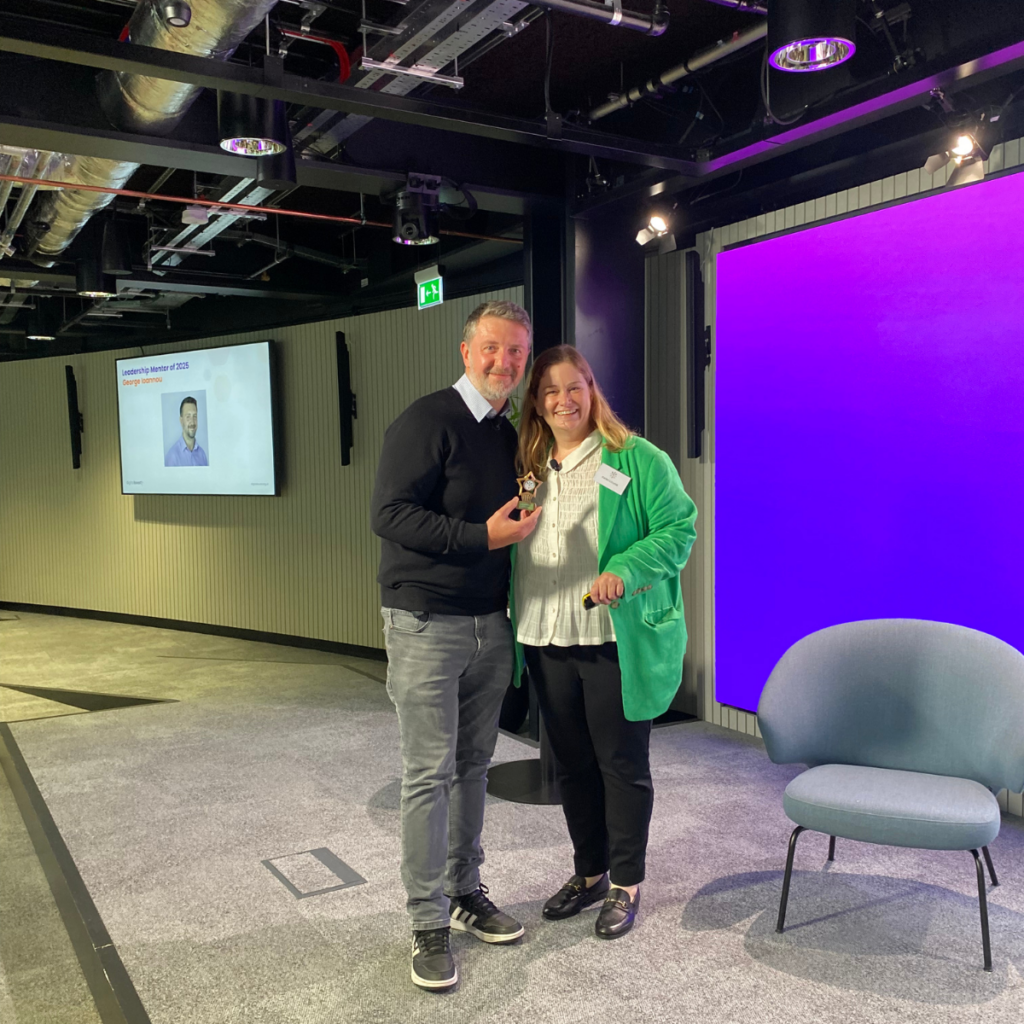
Leadership mentor - George Ioannou
Meet George, our leadership mentor of 2025! George joined us in 2023 and in that time has delivered over 35 mentoring sessions for our community 🎉
Holding positions as Chief Digital Officer, investor & director, as well as being a founder himself (!), George brings an impressive level of experience to his mentoring sessions.
George has been pivotal in many mentees' journeys, offering critical leadership advice to help them expand their businesses. As an angel investor, he's even gone on to invest in some of his mentees' businesses because of the potential that he's seen!
Praise for George:
“I have now had several mentoring sessions with George, and he always goes above and beyond in each and every meeting. He is extremely knowledgeable on every topic we have covered, and I always leave each session having learnt so much and with a list of action points to attack! Thank you George, and I'll see you next time.”
“Being mentored by George has enabled true confidence in my ability to fulfil my business plan. Not only was his mentoring next level but he also provided effective and efficient practical support that has the potential to led to increased sales for my business, which is key to our survival”
Business strategy mentor - Edward Falzon
Since joining us in 2023, Edward has been an exemplary business strategy mentor!
He's delivered over 35 mentoring sessions and supported our mentees with strategy, fundraising, sustainability, and hiring a team, to name a few 🎉
Edward is a senior operations and technology leader as well as an entrepreneur and non-executive director! He brings a wealth of experience to his mentoring and his mentees love his positive and constructive approach to mentoring.
Praise for Edward:
“I had such an amazing call with Edward. He was extremely helpful in preparing me for my business pitch and gave me valuable feedback that I have now implemented. He is clearly an expert in this area. On a personal note, Edward was a delight to speak with and I felt real synergy on our call. I would highly recommend booking a mentoring session with Edward.”
“Ed has been a super supportive and enthusiastic mentor. We have met a few times now to discuss business planning and pitching and Ed helped me get to the final of a pitching competition. He joins every call with a warm welcome but also gives constructive and direct feedback as needed.”

Most enthusiastic mentor - Lucy Guthrie
This year's Most Enthusiastic Mentor award was very easy to give! If you've met Lucy, you'll know how energy is absolutely infectious.
Lucy is the founder of Mad Creative, a marketing agency helping small businesses stand out from the crowd. She joined us in 2024 through NatWest's employee volunteering programme and since then she's delivered over 40 mentoring sessions!
Whether you're having a 1:1 mentoring session, joining her Masterclasses, or even having the pleasure of hearing her talk on stage, everyone agrees, her energy is unmatched.
Everything she does is done with a smile and we couldn't think of anyone more deserving of this award this year!
Praise for Lucy:
“Lucy played a huge part in helping me progress. The tools she provided assisted me in setting up my Social Media page, and in my most recent session, she provided me with excellent advice, which I am taking with me as I progress my podcast and marketing campaign. Lucy is highly skilled and provided me with honest, useful feedback. Thank you, Lucy, and to Digital Boost; this is such a useful platform for any new business.”
“Lucy was well prepared, a great listener and really attentive to my needs and offered practical thought provoking suggestions on how I can expand my business. The session was a thoroughly enjoyable and inspirational sharing of knowledge and I can highly recommend Lucy as a mentor… Thank You Lucy for your time, energy and input - it was so beneficial and so appreciated 🙏🏻”

All-round small business mentor - Kimberley Taylor
It’s difficult to pick just one person who shone this year, but Kimberley really went above and beyond for Digital Boost!
Kimberley is the founder of Pink Giraffe Marketing and she helps small businesses get confident marketing their businesses.
Through her volunteering, Kimberley has delivered over 40 mentoring sessions, supported us with speed mentoring sessions at our in-person events and, most recently, facilitated our Small Business Jumpstart programme 🚀
Kimberly has thrown herself into volunteering over the last year and we couldn't be prouder of the work that she's done 🩵
Praise for Kimberley:
“A lovely conversation that has really helped me get some much-needed oversight to my marketing situation, many thanks!”
“Kimberley… you built a rapport with me within seconds and I instantly felt like I’ve known you for a while. You were very easy to talk to and as a result I was completely myself. You also understood very quickly where my stumbling block was (social media) and told me to take one platform at a time. I needed to hear that… in addition you gave me some homework to do and hopefully we will have a catch up session in a couple of weeks where I can tell you about all the rambling posts I’m doing on Instagram …I would have you as my mentor any time and I’m so happy to have met you.”

Rising star - Shafaq Shams
So many incredible volunteers have joined our community this year and we’re very excited to announce Shafaq as our Rising Star of 2025!
Shafaq began mentoring with us through the BT volunteering programme. She is a senior commercial manager and has a wealth of experience having worked at Vodafone, BT and now Gamma!
Shafaq was encouraged to host a Masterclass with us through her employee volunteering programme. Her session was a huge success and she's gone on to deliver fantastic mentoring sessions for our community. 🎉
Shafaq is continuing to mentor with Digital Boost, sharing her invaluable experience and skills to help founders thrive. We're excited to see what the future holds for Shafaq 🌟
Praise for Shafaq:
“Shafaq not only helped me understand the many points I raised in a long list of questions but she also went above and beyond to offer help and assistance. I came away with several pages of scribbled notes and so many ideas that my challenge now is to find the time to action everything! It was an inspiring session and I left it energised.”
“Shafaq is extremely knowledgeable in the area of pricing strategy which is what I wanted to hear. Given her very recent and lengthy background in large commercial organisations her inside experience and mindset was particularly relevant to us since this is our target audience.”

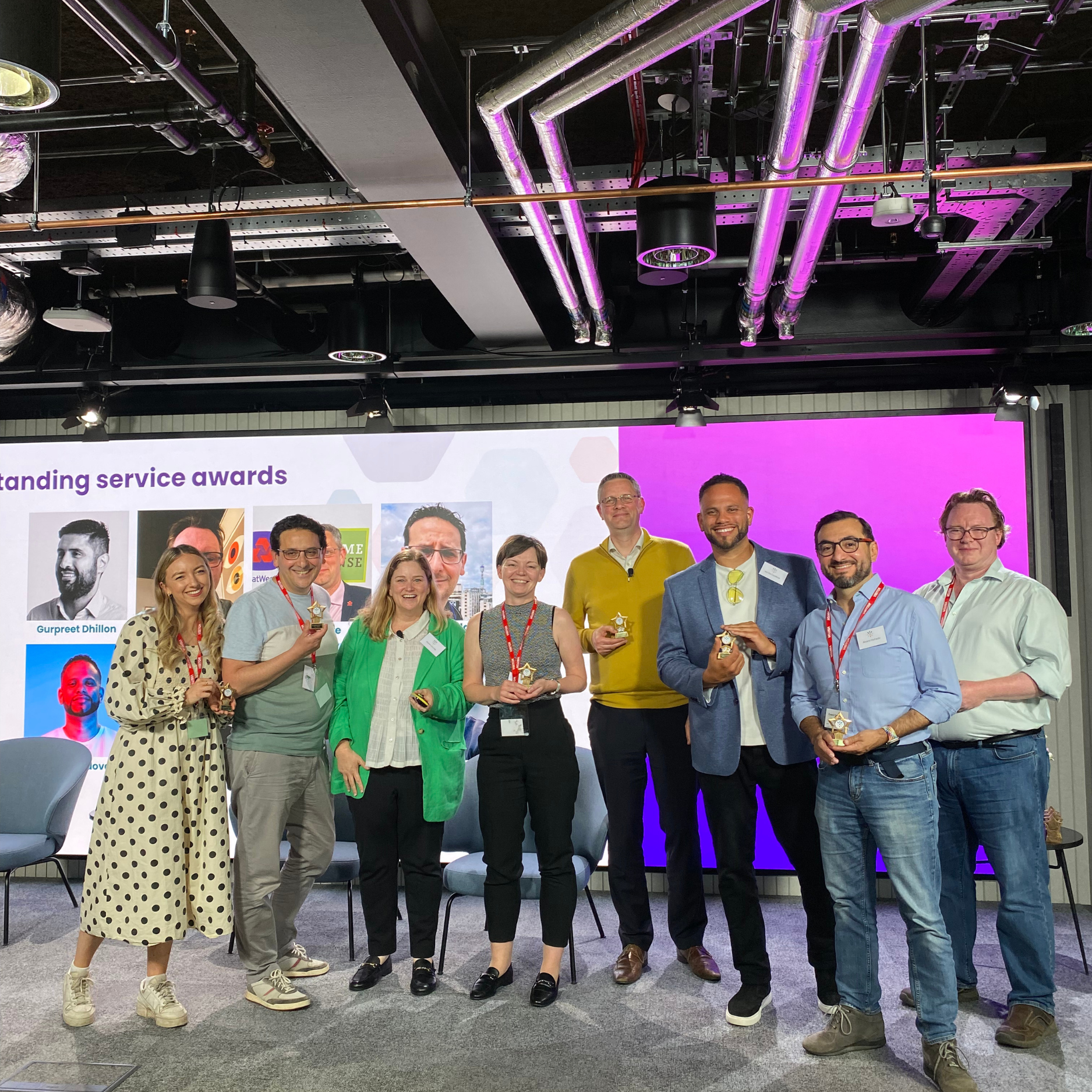
Outstanding Service Awards
This year, we recognised small business mentors in our community who have delivered outstanding service throughout their time with Digital Boost.
All our winners have delivered hundreds of mentoring sessions, delivered exceptional Masterclasses, and/or supported us at in-person events and beyond.
We're extremely grateful for their incredible support and we're delighted to be recognising their outstanding service to Digital Boost! 🎉
A huge congratulations to:
- Matteo Beroldo
- Callum Finlayson
- Gurpreet Dhillon
- Nick Howe
- Paul Davis
- Ian de Cordova
- Nishanth Logeswaran
- Martina Molinari
- Alvaro Hurtado
Thank you to our Small Business Mentors!
We’re extremely fortunate to have such a wonderful community of small business mentors, giving their time to founders and making a difference in the world.
If you’ve ever volunteered with us, we just want to say a huge thank you - we appreciate you!
If you’ve been inspired by our Small Business Mentors of the Year and fancy joining our community of volunteers - we’d love to have you onboard! 🥳
Everybody's talking about Google Ads, but if you've never used them before, they can feel overwhelming to say the least!
In this blog, we're demystifying this topic and showing you how to create your first Google Ads campaign 🎉
Expect jargon-free explanations, step-by-step instructions, and a clear plan to help you take action to create your first ad.
Why Google Ads Work
Google Ads can be true levellers for small businesses. Unlike other advertising avenues where big budgets are king, Google Ads rewards relevance and quality. So even if you don't have a big budget, if you're creating ads that are relevant and high quality, you're in with a shot at standing out from your competitors!
Let's dive into the fundamentals of what it takes to create a Google Ad campaign.
Step 1: How to Choose the Right Keywords
Keywords are the cornerstone of Google Ad campaigns. They bridge the gap between what people are searching for and what you're selling. Here's how to find the best keywords for your campaigns:
The Three Pillars of Keyword Selection
1. Relevancy
Your keywords must be relevant to your products and services. For example, if you're a digital marketing consultant, relevant keywords might include "marketing consultant," "digital marketing expert," or "Google Ads specialist."
2. Search Volume
There's no point targeting keywords that nobody searches for! But don't be discouraged by smaller search volumes - especially if you offer niche services as they can really pay off. Even keywords with modest search volumes can generate valuable leads and conversions when used correctly.
3. Customer Intent
Zone in on what your customers are actually looking for when they're typing a particular word or phrase. Are they ready to buy, looking for information, or just browsing? Ensure your keywords align with your customers' goals.

📸: AS Photography, Pexels
Using Google Keyword Planner
Google provides a free tool called Keyword Planner - here's how to use it:
- Sign up for a free Google Ads account
- Access the Keyword Planner tool
- Enter your initial keyword ideas
- Review the search volume data and related suggestions
- Look for keywords with decent search volume that match your business's goals
The tool will show you monthly search volumes, competition levels, and suggested bid ranges, which will help you develop your campaigns!
Understanding Match Types
Google offers three keyword match types, each controlling how closely a user's search needs to match your keyword:
- Exact Match: Your ad only shows for that exact keyword
- Phrase Match: Your keyword must appear in the search, but can have words before or after it
- Broad Match: Your ad can show for loosely related searches
Pro tip: Start with exact match keywords. While Google often recommends broader match types (they generate more clicks and revenue for Google), exact match gives you better control over your budget and ensures higher relevance.
Step 2: How to Write Compelling Ad Copy
Ad copy is the same as any other copy - it needs to make a good first impression! Ensure it grabs your customers' attention, shows the value you're offering and encourages your customer to click through.
Creating Effective Ad Copy
Show Your Unique Selling Point (USP)
What makes your business or charity different? Maybe you're a specialist in a particular industry, have years of experience, or offer something unique. We call this your unique selling point (USP), and it's essential you make this clear in your ads.
Match Your Keywords
You want your content to match the keywords that your audience is searching for. For example, if your customer searches "digital marketing consultant", you need to ensure that that phrase appears somewhere in your content.
Include a Clear Call to Action (CTAs)
The most common mistake that we see is small businesses not having clear CTAs on their content. Tell people exactly what you want them to do, e.g. "Call today," "Book a consultation," "Get your free quote," or "Learn more about our services."
Use Social Proof
Share testimonials, years of experience, certifications, or awards - this will build trust with your audience and lead to better conversion on your campaigns.
Maximise Your Headlines
Google allows up to 15 headlines per ad, and their algorithm will test different combinations to find what works best. Here's how to make the most of this:
- Create headlines that highlight different benefits of your services or products
- Include your main keyword in multiple headlines
- Vary your approach (benefits, features, social proof, urgency)
- Keep each headline under 30 characters
- Make each headline unique and compelling
Use AI Tools Wisely
AI tools can help generate ad copy ideas, but use them as a starting point, not the final solution.
Here's how to use AI for your Google Ad campaigns:
- Copy text from your website or service pages
- Include customer testimonials
- Ask AI to generate headlines based on this information
- Specify character limits and your target keywords
- Refine and personalise the suggestions
Step 3: How to Set Up Powerful Ad Extensions
Ad extensions are additional pieces of information that make your ads larger and more informative. They're often overlooked but can significantly improve your campaign's performance.
Site Links
Direct users to specific pages on your website. For a consultant, this might include case studies, testimonials, or service pages. For a charity, consider donation pages, volunteer opportunities, or impact stories.
Callouts
Short, punchy benefits like "Free Consultation," "24/7 Support," or "Registered Charity." These help your ad stand out and communicate key selling points.
Location Extensions
If you're a localised business or have a physical location, don't skip this step! Location extension show your address and can include a map, making it easier for people to find you.
Call Extensions
Allow people to call you directly from the ad - perfect for service businesses and charities where phone contact is important.
Testimonials Extensions
Showcase your Google reviews or testimonials directly in your ads. Your click-through rates could significantly increase as a result of this social proof.
Step 4: How to Choose the Right Landing Pages
Where you send your traffic is just as important as the ad that generated the click. Here's how to get this right:
The Homepage Mistake
Most businesses make the mistake of sending all their Google Ads traffic to their homepage. Instead, try directing your ads to the most relevant page to create a better customer experience and increase the chance of conversion!
Here's how to create a clear path from search to conversion:
- If someone searches for "vacuum cleaner," send them to your vacuum cleaner page, not your homepage
- If they search for "donation," send them to your donation page with a clear call to action
- Always match the landing page to the specific keyword and ad that your customer clicked
Creating Effective Landing Pages
Your landing page should:
- Directly relate to the ad and keyword
- Have a clear, prominent call to action
- Load quickly on mobile devices
- Provide the information promised in your ad
- Remove distractions that might lead visitors away
Step 5: How to Improve Your Ad Strength Score
Google assigns an "Ad Strength" score to your campaigns, which affects both your ad performance and costs. Here's how to achieve an "Excellent" rating.
- Add Multiple Headlines: Use as many of the 15 available headline slots as possible
- Create Unique Content: Avoid repeating the same message across headlines
- Include Keywords: Ensure your target keywords appear in your headlines
- Use Varied Descriptions: Write different descriptions that highlight a range of benefits
- Add Relevant Extensions: Include site links, callouts, and other relevant extensions
Why Ad Strength Matters
Google uses your Ad Strength score as part of their auction system. Higher scores can lead to:
- Lower costs per click
- Better ad positions
- More impressions for your budget
- Higher quality traffic
Getting Started: Your Google Ads Action Plan
Ready to create your first Google Ads campaign? Here's your step-by-step action plan:
Week 1: Research and Planning
- Identify 3-5 high-priority keywords for your business or charity
- Research search volumes using Google Keyword Planner
- Analyse your competitors' ads for inspiration
- Check your website for suitable landing pages
Week 2: Create Your Campaign
- Write 5-10 compelling headlines (remember the 30-character limit)
- Create 2-3 unique descriptions (90 characters each)
- Set up relevant ad extensions
- Choose your target locations and audience
Week 3: Launch and Monitor
- Start with a modest daily budget
- Monitor performance closely
- Make adjustments based on early data
- Gradually increase the budget for successful campaigns
With this action plan and our top tips for optimising your Google Ads, we've no doubt that your first Google Ads campaign will be off to a flying start!
Get help from our mentors
Feeling stuck with your Google Ads? You're not alone!
Here at Digital Boost, we can match you with mentors who specialise in Google Ads. They'll help you understand how best to use and monitor your Google Ads to ensure you're not wasting your money and seeing real results!
Meet the Mentor
This blog was guided by the expertise of John, the founder of JMac Marketing. John is a Digital Boost volunteer and a seasoned digital marketing consultant with over a decade of experience helping small businesses and charities maximise their online presence. Specialising in Google Ads, John has managed campaigns across various industries, from healthcare and hospitality to e-commerce and non-profit organisations.

This blog was inspired by one of our Digital Skills Labs, which are sponsored by NatWest.
NatWest is proud to sponsor Digital Skills Labs with Digital Boost, and equally proud to share details of the wide range of support we offer to individuals and businesses across the UK.
The NatWest Accelerator is now more accessible than ever – offering 24/7 support through the NatWest Accelerator app.
Attend in-person events, access 12 physical hubs across the UK, and join a community of founders in your city! Search and download “The NatWest Accelerator” App.
📲 Download now on the App Store or Google Play.
In today’s digital world, your website is often the first impression customers get of your business.
For those of us DIY-ing our websites, it can be easy to make simple mistakes that can cost you business and customers.
But don't worry, we're here to help! We’ve created a free website checklist for small businesses so that you optimise your website and grow your business 😊
Let's dive into the 12 most common mistakes and how to fix them 👇
1. Centred Text Blocks
The Mistake: Large blocks of centred text are hard to read and can frustrate visitors.
Fix It: Reserve centred text for headlines or short phrases. Use left-aligned paragraphs to improve readability, especially on mobile.
2. No Clear Calls to Action (CTA)
The Mistake: Without a clear CTA above the fold of your website, visitors won't know what action you want them to take.
Fix It: Include strong, action-focused CTAs on every page - e.g. 'Book a free consultation', 'Join our mailing list'. Make sure they're clear and visible to the visitor - try using bold text and contrasting colours on your buttons to improve visibility!
3. Poor Colour Contrast
The Mistake: Using low contrast colours in your content can make it hard to read and inaccessible for those with some disabilities.
Fix It: If you already have a brand colour palette, check its accessibility using free tools like Adobe Colour Contrast Analyser.
If you don't have a brand palette yet, you can use Coolors to generate a palette that works for your brand! Just make sure to run it through a contrast checker before rolling it out across your website 😊
4. Not Enough White Space
The Mistake: Over-crowding pages and not leaving enough white space can make your website look overwhelming.
Fix It: Use white space to give your content some breathing room. Try adding padding around key elements on your website like CTAs and titles.
5. No cookie consent
The Mistake: Not having cookie consent or a secure site (SSL). Without these two key things, your site won't seem safe or compliant and may deter customers from working with/buying from you.
Fix It: Ensure you have a GDPR-compliant cookie banner that follows consent rules. And install a free SSL certificate from your website hosting provider to show customers your site is safe!
6. Using Linktree
The Mistake: This is a controversial one, but sending social media traffic to Linktree means lost visitors to your site and missed analytics.
Fix It: Create a branded 'links' page on your site that you can use in place of Linktree. Doing this will give you better tracking, improve your SEO and build trust with your brand too!
7. No Social Proof
The Mistake: Not using testimonials and reviews on your website. Visitors need to see that you're a business that they can trust and social proof is a great way to do this!
Fix It: Use real reviews from Google or Facebook on your website - they're free to embed to give it a go! Include names, photos, and even business details where you can to bring your testimonials to life.
8. Not Sharing Your Personality Or Story
The Mistake: Creating generic content and not sharing your personality or story on your website. People connect with people, and if you're not showing your personality or story it can be hard to connect with your audience and build loyalty.
Fix It: A great place to start is your 'About' page. Share your story and include why you started, your mission, and photos of you/ your team. If you're not ready to share pictures just yet, start with your story and build from there!
9. Walls of Text
The Mistake: More isn't always more - big paragraphs can scare readers off - especially on mobile.
Fix It: Break up text with subheadings, bullet points, and images. This will improve your site's readability and help your SEO too!
10. No Blog Content
The Mistake: Not having a blog means missing opportunities to rank in search engines and add value to your audience.
Fix It: Start writing blog posts for your site! You can try answering customer questions, educating your customers about your industry, or sharing freebies and knowledge to add value and build trust.
11. Low-Quality or Irrelevant Images
The Mistake: Using low-quality pictures or images that don't match your brand can make your site feel unprofessional.
Fix It: Use high-quality, relevant images - preferably of your actual team or products, where you can. If you don't have those yet, stock photos or AI generated images can work, but just ensure they're always relevant and high-quality.
12. No Email Sign-Up or Social Media Links
The Mistake: Not having an email sign-up button or links to follow you on social media means that visitors may leave your site and not be able to connect with you again.
Fix It: Add a newsletter sign-up somewhere on your website. Make it clear why the visitor should sign up! You might like to include an incentive like a freebie download or a discount on your products. Don’t forget to include links to your active social media accounts somewhere on your site too!
Ready to Improve Your Website?
Many of these fixes are quick wins you can implement today! We recommend starting with the most critical issues and then working your way through the rest of the list. Once you've completed all 12 steps, you'll have a great website for your customers to enjoy 💪
✅ Need help getting started? Download our Free Website Checklist for Small Businesses!

This guide is based on insights from Suzi Brown of The Smart Bear, a seasoned web developer with 12+ years of experience helping small businesses and charities create websites that work.
Meet the mentor
This guide is based on insights from Suzi Brown. She's the founder of The Smart Bear and a Digital Boost volunteer mentor too!
Suzi has over 12 years' experience building and developing websites and has a special interest in empowering small businesses and charities to optimise their websites without breaking the bank 😊

If you're posting content and not seeing results, this blog is for you!
Often if you're not seeing results, it's likely that your content isn't connecting properly with your audience.
In this blog, we're sharing a framework to help you create content that converts 😊
Let's dive in!
Why Most Content Fails to Convert
Everyone can create content, but creating content that's effective is the challenge! Many founders make these mistakes
- Focusing on clicks over connection
- Chasing followers instead of building loyalty
- Promoting products instead of transformations
- Ignoring their customers' emotions and buying behaviours
How to Create Content That Converts in 3 Simple Steps
Step 1: Identify What Your Audience Wants
You need to know what makes your customer tick. Fall in love with your customers' problems and pain points by asking yourself these questions 👇
- What do they read, watch, and listen to?
- Which brands do they love? Why do they love them?
- What are there fears and worries?
- What transformation are they hoping for?
- What motivates them to buy?
- How do they want to feel when they buy from you?
It's well known that 95% of purchase decisions are driven by emotion, so make sure you're tapping into that first, then logic second 💪
Step 2: Connect Emotionally
Customers don't buy what you do, they buy why you do what you do!
Follow this framework to tap into your customers' emotions at every step of the buyer journey👇
- Recognition – Show them a problem they didn’t know they had
- Be the expert – Share valuable educational content that shows your expertise
- Proof – Show them why your solution is the best option for them
- Purchase – Make your offer feel like a no-brainer
- Post-Purchase – Reinforce their decision and nurture long-term trust
Step 3: Be Strategic With Your Content
Content takes many forms. Ensure you're using a range of content types to meet all your customers' needs.
- Evergreen Content – Core messages that reinforce your values and expertise (repeat these often!)
- Launch Content – Campaigns that promote specific products or services
- Opportunistic Content – Trend-driven posts that tap into what's current and culturally relevant
Examples of High-Converting Content
- A charity using personal stories to highlight real impact
- A local business offering behind-the-scenes videos to build connection with their audience
- A consultant sharing case studies that show client transformations
These work because they focus on people, not just promotions.
Free Tools to Help You Create Better Content
- Google Trends – Find out what your audience is searching for
- AnswerThePublic – Discover the questions your audience is asking
- Canva – Design amazing graphics for free!
Conclusion
Content creation is a long game. Focus on staying consistent and truly connecting with your audience, and the results will come!
Need support? Don't struggle alone! Our mentors can support you with your content creation strategy for free 💪
Meet the mentor
This blog was guided by the insights of Naomi Rose. Naomi is a content marketing strategist and volunteer mentor at Digital Boost!
With over 20 years' marketing experience, plus having started and grown a successful business, she knows a thing or two about how small businesses can stand out from the crowd.
Naomi specialises in creating content that attracts more clients, boosts visibility and increases sales for her clients!
Often we think the hardest part of building a business is finding the right idea. But as many entrepreneurs know, the idea is the easy bit! The hard part is figuring out how to find your target audience. Without knowing your target audience, you could be selling to the wrong people and leaving yourself drained, so it's really important to get it right!
In this blog, we're sharing a 5-step framework that's going to help you engage and nurture the right clients 💪
Why Finding Your Target Audience Matters
Learning how to find your target audience isn’t just smart marketing—it’s essential for business growth.
When you tap into your target audience:
- You’ll see up to 40% higher engagement rates and 30% better conversion rates
- You’ll retain 20% more clients and customers
- You’ll cut acquisition costs by up to 25%
- You’ll build 60% more trust in your brand
- Most importantly, you’ll save time and energy by focusing on those who genuinely need what you offer
Sources provided by Anna taken from Edelman Trust, Bain & Company, Hubspot
Step 1: Start With Reflection
Before getting into the nitty-gritty of the data, start with a self-reflection.
Ask yourself:
- Who were my most difficult clients?
- Which clients raised red flags or drained my energy?
- Which customers were my favourite?
- Who brought out my best work?
If you haven't got any clients yet, don't worry! Use this self-reflection to dream up who your ideal client is and isn't to help you better hone in on who you want to attract 😊
Step 2: Review Your Customer Base
A key part of how to find your target audience is identifying where your most profitable and satisfying business comes from. Use a simple spreadsheet with these columns:
- Customer (name or identifier)
- Source (how they found you)
- Product/Service (what they bought)
- Profit (percentage or value)
- Want More? (yes/no)
You’ll quickly start to see which sources and customer types bring the most value!
Step 3: Define and Understand Your Target Market
Next steps, define no more than three distinct audience segments. For each one, outline:
- Where they spend time online (social media platforms, search engines, online communities)
- Where they are offline (local events, organisations, communities)
- What interests and hobbies they have (these help build relatable content!)
- Their core needs and pain points
- The emotions behind those needs (e.g., stress, frustration, overwhelm)
- A one-line message that speaks directly to their desires or struggles
By getting clear on both the logical and emotional needs of your audience, you'll craft messages that hit home with your audience and drive more sales!
Step 4: Create Detailed Customer Profiles
Next, bring your audience to life with detailed customer profiles (also known as buyer personas). This is a powerful step in learning how to find your target audience and connect with them authentically.
For each profile, include:
- Basic demographics (age, gender, job role, etc.)
- Key challenges and motivators
- Personal interests and habits
- Purchase drivers (what makes them say "yes")
Name each persona after a real client if possible. Refer back to these profiles when creating content, designing services, or planning your marketing campaigns.
Step 5: Find the Balance Between Acquisition and Retention
The final step in this process is to find the balance between acquiring and retaining clients. Your current audience matters more than new leads. It's not about always going after new clients, it's about recognising the clients that you have and deepening relationships with the right ones.
Here’s how you can retain your ideal clients:
- Share testimonials, case studies, and success stories from your clients
- Communication is key - make sure you're communicating consistently and meaningfully
- Focus on offering value at every step - it's not all about paid services, offer real value to your clients, and they'll keep working with you!
- Know your customer so well that you can anticipate their future wants and needs (even before they can!)
Taking the time to nurture current clients pays off! It's often easier (and more profitable) to grow your business with existing customers than always chasing new ones!
Conclusion
When you truly understand your ideal client, everything else falls into place!
You'll:
- See increased engagement and conversions by speaking directly to the right people
- Build stronger brand trust and credibility
- Improve customer loyalty
- Reduce wasted time and marketing costs chasing the wrong leads
If you try this 5-step process, please let us know! We'd love to hear how you get on targeting your ideal clients 😊
Meet the Mentor
This guide is based on insights from Anna Short! Anna is the founder of Boo!Marketing and a Digital Boost volunteer mentor 😊
Anna's known for her simple approach to marketing, breaking down complex concepts and turning them into understandable action plans for small business owners!

In today's digital landscape, knowing how to build a personal brand isn't just a nice to have—it's essential for business growth. As the saying goes, people buy from people. But what exactly is a personal brand, and how do you build one that feels authentic rather than awkward? 🤔
In this blog, we’re sharing tips and tricks to help you build a personal brand that's authentically YOU!
What is a personal brand?
Before diving into how to build a personal brand, let's clarify what it actually means. Personal branding is the process of promoting what you stand for and positioning yourself as an authority in your industry. The key is to lean into your uniqueness and build a reputation of trust.
Why you should build a personal brand
Having a personal brand helps you to:
- Attract your dream clients
- Build trust with your audience
- Stand out in your industry
- Unlock opportunities that you might never have considered!
How to build your personal brand
1. Remember: It's Your Journey
No two people have the same journey - so lean into your unique lived experiences and let your journey shine.
➡️ Try: writing your story down on paper. Give it a beginning, a middle, and an end - you'll be surprised what comes out in your story!
💡 Tip: Avoid comparing yourself to others. Everyone starts somewhere, and even if you offer similar products or services as others, your story is different, and that's your advantage.
2. Find Your Inner Power
This is a great exercise that filters into all areas of your business! Once you've worked out your story, find out what makes you uniquely you.
Take time to:
- Find out what makes you unique
- Recognise your superpower—what do you do exceptionally well?
- Believe in your ability to provide value
- Embrace and share your unique story
Try ➡️ Asking a friend what they think your superpower is ⚡️ Friends can sometimes see things that we can't see!
💡 Tip : Struggling to be confident? Take time to reflect weekly on what you've done and see if you can pick out times that you showed your superpower. The more you notice yourself having that superpower, the more confident you'll become.
3. Be authentic without giving the "ick"
Many of us put off building a personal brand because we think "nobody wants to hear from me." But the truth is, humans are curious by nature! We're all nosey and we're interested in genuinely getting to know the real people behind our favourite businesses.
When you start showing up authentically online, you're developing key principles in the 'know, like, trust' sequence that all marketing relies on.
- People get to know you through consistent content
- They begin to like you because you educate, entertain, or evoke emotion
- They start to trust you because you remain authentic and consistent
➡️ Try: Reviewing content creators that you love and writing down what it is that you like about that. This will help you understand what qualities you might like to bring out in your own authentic personal brand!
💡 Don't force it - we get the 'ick' when we can tell something is fake. Don't show up online trying to be someone you're not because your audience will quickly see through it. Be your own amazing self and let your authenticity shine!
4. Lean into the power of storytelling
The best personal brands leverage the power of storytelling. Humans have been telling stories for thousands of years - it's in our DNA!
By leaning into your story, you're showing openness and vulnerability, which naturally builds your audience's trust 🤝
Great storytelling elicits emotion and invites your audience to connect with you.
➡️ Try: Reviewing the journey you created earlier on, and seeing if you can pull out key moments that you can lean into for your storytelling. Look out for key moments that will help you reach others with similar experiences to create those connections 🩵
💡 Tip: Remember the 3 'E's of using storytelling in your content:
- Educational: Helping your audience learn about something
- Emotional: Making genuine connections
- Entertaining: Capturing attention and interest
How to show up on camera
For many people, getting your face out there is a big part of personal branding. Just like we said at the start, people connect with people. Having a friendly face incorporated into your business and brand helps foster those connections.
Now, having your face out there isn't for everyone - we'll be covering alternatives in the next section, so don't worry! But if you're ready to try getting in front of a camera, here are our top tips to help you get started.
- Practice regularly: No one's first take is ever perfect and everyone has to start somewhere. The key is just to start and practice as much as possible!
- Find where you're comfortable: Most people aren't comfortable filming in public, so find what works for you. Maybe it's at home at your desk, or out on a dog walk - find what works for you and be consistent to build up your confidence.
- Have a content plan: Knowing what you need to film or create helps keep you focused and removes the pressure.
- Don't overthink it: Remember, if you help even one person, your content has had impact! Focus on the value you're giving and have fun with it 😊
It's not all about being on camera
Not everyone is comfortable showing their face, and that's perfectly okay!
Here are a couple of ways you can create a personal brand that's "faceless":
- Text-based content: Maximise your educational posts with text-based content that shows your personality
- Voice-overs: Try narrating over B-roll footage or behind-the-scenes footage to bring a "voice" to your brand without showing your face!
- Memes: Finding or creating humorous, relatable content that fits your brand voice can help you connect with your audience on a more personal level
- Stop-motion videos: These are particularly great for product-based businesses as you can create short-form video content that's highly engaging without needing to appear on camera
- User-generated content: Also known as UGC, this strategy leverages content your customers or collaborators have created. It allows you to engage with your audience, create relatable content, and bring to life the "humans" at the heart of your business 😊
Ready to build your personal brand?
If you remember one thing, make it this: be authentically you. Everything else you can tweak, test, and experiment, but underpinning everything is being yourself 😊
If you'd love support defining or testing your personal branding, why not book a 1:1 mentoring session with Digital Boost's mentors?
We've got 1000s of volunteer mentors all here to support you on your journey! All our services are 100% free to access, so you can grow your business without spending a dime.
Meet the mentor
This blog was inspired by a Masterclass we hosted with Emma, one of the volunteer mentors in our community! You can watch the replay of the Masterclass here.
Emma is the founder of Fresh Approach Digital. She’s been a Digital Boost mentor since 2020! And in that time she’s supported 100s of founders to develop their social media skills 🎉
When she’s not helping founders get confident on social media, or filming her famous ‘tea and tips’ segment on her social media channels, Emma can be found at sea! She’s a huge marine lover and has spent most of her life living and working in the marine industry. You’ll often find her paddleboarding her local river, sailing, or playing hockey 😊

When Stefania left her stable job in retail management to become a freelance graphic designer, she knew she was taking a leap. What she didn’t yet know was that Digital Boost's mentoring for entrepreneurs would be the missing piece to take her from uncertainty to growth. Through mentoring, she’s overcome overwhelm, developed confidence, and been inspired to mentor others too.
A Creative Leap
Like many entrepreneurs, Stefania found her passion early in life. She was a budding artist in school and later studied graphic design and marketing. She went on to build a long and successful career in fashion retail. But after discovering yoga, Stefania’s goals began to shift.
Yoga unlocked the courage Stefania needed to leave her stable job and return to her creative roots. She retrained as a graphic designer, started freelancing and started her new chapter as a brand design coach.
Digital Boost's Mentoring for Entrepreneurs
Although Stefania had the passion and skill, she soon realised that the “business” side of being her own boss was unfamiliar territory. She struggled with pricing, marketing, and self-promotion, and realised she needed a helping hand.
A friend mentioned Digital Boost, a platform that offers free mentoring for entrepreneurs. Stefania had never heard of Digital Boost, but decided to take a chance.
She was hesitant, believing it was too good to be true. But to her delight, there was no cost to Digital Boost’s services! Stefania said:
“The fact that it was free, was helpful because I was at the stage, [...] of setting up my own business. So having the kind of support and being free, it helped me manage my other expenses as well.”
The perfect match
Stefania sent a mentoring request to Digital Boost’s mentors and was matched in her first week with Martina.
“I knew from the first call. She was amazing,” Stefania recalls. “It’s so nice to have someone you can bounce ideas off and know they’re going to keep you accountable — but also just be there.”
What began as a single session turned into a long-term mentoring relationship that’s still going today!
“[Mentoring] helped me get that confidence at the beginning, when I had none,” Stefania explains. “Having access to someone who really knew digital marketing and could just tell me, ‘Right, this is how you can plan your content, here’s how ads work’—that made such a difference.”
Real-life growth
With Martina, Stefania was able to not only build her confidence but make tangible progress with her business too.
In each session, Martina would support Stefania with an action plan. She’d help Stefania break her big goals into manageable steps. “I’d always come out of those sessions knowing exactly what to do next,” Stefania says. “It wasn’t just emotional support — it was real, practical advice.”
Through this support, Martina guided and challenged Stefania to think differently. She challenged Stefania to think about her pricing, how she marketed herself, how she converted clients. “She told me I could charge more. I didn’t believe her at first,” Stefania laughs. “But she was right. I saw it for myself — clients didn’t push back.”
Stefania had taken courses previously, but mentoring was different. She said: “I think if I’d just done a course, I’d have watched the videos and then forgotten about them. [...] with mentoring, it was personalised. It was real-time. I could ask, ‘This client said this — what do I do?’ and get an answer that helped right then.”
Giving Back Through Mentoring
Inspired by her own mentoring experience, Stefania realised she could help others with her design and marketing skills!
Stefania now volunteers as a Digital Boost volunteer so that she can give back and support others.
“Because I know how much it helped me — especially in those first months — I want to offer that to someone else now,” she says. “Even if it’s just helping someone see that they’re not alone, that they can do it… that’s huge.”
Conclusion
From listening to her intuition and beginning her entrepreneurial journey, to totally skyrocketing her confidence and her sales, to giving back to the community, Stefania’s story is a tale of inspiration.
Her story is proof that with the right support, anything is possible.
“I still message Martina now and again, even if it’s just to say thank you,” Stefania says, smiling. “Because I wouldn’t be where I am without her.”
Inspired by Stefania’s story? Why not try our mentoring and see what’s possible?
📸 photo credit: Stefania Ruggeri, Brand Design Coach
Here at Digital Boost, we love helping our volunteers become the best mentors possible! Through our partnership with the Association of Business Mentors (ABM), we’re excited to provide even more mentor training for our community.
In this blog, we’re sharing key takeaways from our mentor training workshop with the ABM to help you build accountability and create deeper connections in your mentoring sessions.
How to Create Accountability in Your Mentoring Sessions
1. Create clear roles
Getting clear on the different roles in a mentoring relationship is key to success.
- Your mentee is in the driver’s seat – You’re there to guide your mentee, but they’re in charge of steering the car!
- The "mentoring magic wand" doesn’t exist – Mentors aren’t there to solve everything with a magic wand. Real growth comes from the mentee’s own efforts, so don’t be afraid to remind them of that in your sessions!
- Set clear expectations early – Be clear about roles and responsibilities in your sessions upfront. This will help you create structured and productive mentoring sessions.
2. Be realistic
Great mentors are able to be super supporters whilst also being realistic with their mentees.
- Be a realistic cheerleader – Celebrate your mentee’s ideas, but ensure you’re challenging them with important questions.
- Prioritise data-driven decisions – Help your mentee leverage the numbers they have to make informed and logical decisions
- Be a mirror - Use thought-provoking questions to help your mentee come to their own realisations about what is and isn’t possible
3. Connection is Everything
Great mentoring happens when there’s a genuine connection between the mentee and the mentor. Here’s how you can strengthen your connections 👇
- Share a little about yourself – This will make your mentee feel more comfortable and help them open up in later chats
- Try the ‘onion approach’ – Ask probing questions to peel back the layers of your mentee and understand them on a deeper level
- Invite feedback - at the end of each session ask, “How can we make our next session even more valuable?” - This will show your mentee you’re listening and tailoring your sessions to them
Practical strategies to try in your mentoring sessions
As a general rule, following this framework will help you naturally build accountability into your sessions.
- Start with clear boundaries - decide how often you’ll meet, and how you’ll communicate between sessions
- Assign a small task that must be completed before the next call - this helps your mentee take action and ensures that each mentoring session is building momentum
- Share a short note after each session - either send a message with the highlights or fill out an Action Plan on the Digital Boost Dashboard to recap and consolidate everything for your mentee
Try the GROW model
Bonus: why not try the GROW model to structure your next session even more?
- Goals
- Reality
- Options
- Will (what will your mentee do next?)

Try the Helicopter exercise
As a mentor, reflecting on your sessions can be extremely powerful to help you keep developing and improving.
After your next session take 2-3 minutes and:
- Visualise watching the meeting from above.
- Observe any body language or reactions you may have missed.
- Identify moments of confusion or hesitation from your mentee.
- Use these insights to adjust your mentoring approach next time.
Conclusion
With a few simple tweaks to your sessions, you’ll be able to start creating accountability in no time at all!
If you try any of these frameworks, please let us know. We’d love to hear how you get on 😊
Watch the replay of our mentor training session here.
Not a volunteer yet? Let’s change that!
If you’re looking to dip your toe into the world of mentoring, why not become a Digital Boost volunteer?
Our mentoring is flexible, virtual, and most importantly, impactful!
For many of us, walking into a room full of strangers fills us with dread 🫣 It can give you those 'first day of school' vibes and not in a good way! We all know building connections is key for business growth, but is there a way to do it that doesn't make you want to die inside?
We're here to help! We're sharing our small business networking tips to help you get confident building relationships and growing your network! 💪
Why Networking Actually Matters for Small Businesses (We Promise!) 🤝
If you don't love networking, you might be looking for ways to avoid it. But here's the thing, 70% of the time networking presents new opportunities for small businesses. So that means you might find your next big client or dream partnership just by putting yourself out there and networking!
To help you get started, here are our small business networking tips to help you become a networking pro.
Top 10 Small Business Networking Tips 🌟
1. Nail your 'what I do' chat
Practice makes perfect, so don't be afraid to practise your 'what I do' chat on friends and family. Remember, keep it short and simple. Check out our 'Creating The Perfect 30-second Pitch' resource to help with this!
2. Start Small
Feeling overwhelmed? You don't have to throw yourself in the deep end by going to a huge networking conference! Start small and try local meet-ups first to build up your confidence. Check out our upcoming events and see if there's any that you can get involved with!
3. Quality Over Quantity
Networking isn't about who can collect the most business cards! Having real, genuine conversations is key. Set yourself a goal to connect meaningfully with 2-3 people per event and see where it leads.
4. Spot the Friendly Faces
If you're nervous, do a quick scan of the room. Look for groups standing in an open circle - that's body language for "join us!". Join the group and get involved with the discussion as soon as you can.
5. Be Curious
The key to building meaningful questions is being interested in the other person! Ditch the bog-standard questions and opt for deeper conversation starters. Try: "What's been your biggest highlight this year?" or "What part of your business makes you smile the most?".
6. Listening Is Key
Don't just listen to reply. Great listeners ask thoughtful questions and then engage with the answers. Remember, building connections is all about getting to know the other person on a deeper level and active listening will help you to do this!
7. Everyone Else Is Nervous Too (Seriously!)
They can look like the most confident person in the room, but it's likely they felt just as nervous as you when they arrived. Take a breath and remind yourself the nerves will pass - you'll look confident in no time at all!
8. Nail Your Follow-Up
Don't just chat and ghost! Deepen your connections by following up with a message a few days after the event. Bonus points if you can include something specific they mentioned like this: "Loved hearing about your sourdough bread business challenges! Here's that podcast I mentioned..." Simple but effective!
Top tips from our mentors
Meet Lucy, she's a Digital Boost mentor and the founder of MadCreative👋 She's a super-connector and known for her incredible talks on how to get confident pitching your business (whether in a boardroom or a networking meeting!)
Here are her tips on how to network as a small business owner:

"It can be hard gazing into a room full of people who all appear to be more confident and self-assured than you but trust me when I say, they probably felt just like you did when they arrived.
- Arrive in good time, it’s much easier to be one of the first to arrive than the last when the room is already buzzing.
- Don’t overthink it, quickly join a circle of people and introduce yourself.
- Smile, it makes others warm to you and your face will look more welcoming.
- Listen, and ask a question about what was just said. It shows you’re interested and invested in meeting new people."
Conclusion
Networking doesn't have to be scary! With our tips and tricks, you'll become a confident connector in no time at all 💪
And remember, practice makes perfect. The more you put yourself out there and give networking a go, the better and more confident you'll get!
So what are you waiting for? Go find a local networking event and put our tips to the test!