
We all have a big vision for where we want our business to go, but figuring out the best way of funding your business can feel a little daunting. The truth is, there’s no "one size fits all" when it comes to capital. Whether you’re looking to scale fast or grow sustainably, the right investment should empower your dream, not complicate it.
We sat down with Elizabeth, a NatWest Acceleration Manager, to demystify the UK landscape for funding your business. She shared some brilliant, real-world lessons on how to navigate your options without losing sight of your "why."
Let’s dive into how you can find the perfect fit for your unique journey. 🚀
Start with the "Why"
Before you dive into applications, take a moment to reflect on your goals. Misalignment between your funding and your vision can cause significant challenges for both your business and your personal life. To get it right, consider these four key pillars:
- Control: How important is it to you to maintain control? Equity investment involves giving away a stake, which means others may have ideas on how you should run the business.
- Speed: How quickly do you want to build? Think about whether you need a cash injection for rapid sales, marketing, or opening new locations.
- Culture: Funding can impact your business culture in both positive and negative ways. Ensure your chosen path allows you to build the environment you want.
- Exit Strategy: If you pursue equity, your investors will eventually look for a return through an "exit event," such as an acquisition or going public.
The Reality of the UK Funding Landscape
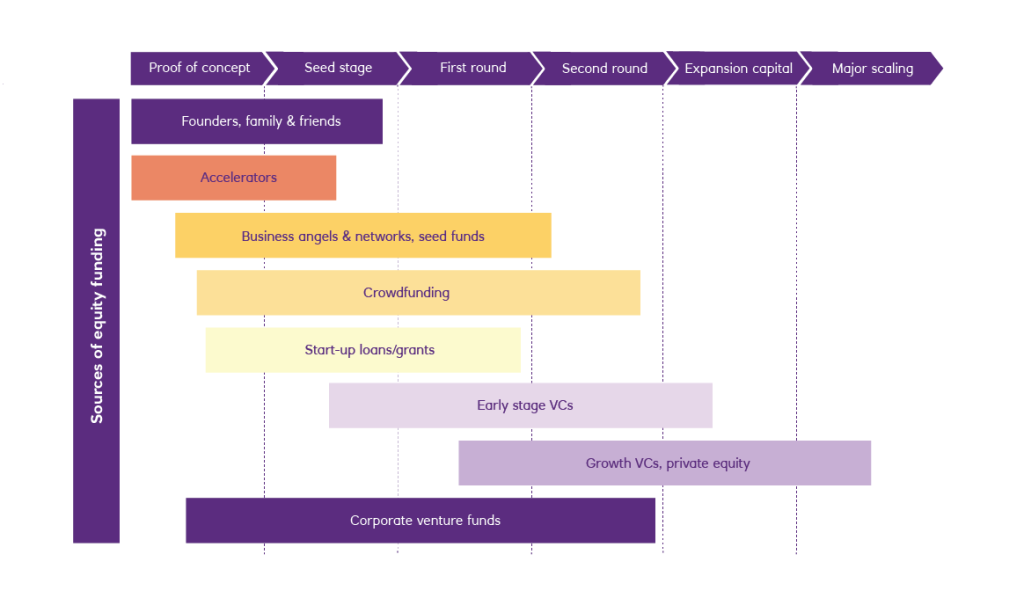
You might be surprised to learn that while venture capital (VC) gets the most headlines, only 3% of businesses actually access equity investment to fund their growth.
According to data from the Bank of England, the most common way founders are funding their businesses is through bootstrapping - specifically, reinvesting business revenues or using personal funds from owners and directors.
The secret for many successful founders isn't picking just one path; it’s using different options in tandem. You might bootstrap in the early days, run a crowdfunding campaign for a specific project, and later secure a grant to fuel innovation.
Exploring Your Options
1. Non-Dilutive Funding (Keeping 100% Ownership)
Non-dilutive funding is any type of capital where you don't have to give away a piece of your company.
- Bootstrapping: This involves reinvesting your own profits or personal cash. While it gives you total control, it relies entirely on your own resources and internal revenue.
- Crowdfunding: For those avoiding equity, project or reward-based crowdfunding allows supporters to give money in return for perks, rewards, or early access to products.
- Grants and Competitions: This is essentially "free money" with no equity or debt attached. These are often run by government bodies like Innovate UK or private companies. For example, the NatWest Accelerator Pitch recently awarded £100,000 to founders in London. While they offer great credibility, they are highly competitive and require a significant time investment for applications.
2. Debt Funding
Debt can be an intimidating word, but it is a standard tool for many growing businesses.
- The Options: These range from bank loans and asset financing (borrowing against the value of equipment or vehicles) to credit cards for short-term cash flow.
- The Upside: Once you are approved, funds are usually accessible quickly. Most importantly, it allows you to maintain full ownership of the business.
- The Catch: You must be able to pay it back, and some options - like credit cards - can be very expensive if used for long-term debt. It can also be harder for very early-stage businesses to meet the criteria for acceptance.
3. Equity Investment
This is when you trade a percentage of ownership for investment.
- The Trade-off: The "due diligence" process is time-consuming and can be costly. You also become responsible to these external stakeholders, who may have their own opinions on how you should run your day-to-day operations.
- Angel Investors & VCs: Angel investors are typically private individuals making personal investments (sometimes starting as small as £500), while Venture Capital (VC) firms are institutional investors looking for high-growth, highly scalable firms.
- Beyond the Money: Equity doesn't have to be paid back because investors are taking a risk. High-quality investors often provide access to their professional networks, expertise, and a level of validation that can attract even more funding later.
Credit: Natwest
Do You Actually Need Funding?
Before you start the hunt for external capital, it is a useful exercise to ask if you can achieve your goals through more creative, internal means. This helps you retain control and clarifies exactly why you might need a cash injection later. Consider these alternatives:
- Creative Staffing: Instead of hiring a full-time team, could you bring someone in part-time or on a commission basis?.
- Sweat Equity: You might find a partner willing to work in return for a share of the business rather than a high initial salary.
- Strategic Partnerships: Rather than a massive marketing budget, find aligned partners who can refer customers to you in exchange for a referral fee.
- Lean Operations: Think about your specific goal - can it be achieved with a smaller version of the plan that doesn't require a large upfront investment?.
Proving you can grow with existing resources - or "sweat equity" - often gives you more leverage and control when you finally do decide to seek external funding.
If you’ve created your own product and secured a trademark, selling on Amazon can be one of the most powerful ways to scale your brand. Unlike reselling, selling a branded product gives you full control over pricing, positioning, and customer experience - but it also comes with higher expectations and responsibility.
This guide is designed for brand owners who want to master selling on Amazon to build a long-term business asset.
Why Amazon Is a Powerful Channel for Brand Owners
Amazon isn’t just a marketplace - it’s a product discovery engine. Millions of customers go there ready to buy, not just browse. It provides:
1. Immediate Access to Demand: Instead of building traffic from scratch, your product is instantly visible to a global audience actively searching for solutions.
2. Brand Credibility and Trust: Customers are more likely to try a new brand on Amazon than on an unknown website, thanks to Amazon’s reputation and buyer protection.
3. Infrastructure That Scales With You: With Fulfillment by Amazon (FBA), you can outsource logistics to Amazon and focus on brand-building, product development, and marketing.
4. Tools Designed for Brands: Amazon offers features like Brand Registry, Brand Storefronts and Sponsored Advertising - specifically designed to help brand owners stand out.
How Amazon Works for Brand Owners
When you sell your own trademarked product, you’re not competing on someone else’s listing - you’re building your own product page and brand presence.
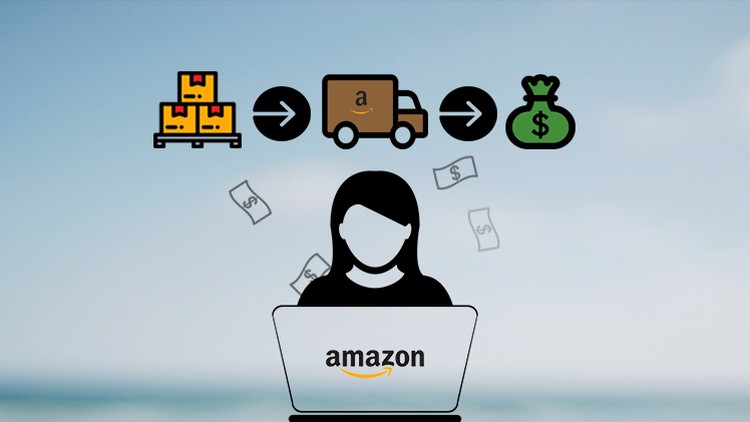
Here’s how it works:
1. You create a product listing under your brand name.
2. You enroll in Amazon Brand Registry using your trademark.
3. Customers discover your product through search or ads.
4. Orders are fulfilled by you or through FBA.
5. You manage and grow your brand presence over time.
A major advantage here is control - you own the listing, the content, and the brand story.
Credit: Ecomclips
Core Selling Model: Private Label (Branded Products)
For trademark owners, Amazon selling typically falls under the private label model - but with a stronger emphasis on brand identity.
What This Means:
- You sell products under your own brand name
- You control packaging, messaging, and positioning
- You build long-term brand equity (not just short-term sales)
This is fundamentally different from reselling because you are creating an asset, not just flipping products.
Setting Up Your Brand on Amazon
1. Register for Amazon Brand Registry
This is essential for trademark owners.
Benefits include:
- Protection against product hijackers
- Access to A+ Content (enhanced brand and product pages)
- Brand analytics and reporting tools and data
- Greater control over your listings
2. Create a High-Converting Product Listing
Your listing is your storefront. It should include:
- A clear, keyword-optimised title
- Professional product images (critical for buyer conversion)
- Benefit-driven bullet points
- A compelling product description or A+ Content
Think of your listing as a sales page, not just a product description.
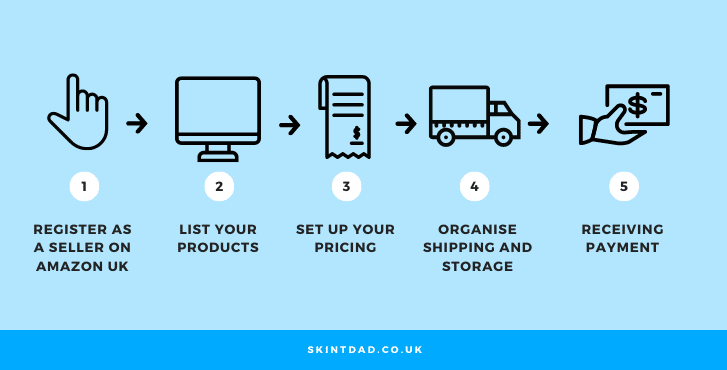
3. Choose a Fulfillment Method
Most brand owners use FBA (Fulfilment by Amazon) and send their products to Amazon’s warehouses because it:
- Enables Prime shipping
- Improves conversion rates
- Offloads logistics and customer service
However, some brands use FBM (Fulfilled by Merchant) for greater control or cost savings.
Credit: Naomi Willis (SkintDad.com)
How to Succeed Selling on Amazon
1. Build a Strong Brand, Not Just a Product
Winning brands differentiate through:
- Having a strong USP
- Quality and consistency
- Strong visual identity (packaging, images, storefront)
2. Invest in High-Quality Creative Assets
- Lifestyle images
- Infographics
- Product videos
- Enhanced product and brand information
These significantly impact conversion rates.
3. Use Amazon Advertising Strategically
Sponsored Products, Sponsored Brands, and Sponsored Display advertising help:
- Drive initial visibility
- Launch new products
- Defend your brand against competitors
4. Focus on Reviews and Customer Experience
Reviews are critical for trust and ranking. Ensure:
- Your product delivers on its promise
- Packaging and instructions are clear
- Customer service is responsive
5. Leverage Brand Analytics
With Brand Registry, you gain access to:
- Search and key word data
- Customer behaviour insights
- Competitive analysis
Use this data to refine your strategy continuously.
6. Protect Your Brand
Even with a trademark, you should:
- Monitor for unauthorised sellers
- Report Intellectual Property violations
- Maintain control of your product listings (don't allow other people to sell on your listings)
7. Play by Amazon’s rules
It’s Amazon’s platforms, so you need to follow Amazon’s rules with respect to:
- Customer Service (Delivery performance and communications)
- Legal and regulatory requirements
- Financial and taxation compliance
- Product storage and inventory management
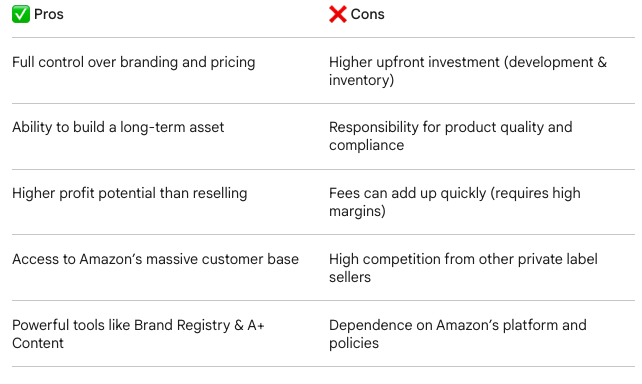
Pros and Cons of Selling Your Brand on Amazon
Final Thoughts
Selling your own trademarked product on Amazon is one of the most effective ways to scale a modern brand - but it requires a shift in mindset.
You’re not just “selling on Amazon.”
You’re building a brand within Amazon’s ecosystem.
The most successful sellers treat Amazon as:
- A sales channel
- A marketing platform
- And a data engine for growth
If you focus on delivering real value, investing in your brand, and understanding how Amazon works, you can turn your product into a scalable, defensible business.
Meet the Mentor
Chipo Mukonoweshuro is an Amazon trainer, business growth consultant, and volunteer mentor for Digital Boost.
With over 20 years of experience helping startups and scale-ups evolve into high-growth, commercially successful businesses, Chipo brings deep expertise in building sustainable revenue streams, navigating e-commerce marketplaces, and developing scalable growth strategies.
Chipo supports brand owners to successfully launch and grow on Amazon, optimise their product positioning, and turn their ideas into profitable, resilient businesses.
Need help mapping out a launch plan for your specific product or reviewing your listings before you go live? Connect with Chipo here.

Launching a startup is a monumental task: finding the capital to fuel it shouldn't be. Many founders overlook innovation grants for small businesses because the "R&D" requirements feel too daunting or the competition too stiff. But 'complex' doesn't have to mean 'impossible.'
We’re breaking down the essentials of these grants and providing a simple 5-question framework to turn your funding confusion into a clear roadmap for growth.
Why Innovation Grants Are Worth the Effort
While traditional loans need to be paid back, innovation grants are "non-dilutive" funding - meaning you don't give away equity and you don't have to pay the money back. Instead, the government is investing in your potential to grow the economy and pay future taxes.
We love innovation grants for small businesses because they:
Speed Up Growth: Grants help you move your product to market faster than bootstrapping alone.
Build Credibility: Winning a prestigious grant from Innovate UK or Horizon Europe proves your business is a serious player.
Fund Talent: These grants aren't for buying fancy office furniture; they are primarily for investing in people, labour, and specialised research.
The "R&D" Test: Is Your Project Eligible?
A common mistake is thinking any new business idea is "innovative." To qualify for these grants, your project must involve Research and Development (R&D). This is the process of seeking new knowledge to create or significantly improve a technology, product, or service.
Keep in mind: You cannot use grant money for marketing or commercialisation. It is strictly for the "creation" phase of your innovation.

Credit: Graeme Donnelly
The 5-Question Framework for Your Application
Don't wait until the deadline to start writing. Use these five strategic questions to build your foundation first:
- Why? What is the specific challenge or problem you are solving? Support this with evidence - like how many people are affected by the issue.
- What? Describe your innovation in simple terms. What makes it different from existing solutions?
- Who? Who is on your team? Assessors want to see that you have the right experts to deliver the project.
- Where? What is your target market? Who are your end users and how many of them are there?
- How much? What are the actual R&D costs? Be detailed, as assessors need to see "value for money".
Your Grant Application Timeline
Grants aren't a quick fix for cash flow. The process requires patience and planning.
- Months 1-2: Research current competitions on the Innovation Funding Service (IFS) portal and answer your 5 foundation questions.
- Months 3-4: Submit your application and wait for the review by independent assessors.
- Months 5-6: If successful, sign your Grant Offer Letter and begin your project.
Avoiding Common Pitfalls
One of the biggest hurdles is the "Technical Trap." Founders are often so passionate that they use too much jargon. Remember: if an assessor doesn't understand your innovation within the first few minutes, they will score you lower. Write in a way that is technically sound but easy to follow.
Want More Support?
If the world of grants still feels a little daunting, our mentors are here to help you navigate the jargon and refine your pitch! Our mentoring is free to access and unlimited.
Meet the Mentor
This blog post was inspired by a Masterclass delivered by Monika Dabrowska for our community. Monika is a Digital Boost mentor and the founder of Innovaction Global.
She has 15 years of experience in raising funding across the UK and Europe and is passionate about helping small business owners understand the "why" and "how" of innovation funding.

The Complete Guide to Growing Your Business Without Breaking the Bank
In this blog, we’re sharing everything you need to know about getting more customers on a small budget!
Growing your business doesn’t always require a massive marketing spend or a high-end agency. In fact, some of the most effective ways to attract new customers are completely free - they just require a bit of time, creativity, and consistency.
Whether you're just starting out or looking to scale without increasing your overheads, these low-cost strategies will help you reach your target audience and build a loyal customer base.
Let’s dive in 👇
Why Small Budgets Can Lead to Big Results
When you have a limited budget, you're forced to focus on what actually works. Instead of "spraying and praying" with expensive ads, you build authentic relationships.
Unlike paid advertising, which stops the moment you stop paying, low-cost organic strategies build long-term value for your business.
The key is to focus on high-impact activities that leverage your unique voice and local presence.
If you’re feeling stuck on how to grow without a huge bank balance, this guide is for you 😊
Debunking Common Marketing Myths
- You need a professional film crew - Authenticity beats high production value every day on social media.
- You need to pay for ads to be seen - Not true! Organic reach and local SEO can be even more powerful.
- More followers = more customers - Nope! A small, engaged audience is far more valuable than thousands of "ghost" followers.
- Marketing is expensive - Only if you do it wrong. The best marketing is often just solving problems for people.
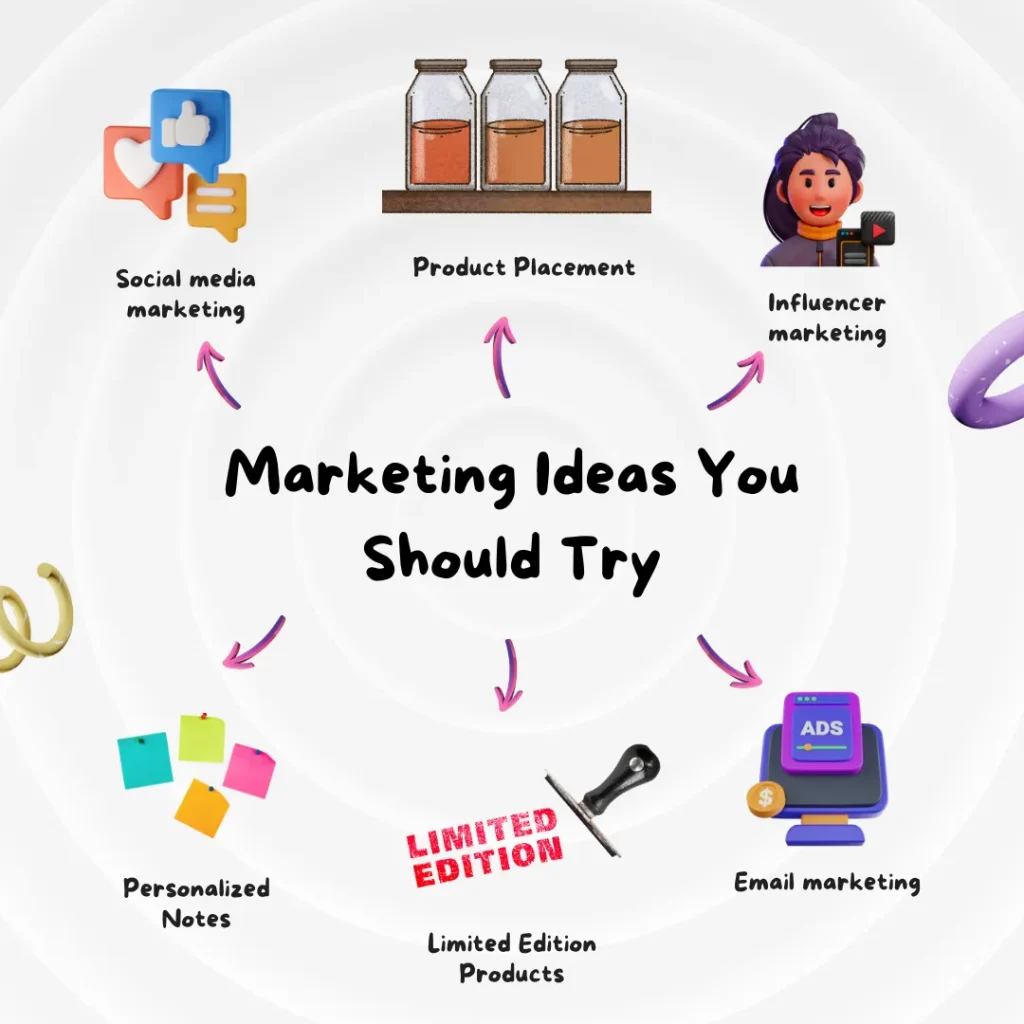
Credit: Parul Gupta
How to Get Started
1. Optimise Your Local Presence
If you have a physical location or serve a specific area, your Google Business Profile is your best friend. It’s a free tool that puts you right in front of people searching for your services. Keep it updated with fresh photos and respond to every review to boost your rankings.
2. Leverage "Micro-Influencer" Partnerships
You don’t need a celebrity. Look for local "micro-influencers" (1k–10k followers) who align with your brand. Often, they are happy to share your product or service with their audience in exchange for a free sample or "gifted" experience.
3. Master Content Repurposing
Don't work harder; work smarter. One long-form blog post can be turned into three Instagram Reels, a newsletter tip, and a LinkedIn post. This keeps your brand "top of mind" without requiring you to create new content every single day.
4. Focus on Customer Retention
It is significantly cheaper to keep a customer than to find a new one. Try this:
- Email Marketing: Send a bi-weekly newsletter with genuine value.
- Referral Schemes: Offer a small discount to existing customers who bring a friend.
- Loyalty Perks: A simple "thank you" note or a small surprise can turn a one-time buyer into a lifelong fan.

Crafting the Perfect Low-Cost "Hook"
To get people's attention without paying for it, your message needs to be sharp. Ensure you include your USP (Unique Selling Proposition) in everything you do.
1. The Problem/Solution Angle
Identify a specific pain point your customer has and show them how you fix it for free or at a low cost.
- “The 5-minute morning routine for busy founders.”
- “How to fix your website SEO in one afternoon.”
2. Social Proof
People buy from people. Share testimonials, "behind-the-scenes" videos of you working, and case studies. When potential customers see others succeeding with you, the "sale" becomes much easier.
Free Tools to Supercharge Your Growth
You don't need a "Pro" subscription for everything. Start with these:
- Canva: For professional-looking graphics and social posts.
- Google Trends: To see what people in your industry are actually searching for.
- AnswerThePublic: To find the exact questions your customers are asking online.
- MailerLite: Most have a free tier for your first 1,000 subscribers.
Making Your Marketing Work Harder
Once you start getting traction, make sure you don't let those leads slip through the cracks!
- SEO Benefits: Writing helpful blogs (like this one!) helps Google trust you, bringing you "free" traffic for years to come.
- Email Sign-ups: Every visitor to your site should have an easy way to join your mailing list.
- Website Health: Ensure your site is fast and easy to use on mobile (Check out our website checklist for help!)
Conclusion
Getting more customers on a small budget isn't about doing less - it's about being more intentional. By focusing on local SEO, building an email list, and creating authentic content, you can grow a thriving business without a massive ad spend.
If you’d like personalised support with your marketing strategy, why not contact our marketing mentors?
Our mentoring is free to access and means you can get expert advice on how to scale your specific business!
We’re on a mission to help founders develop digital skills so that their businesses can thrive! With the help of our partners, we’ve interviewed real-life business owners like Emma to show you what’s possible when you embrace the power of video content 🎉
With more and more social media platforms prioritising short-form video content, it's more important than ever for small businesses to embrace this content. In this blog, Emma is sharing her tips and tricks to help you master short-form video for your small business!
You can watch the full video interview with Emma here.
How to master short-form video content
Emma's broken this down into 5 easy pillars that you can follow to get confident posting videos online 💪
1. Kill perfectionism
Ever pulled out your phone to take a video and then talked yourself out of it because it's not the perfect setting? You're not alone! But as Emma reminds us, "you don't need to be Greta Gerwig or Steven Spielberg" to film a video for social media.
Many of us believe we have to have the perfect lighting and a show-home backdrop in order to get a great video. But guess what, authentic and "unpolished" content performs better than those videos.
Why? Because it feels more human.
So next time you catch yourself worrying about your backdrop or video setup, remind yourself, 'done is better than perfect'! Your audience wants to hear from you, whether you're in a ball gown or out on a 'tea and tips' walk like Emma!
Take action 👉
Challenge yourself to film one "imperfect" video this week! Choose something easy, maybe it could be a reintroduction post for your audience, or about a topic you're really passionate about.
2. Find where you're comfortable
Emma’s Tea and Tips series didn't happen by accident. She realised she felt most relaxed with a mug of tea in her hand. Rather than putting off filming her videos, she started to look forward to them!
Finding a physical "anchor" or environment that makes you feel comfortable is key. Once you've found that comfort, you'll find it easier to consistent with your videos.
Take action 👉
- Have a think about where you're most comfortable. Maybe it's like Emma when you're having your morning coffee. Maybe it's when you're out for a run, or sat with your dog.
- Once you've found your comfort zone, challenge yourself to film one video a week in that comfort space for a month. We want this to become a habit 💪
3. Say less, do more
As the algorithms continue to shift, one thing remains clear: hard selling is over.
Emma predicts that the most successful brands will be those that take their audience on the journey with them.
Audiences don't want to constantly be told what to buy from you. They want you to show them behind-the-scenes, show you the human behind the brand, and take them on the adventure with you.
So when you're creating your next video, use that as a sense-check. Am I trying to really push a sale, or am I trying to show my audience something of value?
Take action 👉
- Think about what your audience actually wants to see from you. Separate your ideas into 3-5 content "buckets" or key themes that you can then use to create future posts
- Once you have your themes, identify ideas that fit the 'behind-the-scenes' concept - challenge yourself to record these throughout the day and see what you come up with! Remember, what might seem mundane to you may be fascinating to your audience.
- Bonus resource: Watch Naomi's Masterclass on how to sell through storytelling
- Bonus resource: Stuck for content ideas? Check out this free guide and never run out again!
4. Practise makes perfect
Believe it or not, even the most "natural" people weren't confident on camera when they first started!
Getting confident posting short-form videos is simply a case of practise, practise, practise. The more you practise, the easier it gets!
Emma recommends the "One-Minute Test" if you're nervous. Talk to the camera for 60 seconds about something you know inside out - even if it’s just how to make the perfect cup of tea.
Although it might make you cringe, watching yourself back helps you get used to your voice, your hands, and your energy on camera. And the more you do it, the less practise runs you need 😊
Take action 👉
- Try Emma's 'one-minute test' today but don't post it. Instead, watch it and see how you behave on camera. You'll be surprised how much you learn! Maybe you need to use more hand gestures, speak louder, or even speak slower (this is a common one!)
- Bonus resource: Watch Emma's Masterclass on how to create impactful videos
5. The 12-week testing rule
We're all impatient, but one of the big learnings Emma shares is this: don't change anything until you've tried it for at least 12 weeks.
Why? Simply because if you're trying something new each week and not doing something consistently, you won't know what's working.
So for example, if you're testing different lengths of videos (5 seconds vs. 20 seconds), do this test across your video content for at least 12 weeks. Then you can review, see the results of the test and then start testing something else like voice recorders vs talking to the camera!
Don't be disheartened if you don't see results straight away. As tough as it is, stay consistent with your tests and the results will follow 😊
Take action:
- Make a list of a few things you'd like to test over the next few months. Make sure these experiments are filtered into the themes and pillars you identified for your content earlier!
- Bonus resource: If you're feeling uninspired with your content, check out this Masterclass on how to create content that converts! It'll help you get ideas to really connect with your audience.
Your Video Toolkit
It may surprise you to know, but Emma thinks you've already got everything you need to start filming short-form videos!
Emma's main message? Keep it simple.
Here's what you need to get started:
- Your smartphone - if you've got a smartphone, you've already got a powerful recording device ready to go!
- TikTok app - free to download, it's a great platform for short-form content
- CapCut - again, this is a free editing tool that works directly with TikTok and is really user-friendly!
- Instagram Edits - if you're planning to post on Instagram, Edits is their in-platform editing tool
Conclusion
So there you have it! Creating short-form videos couldn't be easier. With Emma's tips and tricks, we're sure you'll be creating incredible videos in no time at all 😊
If you need support with anything we've covered in this blog, our mentors are here to help!
You can access unlimited 1:1 mentoring, group Masterclasses and peer learning programmes, all free of charge through Digital Boost 🚀
Meet the Mentor
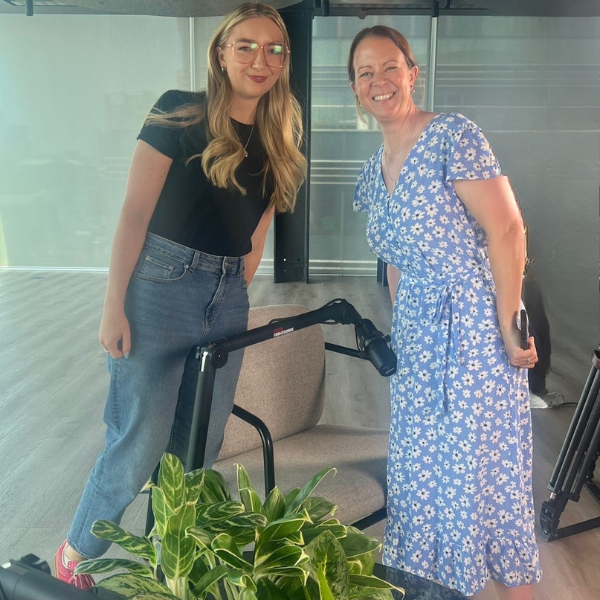
Emma York is the founder of Fresh Approach Digital, a one-stop shop for social and marketing support! When she's not helping founders get clear on their marketing strategies, you'll find Emma filming her famous 'tea and tips' videos or out on the water, which is her happy place! 🌊
We're on a mission to help founders develop digital skills so that their businesses can thrive! With the help of our partners at BT, we've interviewed real-life business owners and mentors so that you can learn from people who've been in your shoes and can show you the way forward.
In this blog, we’re exploring how you can build a high-converting social media strategy that actually gets results without taking over your life!
You can watch the full video interview here.
Building your high-converting social media strategy
1. Choose one platform and do it well
Running a business is hard enough; don’t make it harder by trying to manage every social channel in existence!
There's often pressure to be on trending apps like TikTok, even if it's an app that you don't personally like. But as Naomi advises, if your audience isn't hanging out there, or you absolutely hate using the platform, it won't get you anywhere.
Why focusing on less gets you better results:
- Quality over quantity: It's better to post high-quality content a couple of times a week than to post low-effort "filler" content every day.
- Deeper engagement: Focusing on less platforms allows you to actually engage with your followers, building lasting relationships and happier customers!
- Time management: Less platforms means you can manage your time better and stops social media feeling like a total time-suck
➡️ Take Action: Identify where your ideal clients hang out. Pick one platform to master this month and ignore the rest!
2. Focus on genuine connections
A common mistake founders make is "broadcasting" at people rather than having a conversation. If you just "fling" content out there without engaging, it’s like a tree falling in the woods with no one to hear it.
It's important to remind yourself of the golden rule: people buy from people.
No one is buying from a business that "shouts" on social media but doesn't actually care about its customers.
By replying to comments and engaging with your audience, you're making your customers feel listened to and understood.
Nail your engagement:
- Don't fear small talk: You don't have to jump straight to a sale! Speak to your audience like humans, have the small talk, and watch your relationships build organically. Naomi has a great story about how her 'small talk' about her Chinese takeaway order went viral with our audience and led to more meaningful conversations with her customers.
- Tell stories: Storytelling is one of the most powerful tools in your social media kit. Be authentic and share stories that help you connect on an emotional level
- Solve a problem: Remember, most customers want to be taken away from a "pain" in their lives. Be open about how you can help and show them your value.
Does it actually work? We hear you, engagement can feel like another item on the to-do list, but don't neglect it! Naomi has seen sales come directly through social media by connecting with people authentically.
➡️ Take Action:
- Challenge yourself to take 5 mins each day this week to engage with your audience!
- Watch this bonus resource: How to sell through storytelling
- Watch this bonus resource How to create content that converts more clients
- Watch this bonus resource How to turn your social media posts into sales
3. Ditch the perfectionism
Nothing kills a high-converting social media strategy like perfectionism.
If you've got all the ideas but you're getting stuck trying to get a Hollywood-quality video - you need to hear this.
Your audience isn't expecting you to have high-production value content. They want to hear from YOU - however that looks 😊
Naomi recommends using simple tools that allow you to work quickly and confidently. The main aim is for you to just get something out there - it doesn't have to be perfect!
As Naomi's found, her most "rough and ready" off-the-cuff videos have been her highest performers.
How to bust perfectionism:
- Don't fall for over-the-top tech: A simple phone stand and an inexpensive microphone are all the tech you really need to get started.
- Practise makes perfect: No one's first video is amazing, but the more you practise, the more you'll silence the perfectionism! Remember, something is always better than nothing. So keep trying and you'll become more confident as you go 😊
- Work smart not hard: Editing tools like Canva are free to use and allow you to repurpose and bulk your content quickly and efficiently. There's no time to overthink when you're creating content this fast!
➡️ Take Action
- Create one "rough and ready" video today showing what you're working on. Don't overthink the editing - just post it!
- Watch this bonus resource: How to create impactful video content
Conclusion
So there you have it! In just 3 simple steps, you can build a high-converting social media strategy, that doesn't feel like a drag!
Need support with anything that we've covered in this blog? Join our community and start accessing free mentoring to continue learning with us!
Meet the mentor
Naomi Rose is a content marketing strategist and volunteer mentor at Digital Boost!
With over 20 years of marketing experience, plus having started and grown a successful business, she knows a thing or two about how small businesses can stand out from the crowd.
Naomi specialises in creating content that attracts more clients, boosts visibility and increases sales for her clients!

We're on a mission to help founders develop digital skills so that their businesses can thrive! With the help of our partners at BT, we've interviewed real-life business owners and mentors so that you can learn from people who've been in your shoes and can show you the way forward.
In this blog, Ian de Cordova is showing exactly how to market your business on a budget. We know when you're a founder, you don't always have a big marketing budget. But trust us, it's possible to get your business out there without breaking the bank!
You can watch the full video interview here.
What stops founders from getting their business out there?
We've helped thousands of founders to market their businesses, and the one commonality? The overwhelm.
In today's digital landscape, there are so many different ways to market your business that it can be difficult knowing where to start!
Want to know our secret? The key thing is to just get started.
Cut through the noise of the online world and get focused on these three simple, cost-effective ways to master how to market your business on a budget.
Your budget marketing blueprint
1. Set up a Google Business Profile
Whether you're running an online business or have a bricks-and-mortar store, every business should have a Google Business Profile.
A Google Business Profile is free to create and helps you build your presence online for your customers.
With your profile, you can:
- Give an overview of your business
- Link directly to your website
- Share opening hours and business location
- Showcase Google reviews
Why it's important:
Customers are looking for information faster and faster. Buyers no longer want to check your full website to find out what you do, or work out if you're a trustworthy business.
Having a Google Business Profile allows you to communicate quickly with potential customers who you are, what you do, and why they should buy from you. And as this tool is completely free to use, it's a no-brainer for any business or charity to have!
Does it actually work?
Yes! Ian helped one of our mentees set up their Google Business Profile. Through the profile, they were able to tap into local SEO and start reaching more local customers. After a few months, they were able to stop all paid advertising as the organic reach of their profile was bringing in more traffic to their website than the ads!
➡️ Take Action
- Watch this bonus resource: Harnessing Google Business Profile to Bring More People to Your Website
2. Create a website
If you had a bricks-and-mortar store, you'd have a lovely storefront drawing customers in and giving them somewhere to find and buy from you.
The online world is exactly the same, but your website is your storefront. And the best part is, your website operates 24/7, so your storefront never closes!
It's now easier than ever to set up a website. There are hundreds of website hosting tools out there, and emerging AI tools and platforms which can help you to create a website in seconds.
💡 Once you've created your website, don't forget to link it to your Google Business Profile
Does it actually work? Yes! Ian's been mentoring Gary for over two years, and in that time, they've developed Gary's website together. With Ian's support, Gary's sales went from just a couple a month to regularly hitting 300 sales in a month. This is all thanks to Gary's website that allows his customers to buy his products quickly and easily.
➡️ Take Action
- Read our blog on how to create a website using AI
- Read our blog on how to avoid 12 common website mistakes
3. Nail your social media content
Hear us out, we know that social media platforms are overflowing with content. But with the right strategy and some consistency, you can leverage social content to reach your audience, totally free of charge.
Your social strategy
- Pick your platforms - the biggest mistake founders make is trying to be everywhere all at once. Pick a handful of key platforms, and focus on sharing quality content there.
- Decide what to post - most people are on social media to either be entertained or educated. With your account, you can use your content to educate customers about you, your business, and the products/services that they can buy from you
- Decide how often to post - this doesn't have to be overwhelming. Pick a frequency that works for you, whether that's once a month, week or day and stick to it. Consistency trumps volume every time.
💡 Tip: link your social media platforms to your website. It helps build trust and show your potential customers that you're a living, breathing business!
➡️ Take Action
- Read our blog on how to create content that converts
Bonus: When you're ready to spend money
If you've nailed the first three steps and you want to take your business to the next level, you can try low-cost paid ads.
Search engines like Google and Bing offer paid search adverts that you can start from around £5 a day. Even with a low budget, you're able to more accurately target your customers and start to get seen by your ideal clients.
The same rules apply to paid advertising as organic - you need to ensure your ads are quality, and that they're linking back to a valuable and optimised website. Always think about the overall customer journey and ensure that every time a customer interacts with you, whether it's organic or paid, that they're having the best experience possible.
➡️ Take Action
- Watch this bonus resource: Getting Started with Google Ads
- Read our blog on how to create your first Google Ads campaign
So there you have it! Getting your business out there doesn't have to cost a fortune. With these simple steps, you'll be able to market your business on a budget in no time at all.
Need support with anything that we've covered in this blog? Join our community and start accessing free mentoring to continue learning with us!
Meet the mentor
Ian de Cordova is passionate about helping small businesses thrive. With experience in the corporate sector and a business owner himself, he brings years of knowledge and learning to all the mentoring sessions he delivers.

We're on a mission to help founders develop digital skills so that their businesses can thrive! With the help of our partners, we've interviewed real-life business owners like Gary to show you what's possible when you have an optimised website 🎉
In this blog, we’re exploring how to build a high-converting website. We know that when you're starting out, the digital world can feel like a maze of platforms and technical jargon. But building a site that actually sells couldn't be easier!
You can watch the full video interview with Gary here.
What stops founders from building their first website?
We’ve helped thousands of founders, and the biggest hurdle is usually overwhelm. With so many website builders and options out there, it’s easy to get lost in a rabbit hole of platforms and give up before you’ve even started.
Gary’s secret? He realised he didn't have to have all the answers, He just needed to get started, and test until he got it right!
Building your high-converting website
1. Choose a user-friendly website builder
Running a business is hard enough, don't make it harder with complicated tech!
Some founders opt for 'open' platforms like WordPress when they need something bespoke or customer-built.
But as Gary found, often when you're getting started, you just need something simple to get the ball rolling.
Initially experiencing a total 'disaster' with an open platform, Gary trialled Squarespace and Wix, before settling on Shopify for his business.
Why builders work:
- Drag-and-drop: Many tools have templates built into them that you can customise without coding
- Speed: Out-of-the-box options are often the fastest way to get your site up and running, saving you hours of time coding and instead freeing up time for you to focus on your customers!
- Tried and tested: Many platforms have templates or themes that have been designed to convert. You don't have to reinvent the wheel as the heavy lifting has been done for you!
Does it actually work? Yes! Gary found that once he settled on a dedicated builder like Shopify, he could focus on the business rather than the tech. By using an optimised template, he created a professional storefront for his business.
➡️ Take Action
2. Niche your Content
A common mistake founders make is trying to sell to everyone. If your website messaging is too broad, it resonates with no one.
Gary originally marketed his product for "back pain" which is a massive market. However, it wasn't until he focused specifically on runners and running injuries that things took off. As a result of niching, he was able to keep his keywords consistent and direct customers to the pages and products they actually wanted to see. And when his customers saw the products, this led to sales!
How to niche down:
- Solve one problem: Focus on one specific pain point that you know your audience suffers with. Become the go-to solution for that pain point and build from there!
- Consistent keywords: Ensure your ads and your website use the same language so customers don't get confused.
- Test landing pages: Create a separate page for a specific audience (like Gary did for runners) to see if it performs better than your main site.
Does it actually work? Absolutely. By pivoting from a general health product to a specific fitness tool for runners, Gary saw his sales jump from one sale a month to over 300 a month!
➡️ Take Action
- Identify your niche: Write down your top 3 customer "types" and pick one to focus on this month.
- If you already have a website, try testing a landing page targeting another target market and see what happens!
3. Use data to your advantage
Once your site is live, the work isn't done - you need to see how people use it.
Gary used heat maps to watch how visitors moved through his site. He realised that if 85% of people weren't reaching the bottom of his page, he needed to move his best content higher up. He also learned to change only one thing at a time (like a headline or a photo) so he knew exactly what caused a boost in sales.
Gary’s Optimisation Tips:
- High-quality images: Don't use poor-quality phone photos; professional product shots build trust.
- Social proof: Even if you have to give products to friends and family first, get those reviews on the site!
- Keep it simple: Gary’s mentors told him to strip back the "bells and whistles" and stick to one font and a clean white background - and it worked!
➡️ Take Action
Conclusion
By following Gary’s tips and tricks, you’ll master how to build a high-converting website in no time at all! If you give these steps a go, make sure to email in and let us know 😊
Need support with your website build? Join our community and start accessing free mentoring today!
Meet the Founder
Gary Watts is the founder of Eastnole and the inventor of the Yoback, a recovery tool born from his 20-year struggle with chronic pain and a determination to return to the sports he loves.
After a "disastrous" start with complex website builds, Gary worked with mentors to simplify his online presence and pivot his focus toward the runner market. This strategic shift helped him scale Eastnole from making just one sale a month to consistently reaching over 300 monthly sales!

Meet Evie Jones. She’s a coach, an advocate, and the founder of her own neurodiversity consultancy.
After years of fighting for her own children’s support, Evie turned her lived experience into a mission. She now helps other families navigate the complex systems of school and mental health services.
But after nearly 20 years away from the workforce, the transition from "Mum" to "Businesswoman" wasn't easy. Evie had the passion, but she knew that to make her dream a reality, she needed to find the right free business support to help her bridge the gap.
This is Evie’s story.
Turning Lived Experience into a Mission
Evie’s journey started 17 years ago when she adopted her daughter and son. As a family, they had no prior experience with neurodiversity or special educational needs. They struggled, and it felt very isolating.
For years, Evie fought to secure the diagnoses and support her children deserved. As she gained expertise through these battles, other families began seeking her advice, asking how to access the services they needed. What started as informal help evolved naturally into a consultancy business; as Evie puts it, "It wasn't really a case of me finding my business; it was more a case of my business found me".
Navigating the Digital Shift
While Evie had a background in corporate sales and training, returning to the business world after two decades felt like entering a completely different landscape. The coaching came naturally, but the technology was a significant hurdle.
"Up until starting the consultancy, the only online stuff I did was reading a magazine or doing a Tesco shop," Evie admits. Suddenly, she was faced with building a website, mastering social media, and writing a marketing plan with no idea where to start. Searching for help, she discovered Digital Boost via a Google search. Though initially sceptical that free business support could be high-quality, she soon realised it was a hidden gem!
The Power of Expert Mentoring
The impact of one-to-one mentoring was immediate and "fundamentally changed" how Evie built her online presence. She worked with Digital Boost mentors to move from a "dodgy," cobbled-together website to a professional platform that includes all the key elements she didn't know she needed.
Beyond the technical skills, the mentoring provided a psychological breakthrough. "The standout part of the mentoring was just realising that I knew more than I thought I knew," Evie says. The process helped her reactivate business skills that had been "stagnating" during her time away from the workforce.
Real results
Despite focusing heavily on her Master’s degree in Child and Adolescent Mental Health over the past year, Evie’s business has continued to grow. Thanks to the free business support she accessed through her mentors, she is now seeing real results:
The phone is ringing: Whilst she's busy studying, Evie's new website is working hard in the background. She’s now seeing families find her coaching services naturally through Google, without her having to spend all her time on marketing.
A clear path forward: Before, the idea of a marketing plan felt overwhelming, but the Digital Boost workshops changed that. She’s moved past the "where do I start?" phase and now has a clear, manageable roadmap to grow the business over the next year.
Building lasting trust: First impressions matter, and moving away from a "cobbled together" site has made a huge difference. Because her business now looks as professional as the support she provides, clients feel confident coming back to her again and again for ongoing help
Embracing the Entrepreneurial Identity
The biggest win of all isn't technical - it’s how Evie feels. "The thing I have now that I didn't have before joining the Digital Boost community is a level of confidence in the way that I present myself to the world," she explains.
She has reclaimed her identity. She’s not "just a mum" or "just a coach". At 60, while others are thinking about retirement, Evie is finishing a Master's and launching a fledgling business.
Her advice to anyone thinking about starting a small business? "Do it". It’s rewarding, it’s exciting, and with the right mentors to hold your hand, you don't have to do it alone.
Inspired by Evie's story? If you’re looking for free business support to help launch or grow your ideas, we’re here to help.
We’ve got peer learning programmes, expert mentoring, and more to support you on your journey!
We're on a mission to help founders develop digital skills so that their businesses can thrive! With the help of our partners at BT, we've interviewed real-life business owners and mentors so that you can learn from people who've been in your shoes and can show you the way forward.
In this blog, we’re exploring how to grow your business with AI, without getting bogged down in the technical jargon. We know that for many founders, especially in traditional industries, AI can feel like a "huge technical leap" that leaves you feeling a bit frozen.
But you don’t have to be a tech expert to see results. In this blog, we hear from Cath, founder of CDS Printer Solutions, who shares how she moved past the initial "bombshell" of AI to boost her sales by 20% and even grow her team!
You can watch the full video interview here.
Finding excitement with AI
Before embracing AI, Cath describes her printer repair business as "plodding along." They weren't growing; they were standing still. When a mentor first asked Cath why she wasn’t using AI for business growth, she admitted she felt intimidated.
"It was a bit of a bombshell, really," Cath says. "We’re an old-fashioned repair company. I thought, 'We don't do that.'"
But by shifting her mindset, Cath didn't just find a new tool—she found a "jumping-off point" that made the business feel exciting again. Here's how you can dive into AI just like Cath did!
Your guide to mastering AI
1. Treat AI as your "Digital Teammate"
Running a small business can be lonely. You don’t always have someone sitting across from you to help with a difficult email or bust a creative block. AI fills that gap, helping you tackle the "wordy stuff" that usually takes up way too much of your brainpower.
How to use your new "teammate":
- Unblock your marketing Use AI to draft social media posts or blogs that you’ve been putting off.
- Tidy up your writing: Save hours of self-correcting by having AI write proposals and emails for you.
- Brainstorming: Ask questions and request feedback to help you develop and refine ideas.
Does it actually work? Yes! Cath used AI to get "much louder" on LinkedIn, Facebook, and Instagram. Even though she didn't think a printer repair business belonged on Instagram, the results were "mind-blowing"—sales increased by 15% to 20% in just six months.
➡️ Take Action
- Try this today: Ask your AI to create a social media post for you, optimised for each of the platforms that you use (we like Claude or Gemini for this!).
- Watch this Masterclass on how to use AI wisely in your marketing copy
2. Focus on gaps not fear
There’s a big myth that AI is only here to take jobs. But for small businesses, it’s often the exact opposite! When you move away from that fear and focus on the gaps AI can help you fill, that's when the growth happens.
So how do you find your gaps? For Cath, she sat down and listed out all the repetitive tasks she was doing each day. She also reflected on the things she wasn't doing. In Cath's case, this was marketing, which was nonexistent at the time.
Cath used AI to fill her marketing gap. Using it to generate consistent content at scale across multiple social media platforms. This presence on social media steadily built Cath's online following. And after just a few months, she was getting new leads and contracts from social media! Rather than replacing anyone on her team, AI plugged a gap that unlocked more sales. And with more sales, came the need for Cath to hire two new team members for their warehouse!
Ask yourself, what growth could you see if you filled some of the gaps in your business with AI?
➡️ Take Action:
- As Cath recommends, make a list of all the repetitive tasks you do each week. Tasks that are taking up your time unnecessarily are "gaps" that AI can easily fill! Once you've got your list, see which of these gaps AI could fill for you. You'll be amazed how many hours you can reclaim by outsourcing these tasks to your AI!
3. Get great at prompting
The biggest mistake people make is being too vague when prompting their AI tool. If you just say "write me an email," you're not going to get great results.
And what we don't want to do is put out content that's clearly written by AI. We want to ensure that the outputs you're getting look and sound like your business.
To get the best out of your AI, follow this framework when prompting:
- What: What exactly are you trying to create?
- Why: What's the goal of this content?
- Tone: How do you want the content to sound? Professional? Friendly?
- Context: Give it the background info it needs to be accurate.
➡️ Take Action: Try out these simple AI prompts to get started with your AI!
The AI Toolkit: Tools to Try Today
There are so many AI tools out there, but don't worry! You don't need to learn them all. Experiment and see which tools you like, and then stick with what works for you 😊
Here are some of Digital Boost's favourite AI tools:
- ChatGPT, Gemini or Claude: Great for drafting emails, blogs, and social posts.
- Perplexity: Fantastic for research and finding real-time information.
- NotebookLM: A brilliant tool for organising your business notes and ideas, and understanding a large amount of information
- Otter.AI or Fireflies.AI: Amazing for taking meeting notes so you don't have to!
- Intercom or Tidio: Great starting points for Chatbots and customer support
- Klaviyo and HubSpot: Email marketing tools that allow you to build automations and connect with your customers in real-time
- Notion or ClickUp: Two great project management tools that are integrating AI to help you work smarter, not harder, across all your projects
- Zapier: The best in class for connecting all your tools and apps and ensuring they're all "talking" to each other
The Bottom Line
So there you have it! Cath's shown us how to grow your business with AI. As you can see, it's all about taking small steps into the world of AI and beginning to gain confidence and momentum as you go.
You don't need to be a tech genius; you just need to start!
Need support with anything that we've covered in this blog? Join our community and start accessing free mentoring to continue learning with us!
Meet the Founder
Cath (pictured right) runs CDS Printer Solutions, a printer repair and sales company in Staffordshire. After a mentor challenged her to start using AI, she went from being "frozen" by marketing to seeing record-breaking growth and hiring new staff.